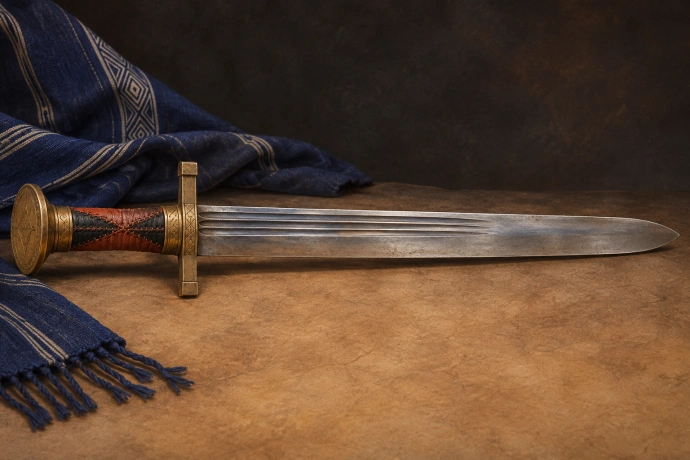
The Richtschwert, or executioner's sword, sits at a distinct intersection of martial craft and judicial ritual in Early Modern Europe. Unlike its battlefield counterparts, this heavy, double-edged blade was forged not for combat, but for the singular act of judicial beheading, serving as both a functional instrument and a potent symbol of legal authority.
Evolution from Martial Blade to Judicial Instrument
The transition of the longsword into the specialized Richtschwert reflects broader shifts in judicial culture. While earlier medieval executions were often carried out with standard sidearms, the 16th century saw the emergence of dedicated blades designed specifically for the mechanics of a single, clean strike.
Engineering these swords required a balance of mass and leverage. The heavy, wide blade was optimized to provide the necessary kinetic energy for a decapitation while remaining manageable for a trained operator who relied on the weight of the steel rather than a sharp, piercing tip.
The Geometry of the Rounded Tip
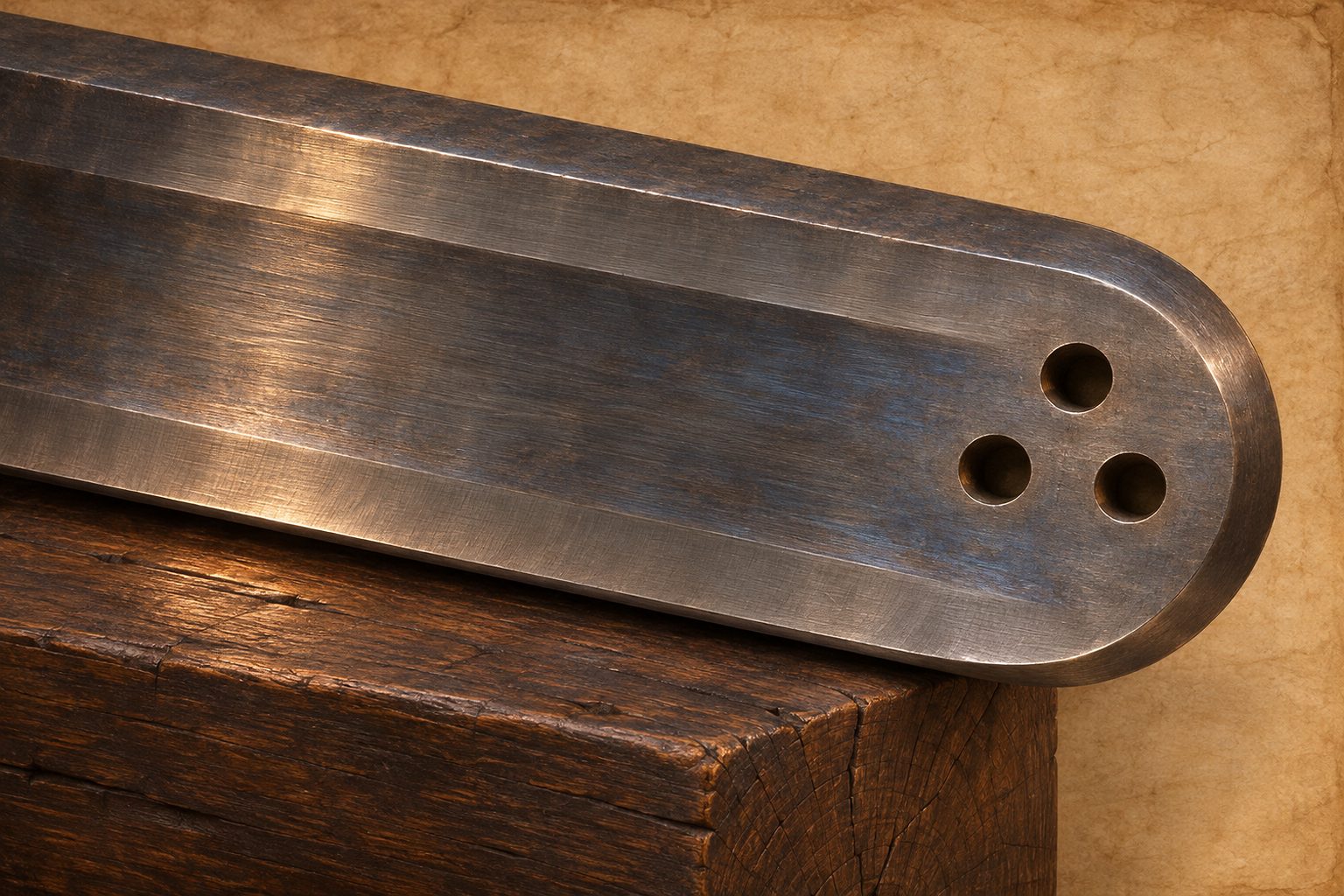
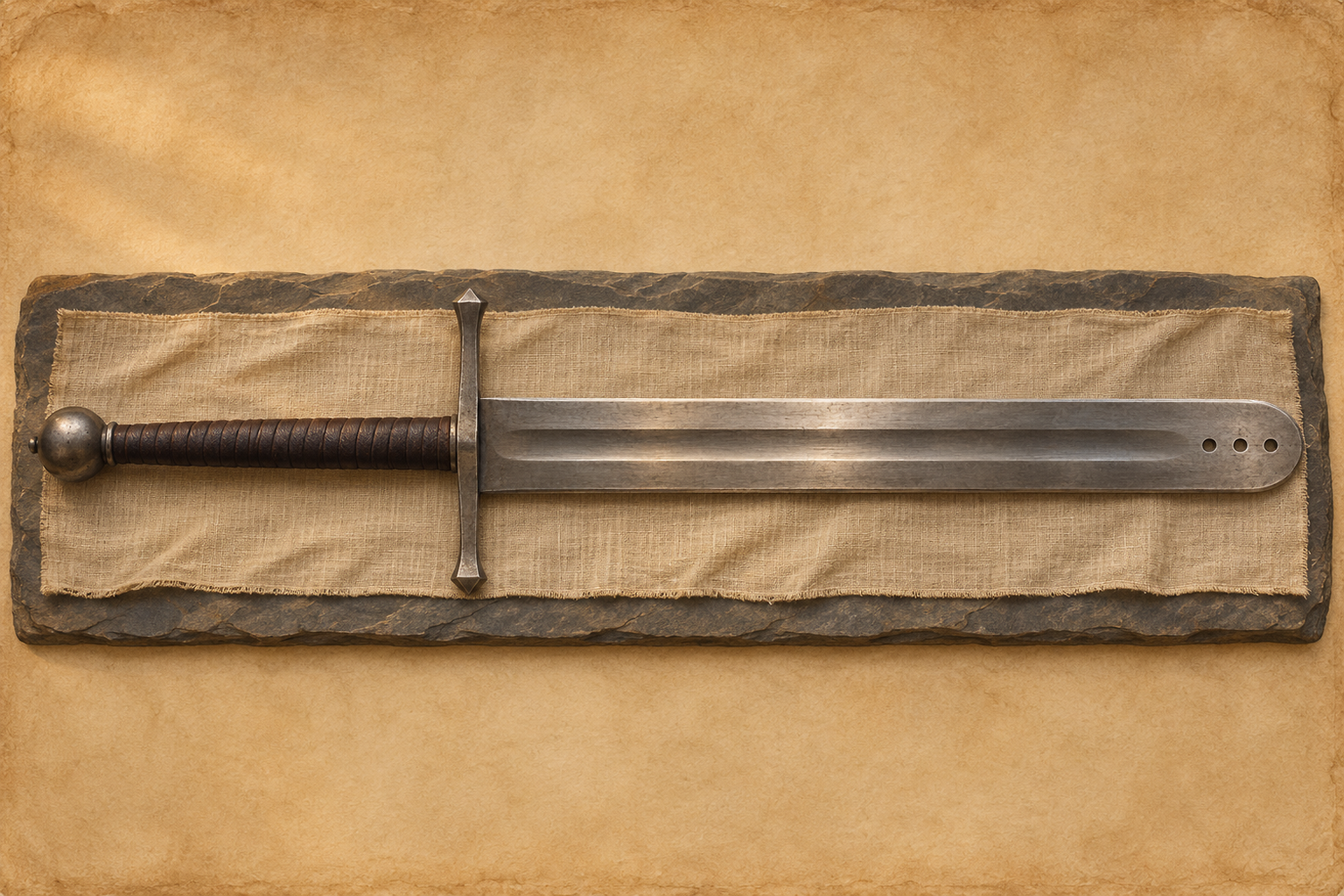
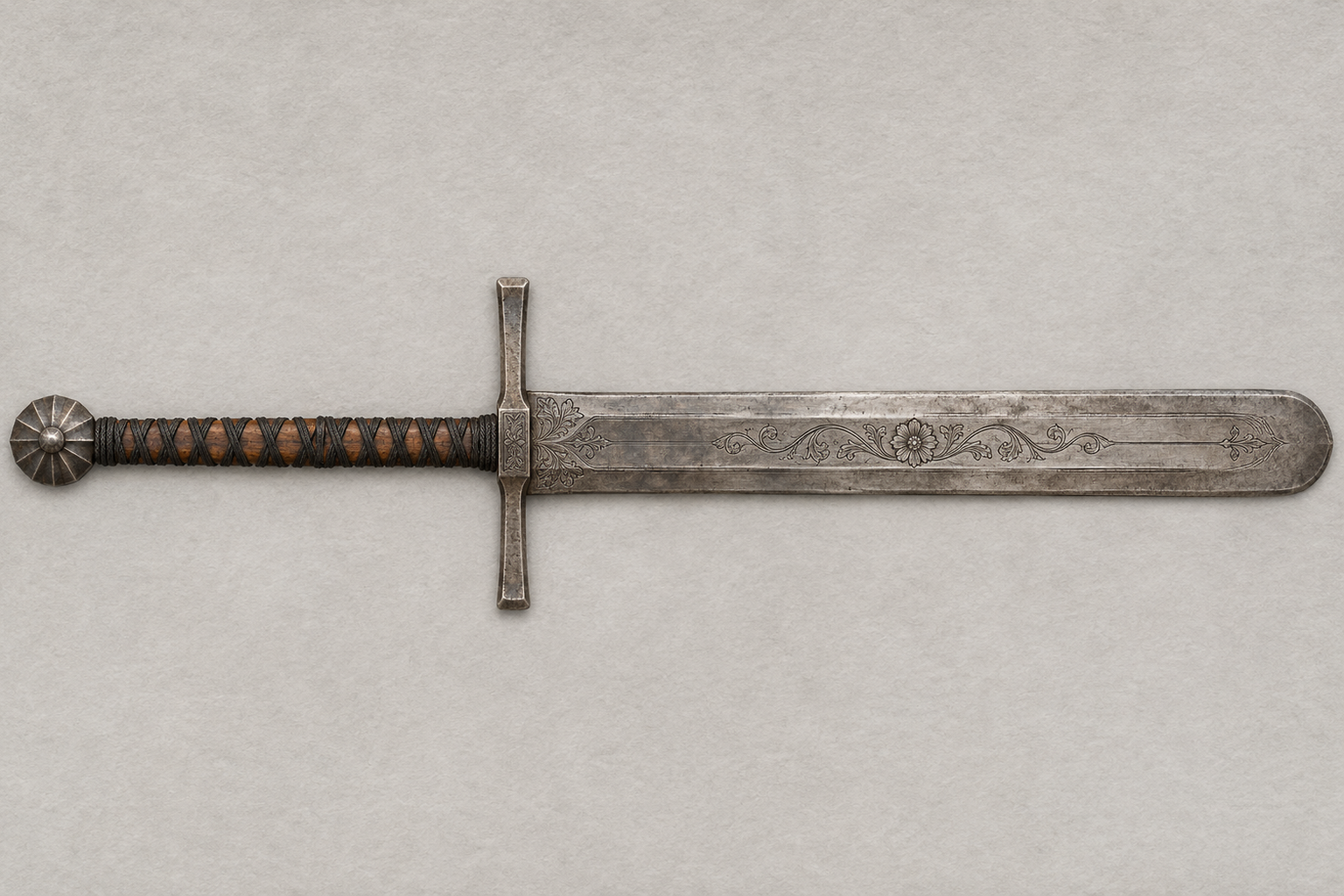
One of the most defining visual features of the Richtschwert is its lack of a sharp, thrusting point. This design choice serves both functional and symbolic purposes within the context of legal history.
Functionally, the rounded or squared tip eliminates any thrusting capability, concentrating the blade's mass and design entirely on a clean cutting stroke. Symbolically, it distinguishes the sword from a weapon of combat or private duel, marking it as a dedicated instrument of judicial sentence.
Distinctive aspects of the blade geometry include:
- A lack of distal taper, ensuring consistent weight distribution.
- A wide, flat edge profile suited for precision impact.
- The absence of a crossguard optimized for parrying, reflecting its non-combative purpose.
Inscriptions as Judicial Admonitions
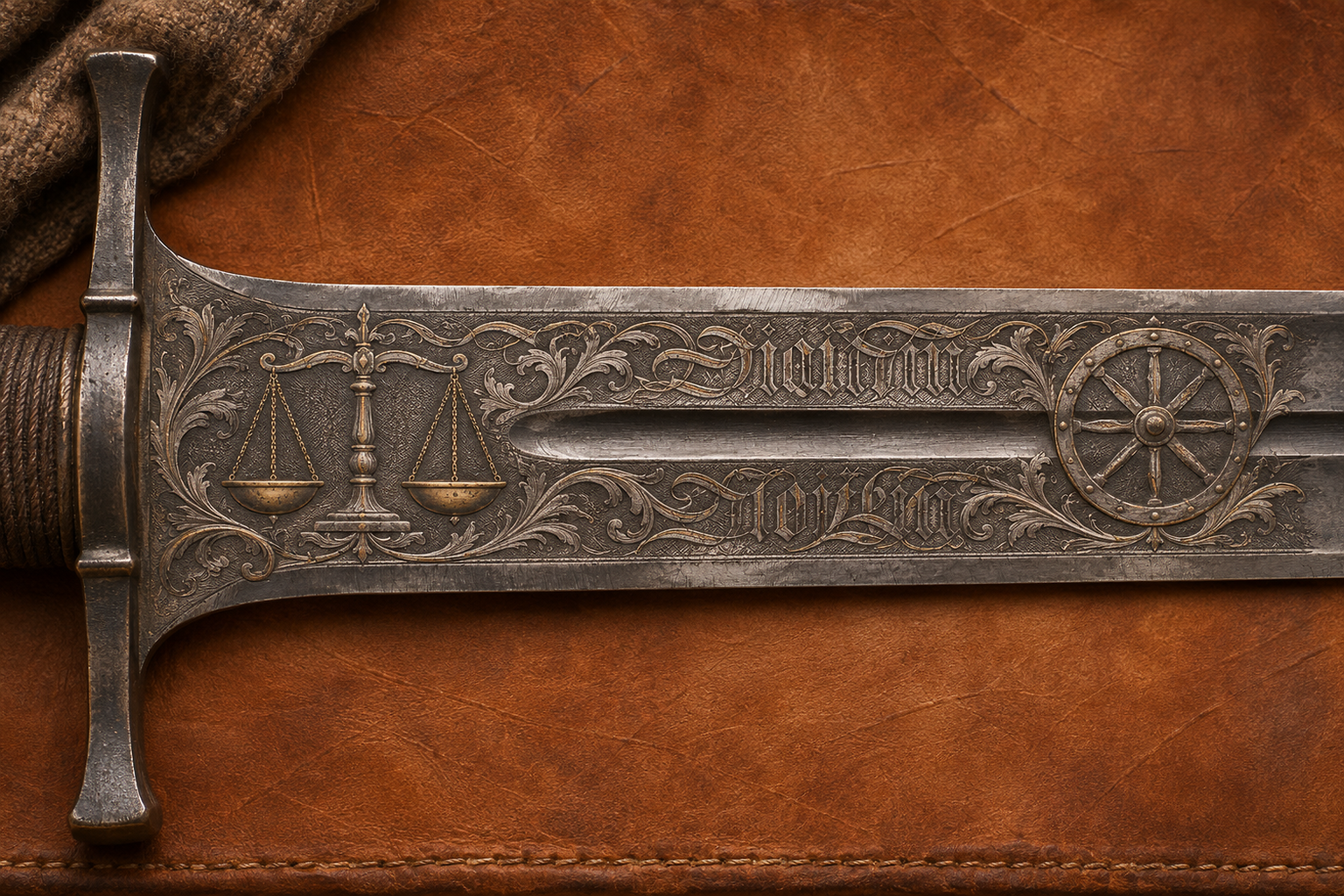
Engraved text on these blades served to communicate the moral framework under which the execution took place. These inscriptions were often directed at the condemned, the public, and the executioner himself.
Common themes included calls for divine mercy, the necessity of the law, or the inevitability of divine judgment. By turning the blade into a narrative object, the authorities reinforced the idea that the death sentence was a moral necessity rather than a personal act of vengeance.
Workshop Practice and Craftsmanship
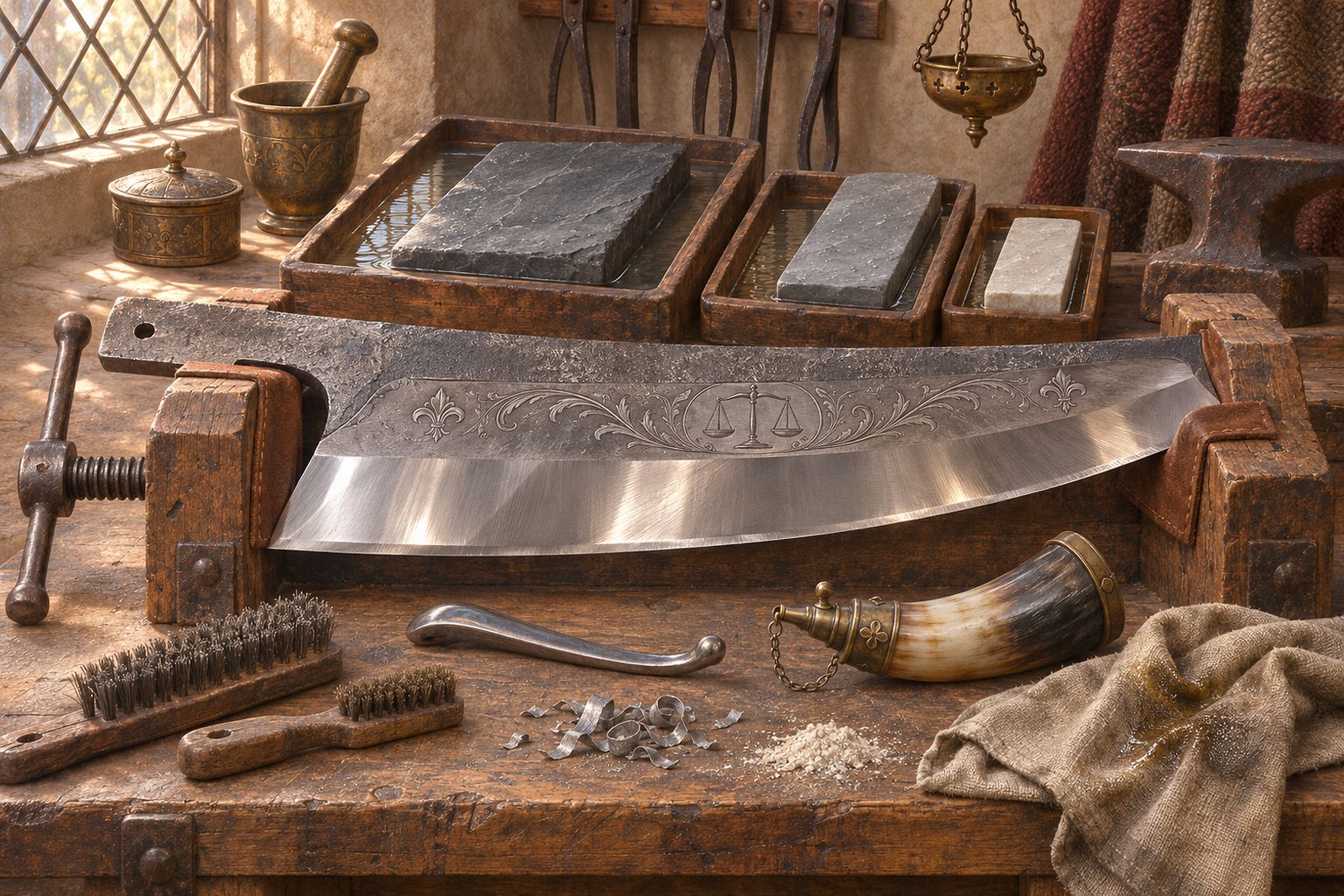
The production of a Richtschwert was a specialized task undertaken by established bladesmiths. While less concerned with the elasticity needed in a combat sword, these blades required sound heat treatment and durable edge geometry to sever bone cleanly without chipping or rolling.
Surviving weapons in museum and municipal collections show that many blades were refurbished repeatedly. Regrinding and polishing over decades of service often wore down inscriptions, which were re-engraved to create a palimpsest of sequential ownership and legal formulas.
The Social Role of the Executioner
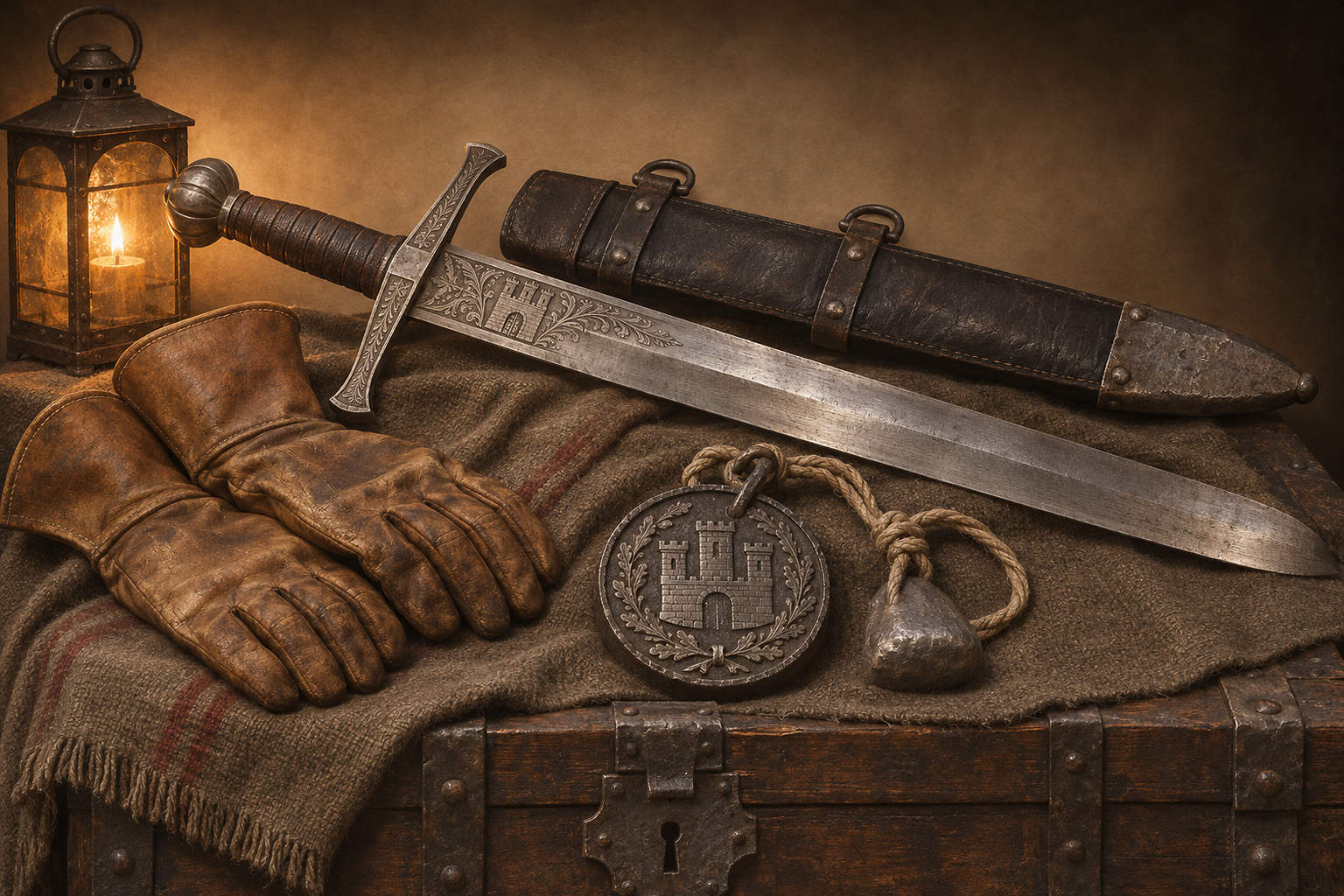
The executioner was a paradoxical figure in Early Modern society, feared and socially ostracized, yet vital to the functioning of the legal system. The Richtschwert was his most visible tool, carrying the burden of his profession's identity.
Maintaining the blade was a point of professional pride. A dull or poorly maintained sword was seen as a reflection of the executioner's incompetence, potentially leading to a botched execution which could incite public unrest.
Dynamics of the Execution
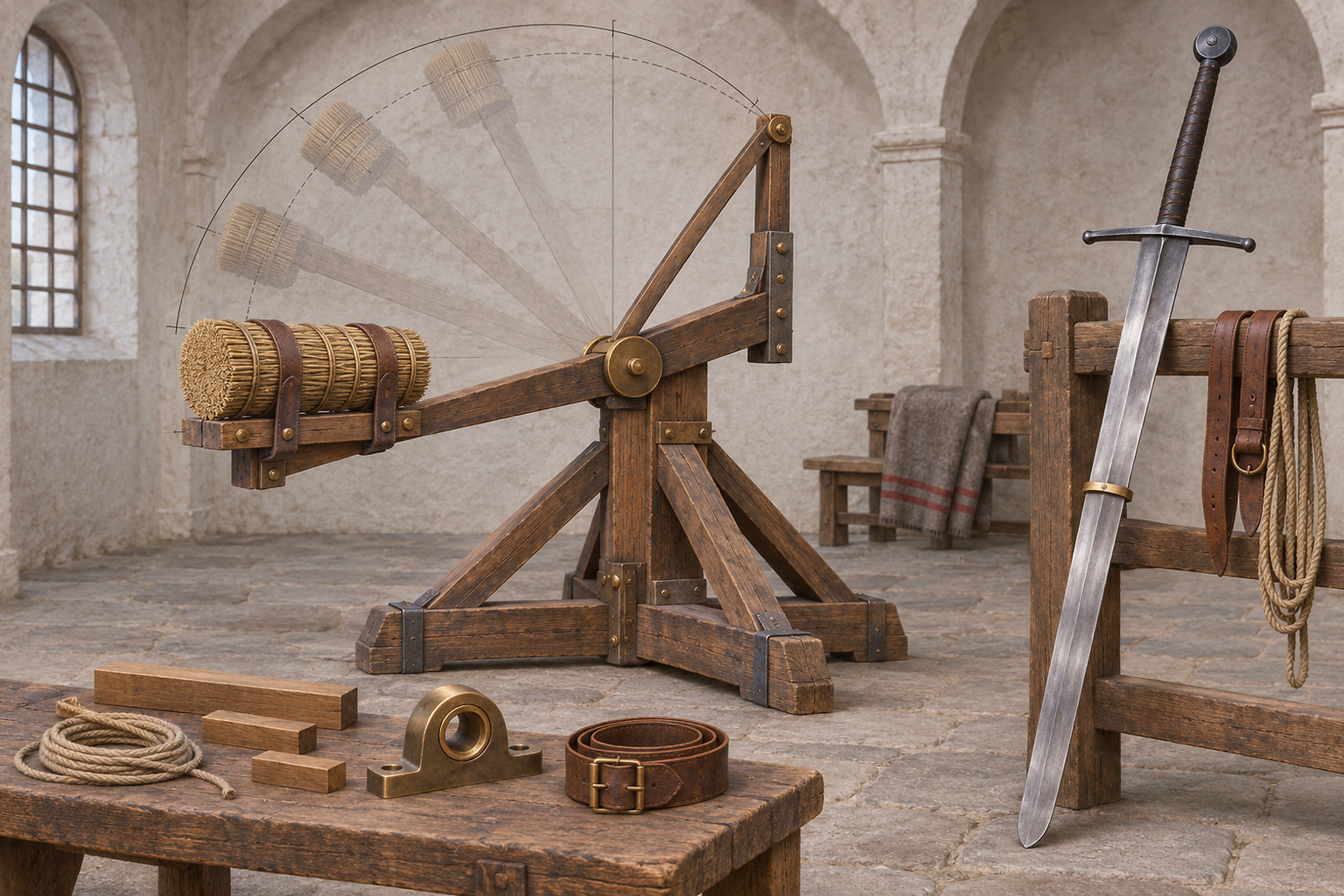
The mechanical act of using the Richtschwert required specific training. Unlike the sweeping cuts of a battlefield longsword, the judicial strike was a controlled, singular movement designed to sever the cervical vertebrae.
Accounts from the period suggest that executioners often practiced on inanimate objects to ensure the consistency of their strike. This level of technical control was essential for the state to project an image of orderly, efficient administration of the law.
Survival and Provenance
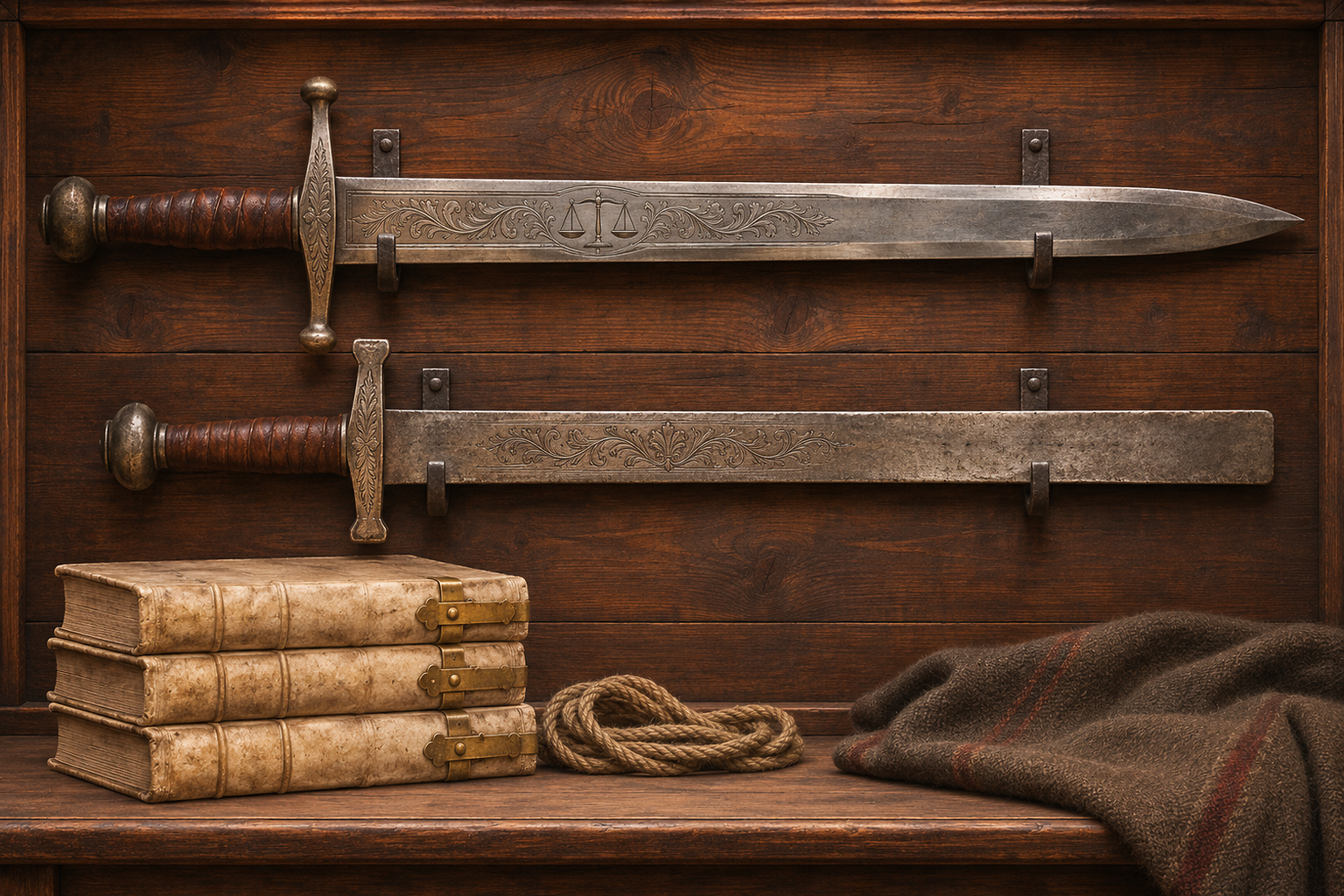
Many surviving Richtschwerter are preserved in municipal armories or museums of legal history. These objects have often been treated with a mix of reverence and revulsion, affecting their conservation history.
Provenance tracking is frequently difficult because many blades were not catalogued until they were removed from active service. However, those that remain offer a vital link to understanding how the tools of punishment were integrated into the material culture of the state.
Common settings for recovered artifacts include:
- Town hall armories.
- Private collections of aristocratic families.
- Regional history museums.
Modern Interpretation and Experimental Archaeology
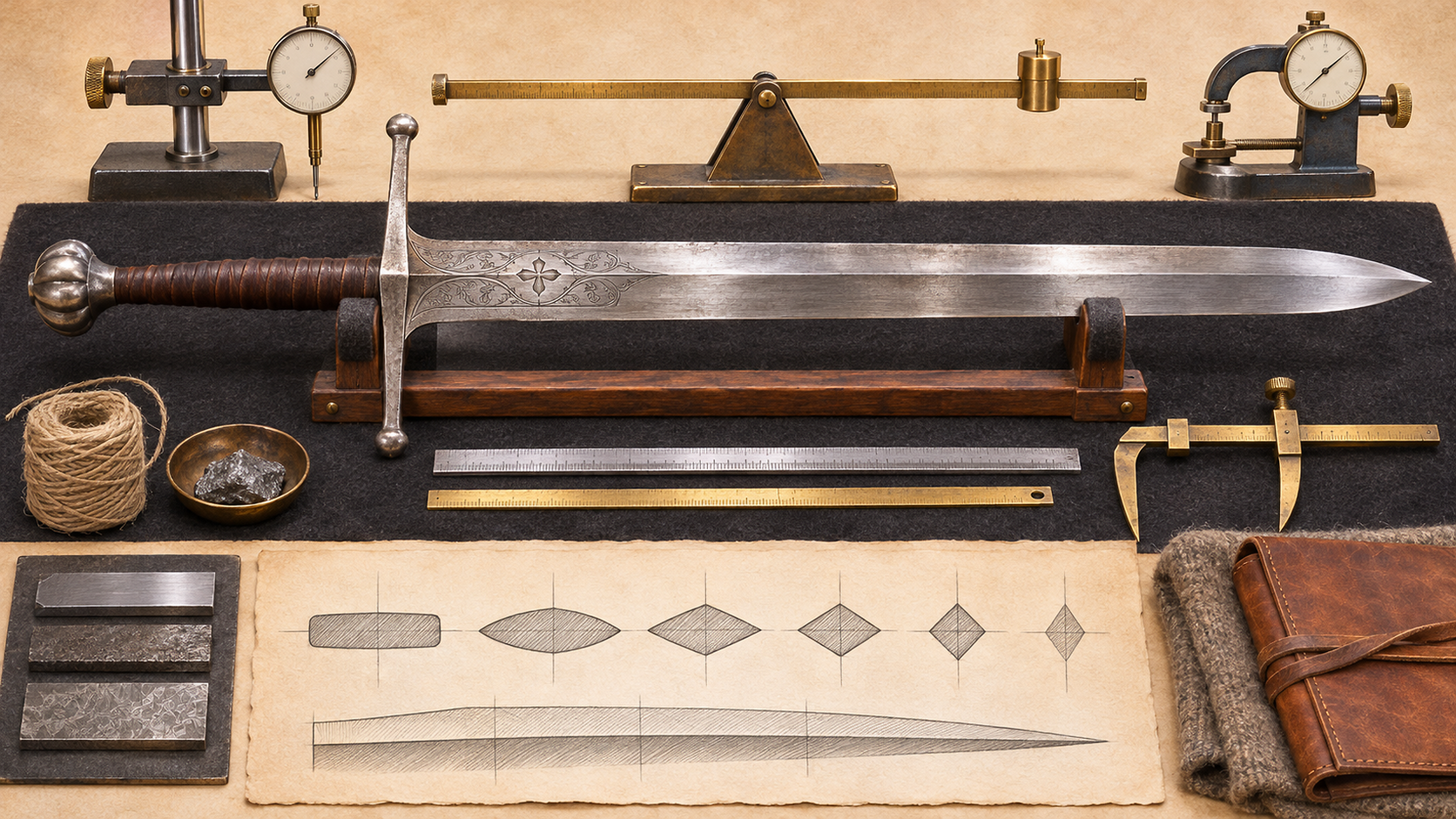
Modern re-examinations of the Richtschwert often focus on the physics of the blade's weight and the mechanics of the execution strike. Through experimental archaeology, researchers have sought to understand the efficacy of these blades compared to contemporary accounts.
Replicas have been used to test the impact force required for a clean separation. These studies help distinguish between historical reality and the often sensationalized narratives that appeared in later centuries regarding the "skill" of specific legendary executioners.
The Sword as a Relic and Symbol
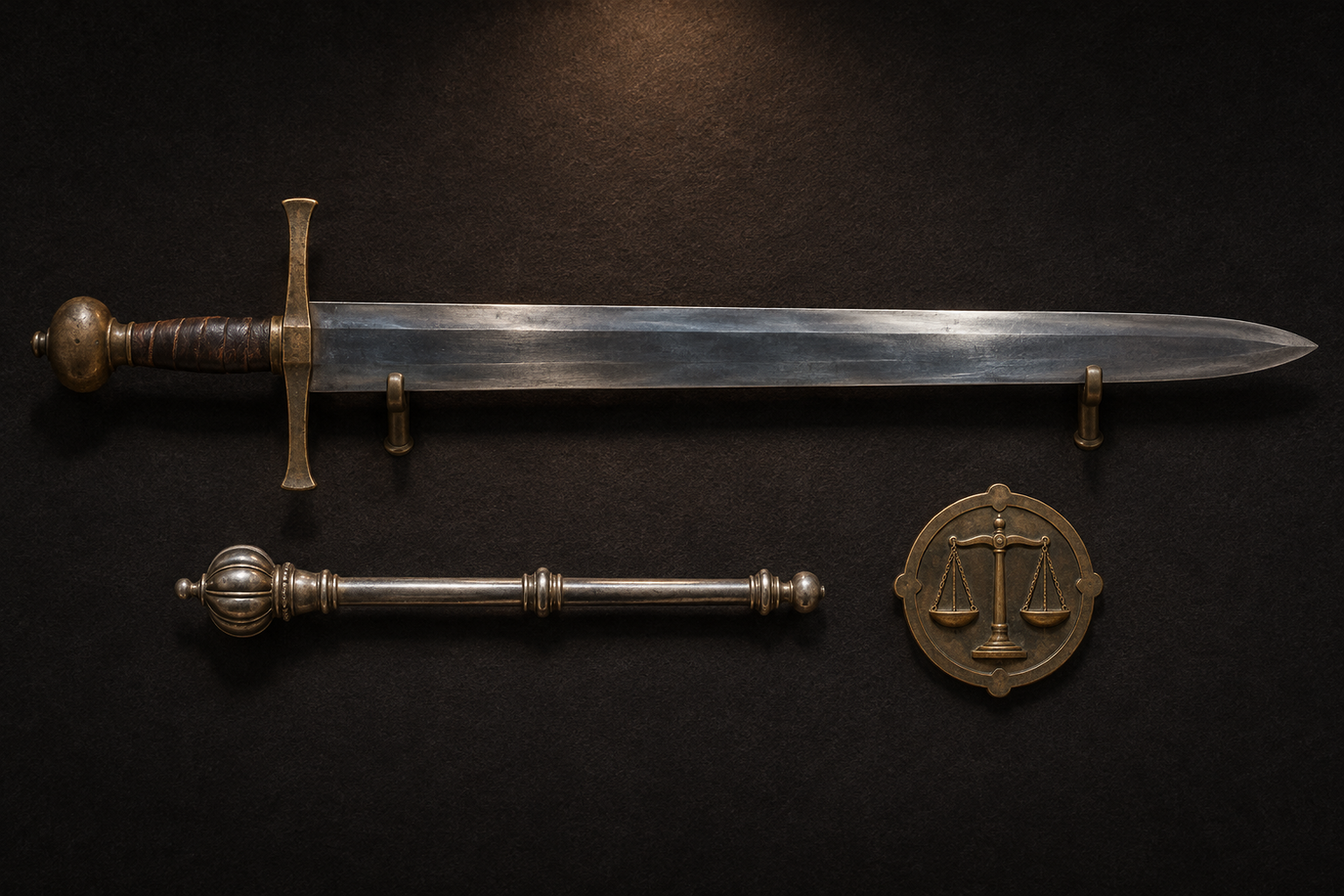
Following the decline of public beheading as a common form of execution, the Richtschwert was often repurposed as a symbolic object. Many were kept as historical mementos, representing the power once held by the judiciary.
In modern museum displays, surviving Richtschwerter provide direct material evidence of how Early Modern authorities codified capital punishment and projected legal authority.
Cultural Depictions and Later Legends
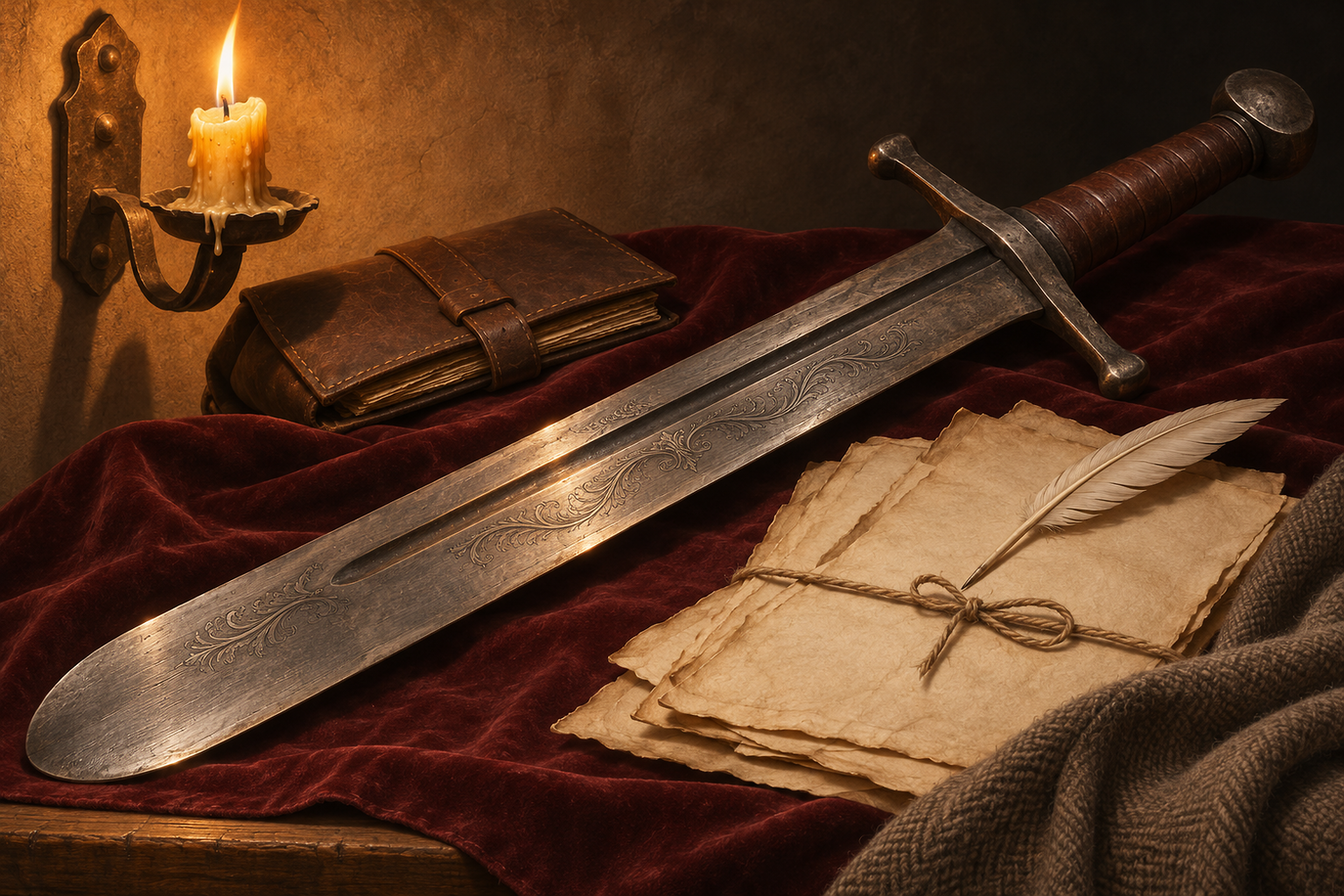
Over time, the Richtschwert has become a common motif in folklore and literature. Stories of 'cursed' swords or executioners with preternatural speed have often obscured the mundane reality of the professional executioner's work.
These legends often conflate the ceremonial usage of the sword with its functional role, turning the executioner into a figure of dark mystery rather than an administrative employee of the state.
Comparisons with Other Execution Tools
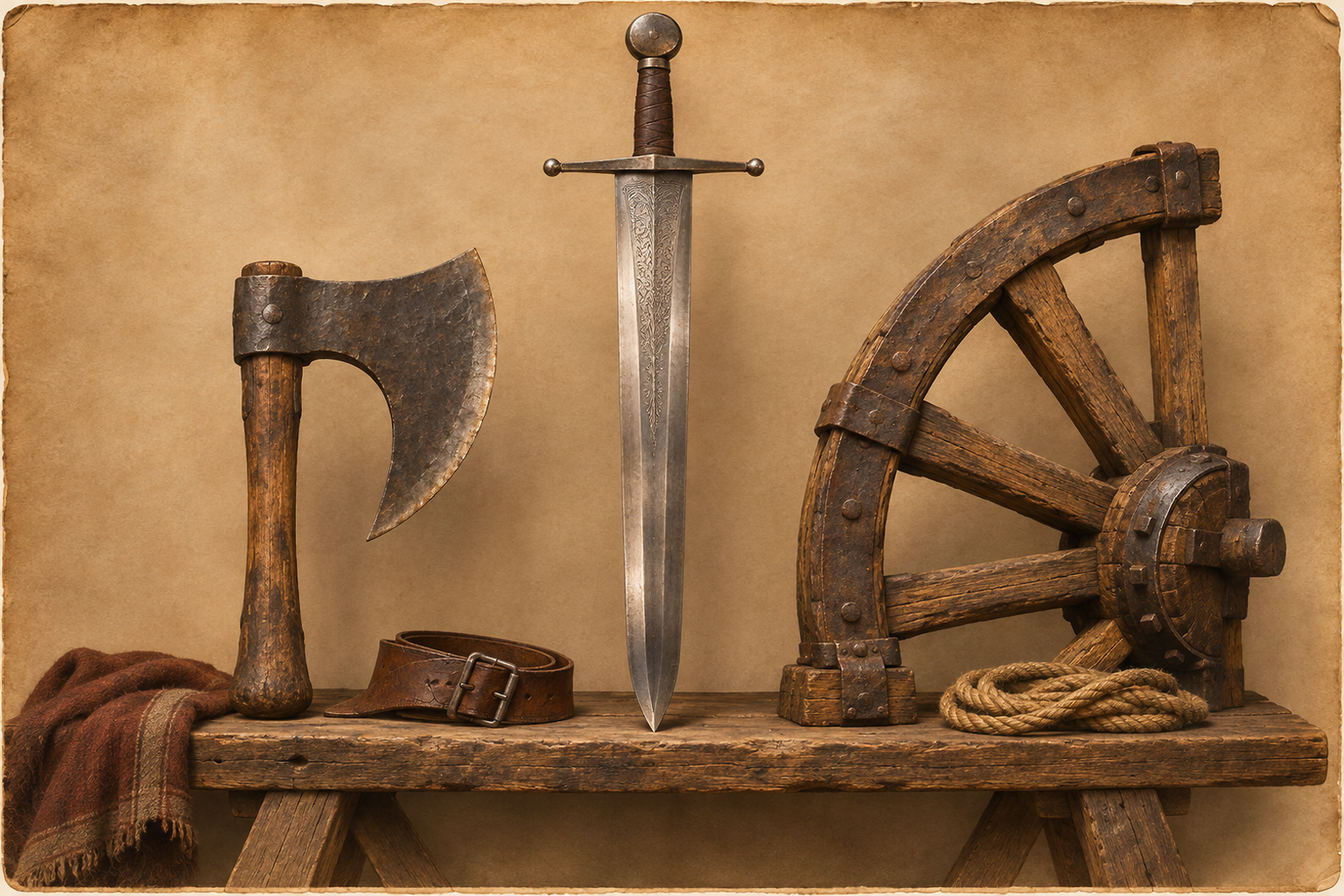
The Richtschwert was only one of many methods of capital punishment. In many jurisdictions, it coexisted with the breaking wheel, the gallows, and eventually the guillotine, with each method often reserved for specific classes of criminals.
The sword was frequently viewed as a more 'honorable' form of execution, reserved for those of higher status, whereas other methods were considered more ignominious.
Materiality and Metallurgy
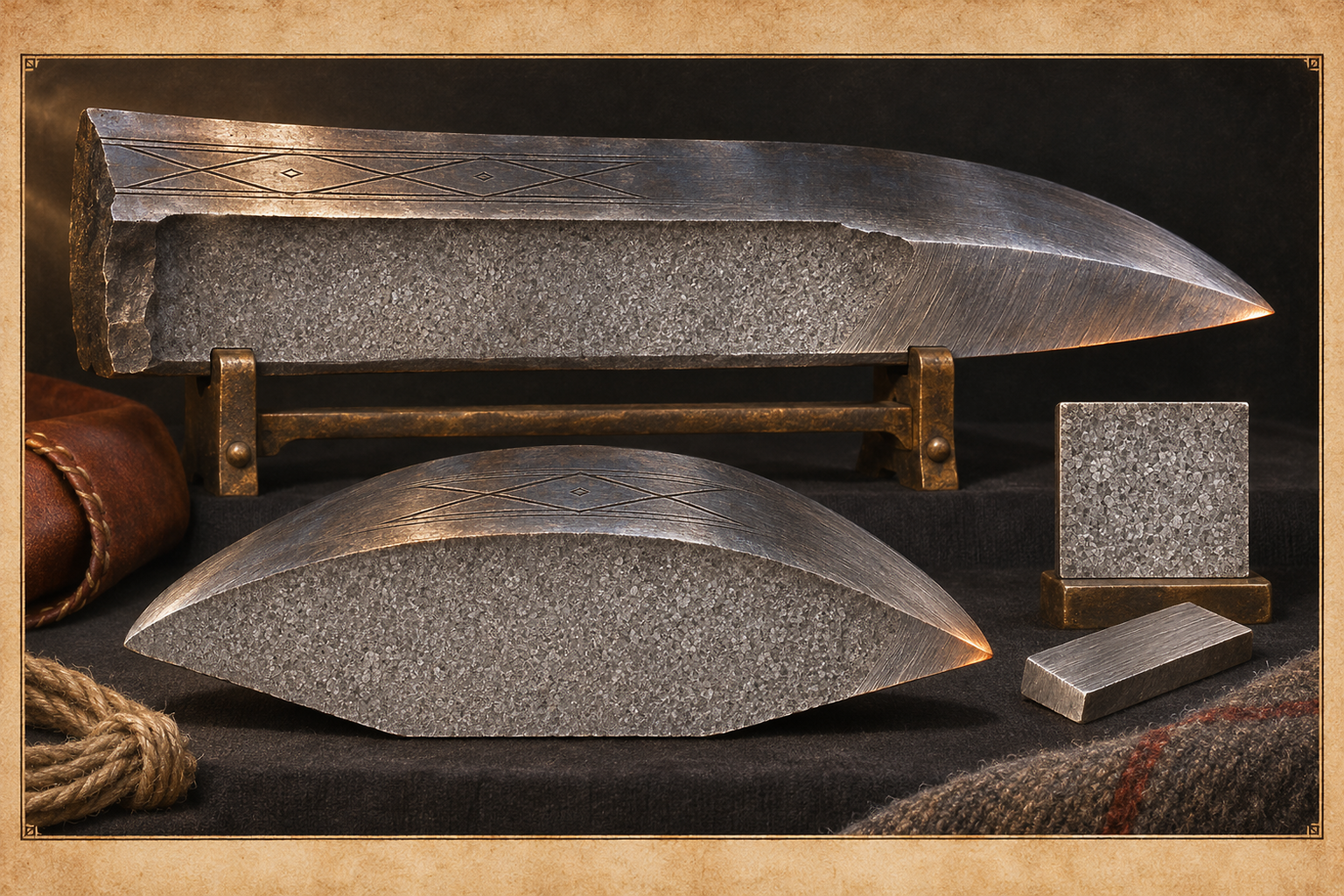
The metallurgical composition of the Richtschwert is distinct from the pattern-welded blades of earlier centuries. By the 16th century, improved refining techniques allowed for a more consistent, homogeneous steel.
This allowed for a simpler, thicker blade that could withstand the impact of repeated use without the complex tempering requirements of a thin, flexible sword meant for combat.
The Impact of Judicial Reform
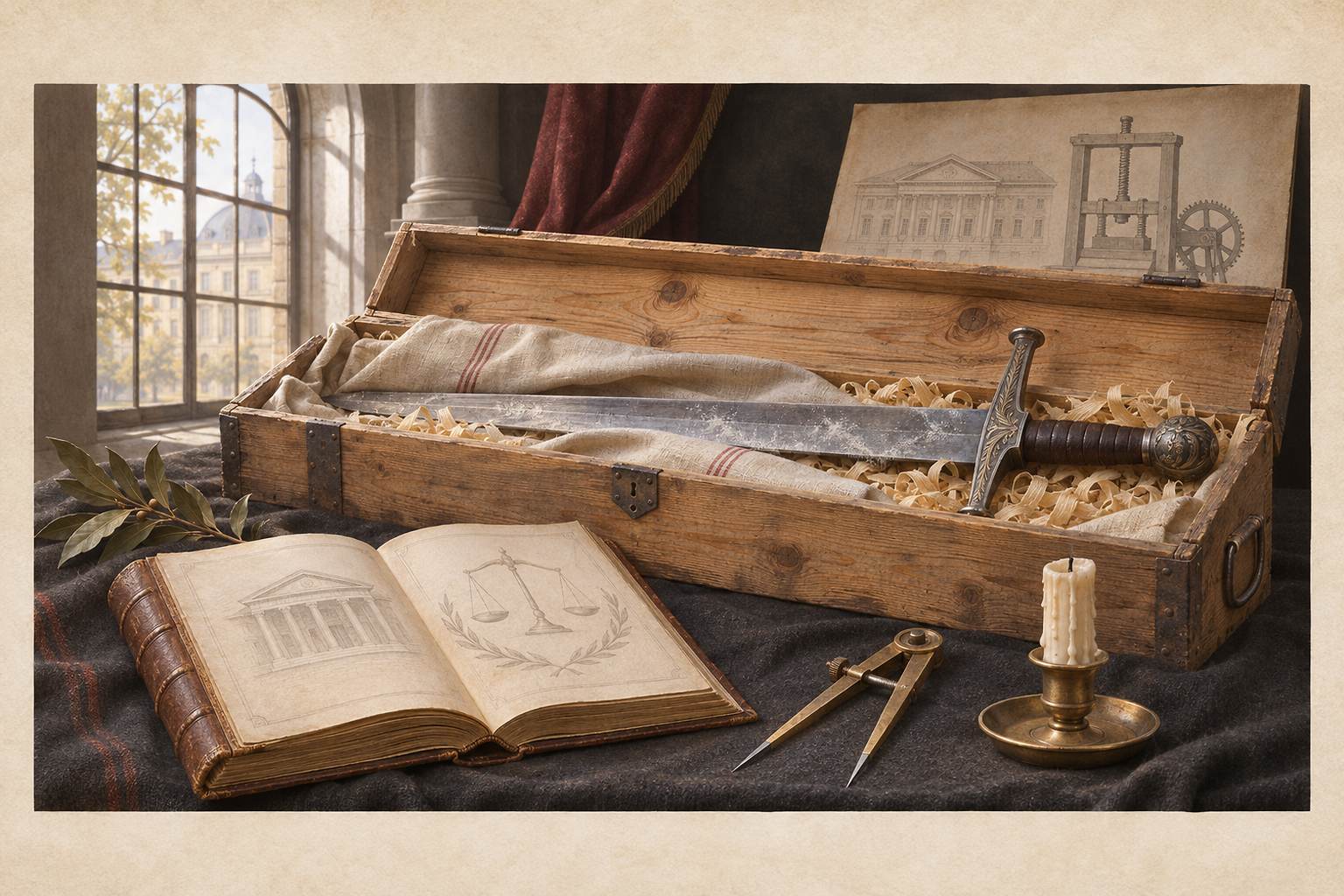
The eventual phasing out of the Richtschwert in the late 18th and 19th centuries was part of a larger shift in European jurisprudence. As Enlightenment ideals began to influence legal systems, the public and ritualized nature of executions came under scrutiny.
The transition toward private, mechanical forms of execution reflected a desire to remove the 'human' element from the act, distancing the state from the visceral reality of the executioner's sword.
Preservation and Conservation Challenges

Conserving these blades presents unique challenges, particularly regarding the preservation of the original engravings. Corrosion can easily obscure delicate inscriptions, requiring specialized intervention to ensure they remain legible.
Curators must also navigate the grim associations of capital punishment while preserving the swords as significant technological and legal artifacts.
Final Reflections on the Archive of Justice
The Richtschwert serves as a silent, tangible record of the evolution of the state's monopoly on violence. By examining these blades, we gain insight into the ways in which historical societies attempted to codify, justify, and perform their most extreme legal actions.
Ultimately, the surviving blades show how Early Modern justice was staged, enforced, and recorded through specialized material tools.
Further reading
Follow the sources to examine the object and its historical context.
The Executioner's Sword in History and LegendExternal reference · Opens in a new tab