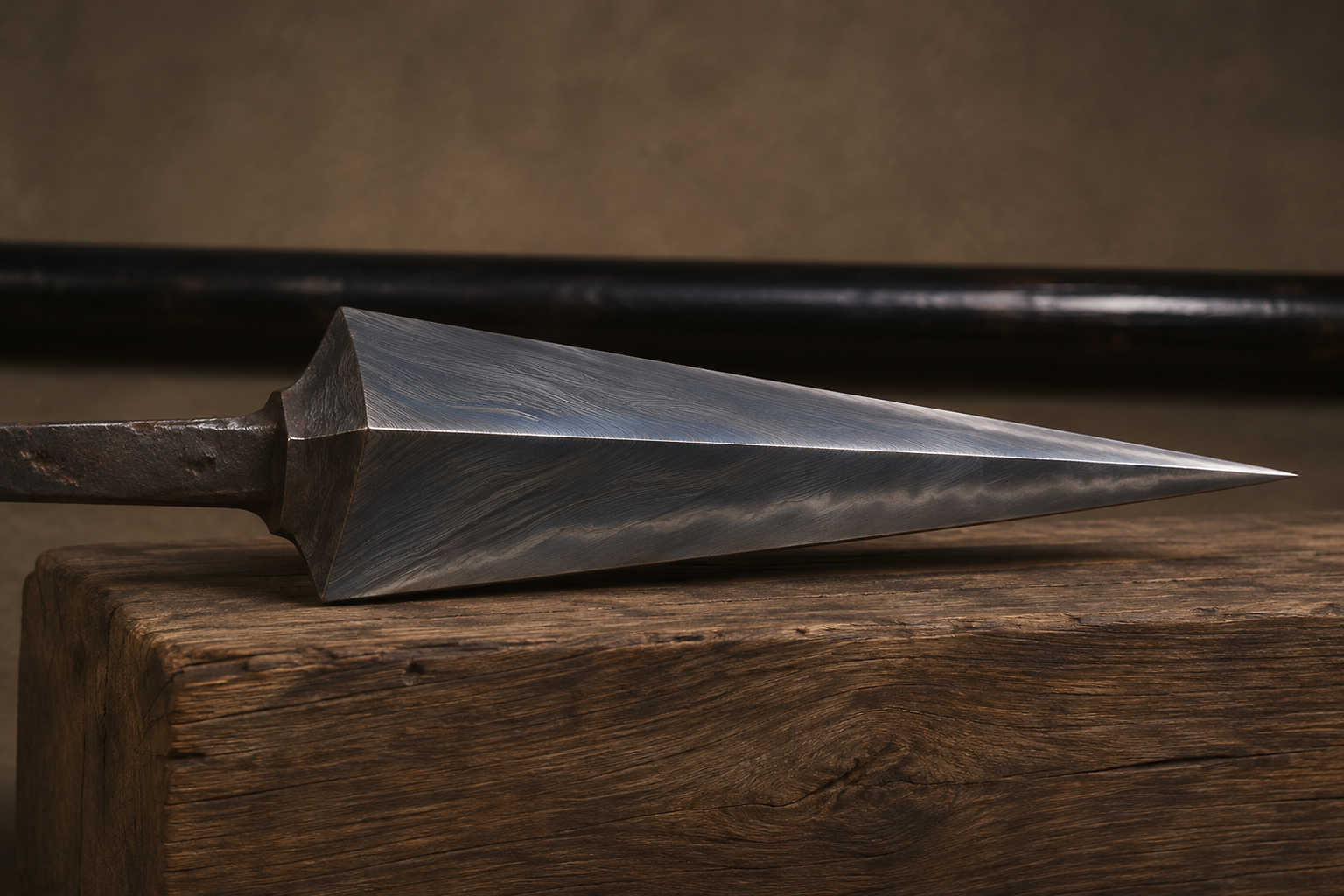
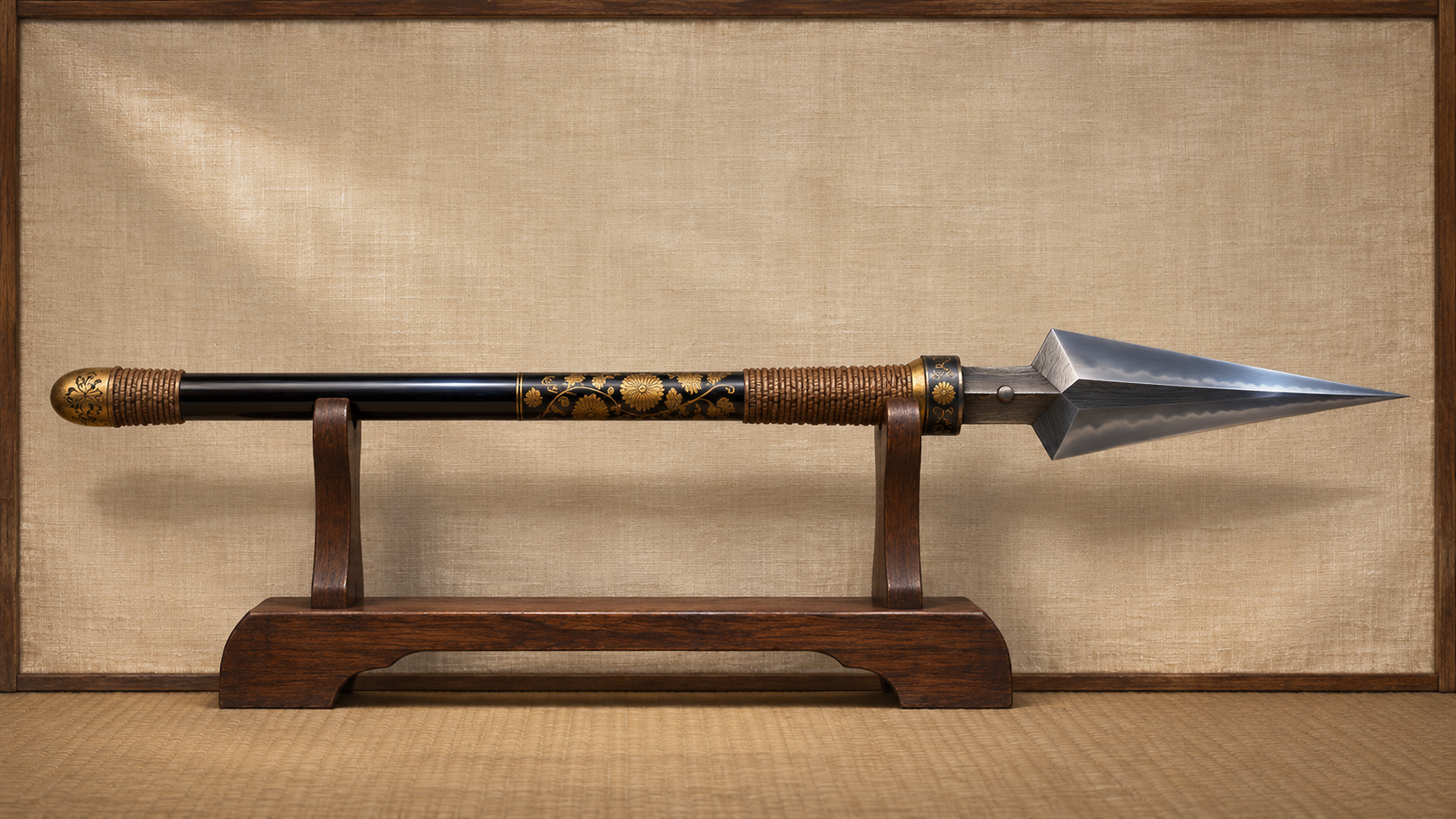
A Sengoku-period sankaku yari blade appears less like a traditional sword and more like a chiselled metal stake. Forged with a thick, three-sided profile and a long, tapering tang, this weapon dispensed with the broad, slashing curves of earlier polearms in favor of absolute structural rigidity under impact. Mounted upon lengthy timber shafts, tens of thousands of these heads formed the bristling perimeter of late-sixteenth-century Japanese infantry formations.
The Sengoku Shift to Collective Thrusting Weapons
Before the middle of the fifteenth century, elite warfare in Japan placed high value on personal archery, mounted shock actions, and wide-sweeping cuts delivered with the curved naginata. These sweeping weapons required generous clearance to swing effectively. As military commanders recognized that territorial dominance depended on numbers, army sizes expanded rapidly. Clashes between small bands of mounted samurai gave way to tight ranks of commoner foot soldiers, the ashigaru.
Packed in contiguous ranks, foot soldiers could not safely swing broad, curved blades without endangering their companions. The polearm had to change from a cutting tool to a thrusting instrument. The earliest straight spears, known broadly as su yari, retained flattened diamond cross-sections derived from earlier daggers, but these proved vulnerable to bending when striking contemporary iron defenses. By the high Sengoku period, weapon smiths had re-engineered the spearhead into the sankaku yari, a thick, three-sided armor piercer that traded all cutting versatility for immense longitudinal strength.
Geometry of the Triangular Spike
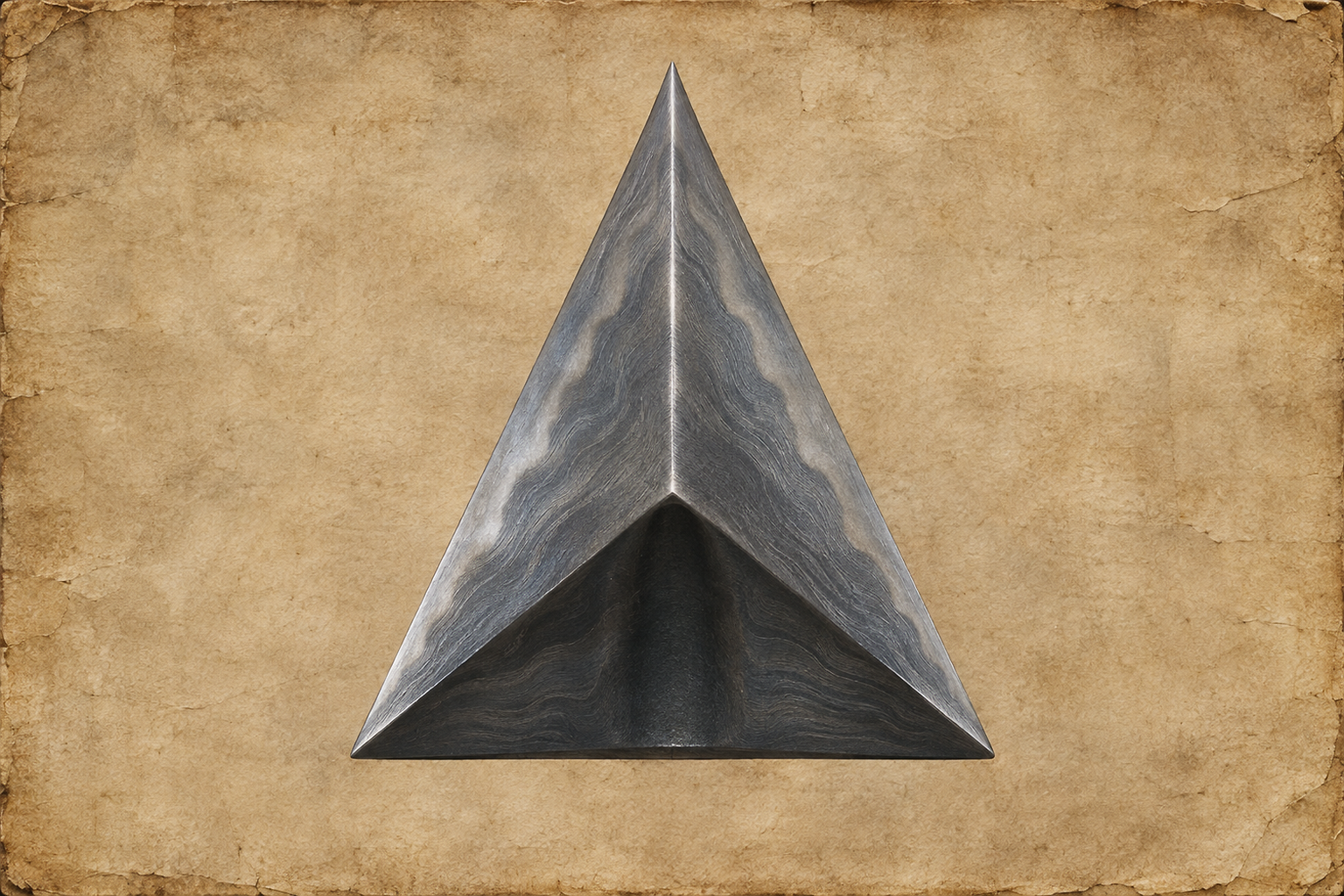
The cross-section of a sankaku yari resembles a narrow triangle. The blade possesses three longitudinal corners and three distinct faces: two beveled front planes meeting at an acute upper ridge, and a broader, flat or shallowly channeled back plane. This channeled reverse face, sometimes lacquered in vermilion, reduced unnecessary mass while preserving perpendicular stiffness along the thrusting axis.
Unlike a double-edged flat blade that can flex under side pressure, this triangular truss construction prevents the weapon from buckling upon meeting solid resistance. When driven into plate armor, wood barricades, or hardened leather, the force converges entirely on a thick, pyramidal point. The trailing edges of the triangle act as widening wedges that force apart split iron or thick textile paddings without binding within the wound.
Tang Mounting and Longitudinal Shock
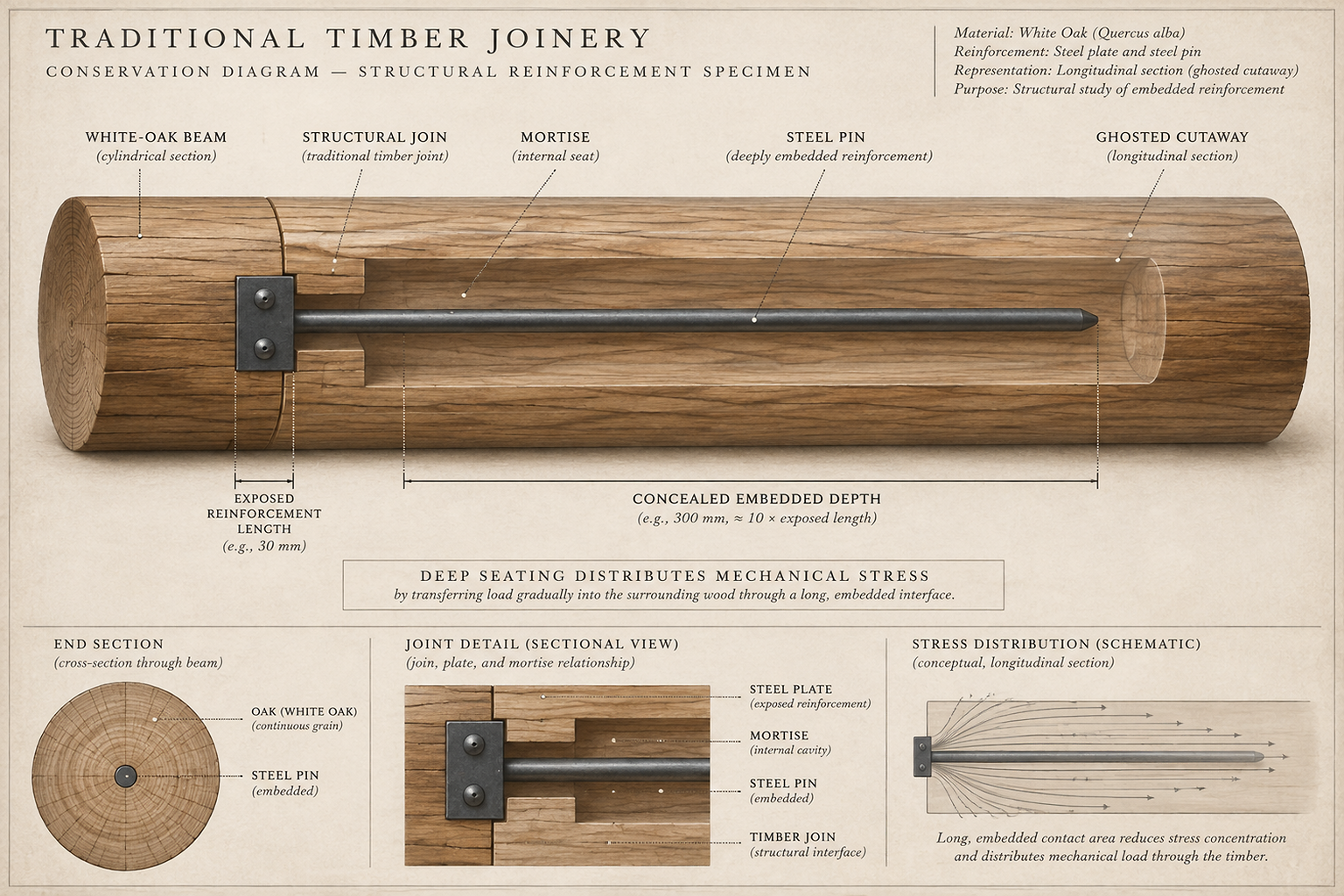
The prevailing Japanese method of securing a spearhead relied on a long internal tang (nakago). In many sankaku yari, the unhardened tang measures as long as, or significantly longer than, the exposed working blade. A blade of twenty centimeters might feature a tang extending thirty to forty centimeters deep into the timber core of the shaft.
This deep insertion served a vital mechanical purpose. When a running infantry line planted spear butts against a cavalry charge, the kinetic energy transferred through the tip was immense. A short mounting would act as a lever, shearing the head off or instantly splitting the wood. The elongated nakago distributed the violent bending moments along more than a foot of timber, allowing the dense grain of the haft to absorb and disperse the energy throughout its length.
The Socketed Alternative: Fukuro Yari
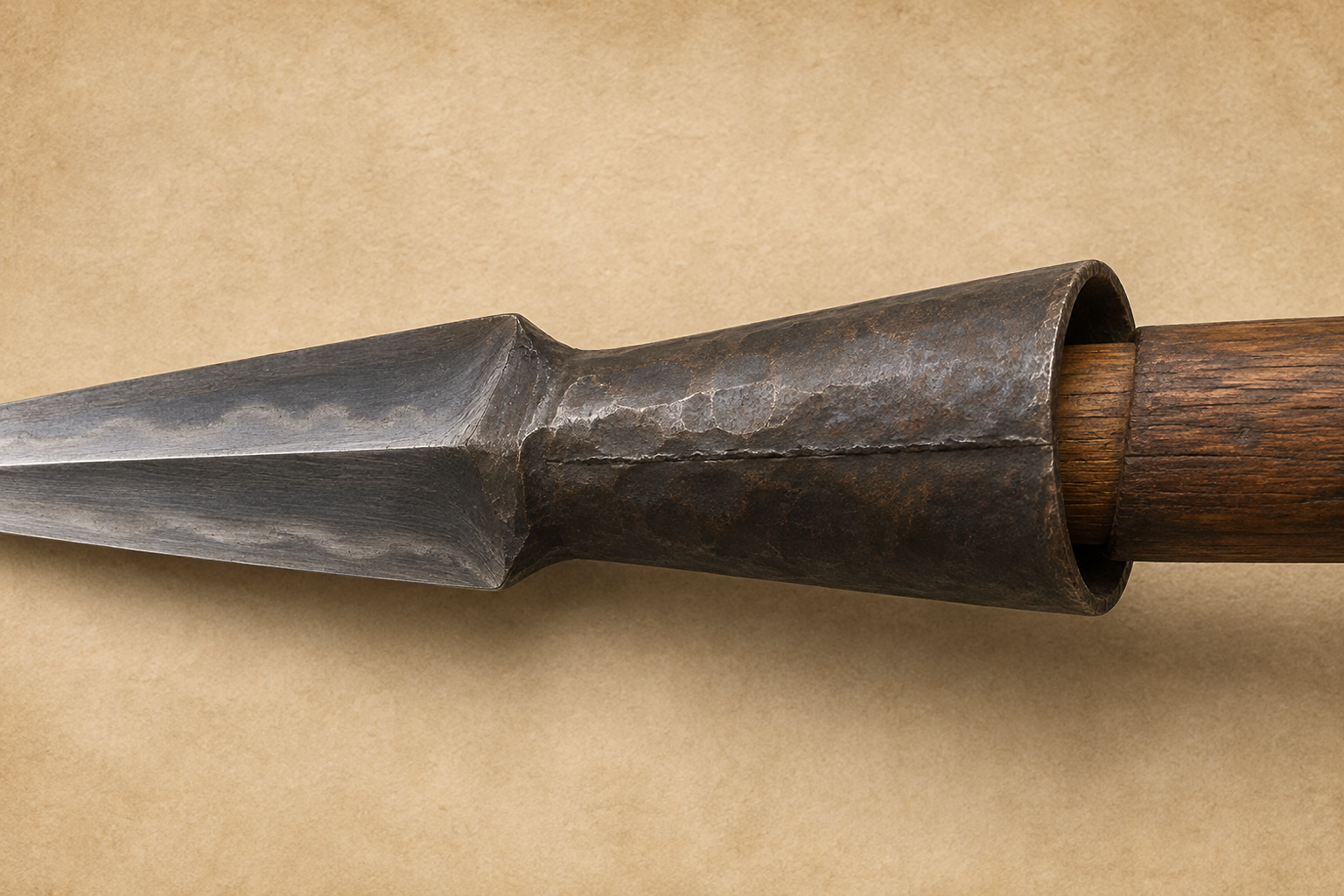
While deep tangs dominated central Japanese arsenals, smiths also produced socketed spearheads known as fukuro yari. Rather than terminating in a solid iron rod that disappeared inside the wood, the base of a fukuro yari was hammered into a hollow conical sleeve. The shaft's tip was shaped to a matching taper and driven into this socket, held fast by friction and small transverse retaining nails.
Forging a conical socket required hammer-welding a flat sheet of steel back onto itself around an iron mandrel. If the weld seam was poor, lateral stress could tear the socket open along its joint. However, socketed heads offered an immense logistical advantage in the field: if a spear shaft fractured behind the head during fighting, an armorer or soldier could clear the broken wood, whittle the splintered shaft to a crude taper, and drive the head back into place over a campfire in minutes, restoring a functional weapon without delicate internal boring.
Munition Forges: Kazuuchimono Production
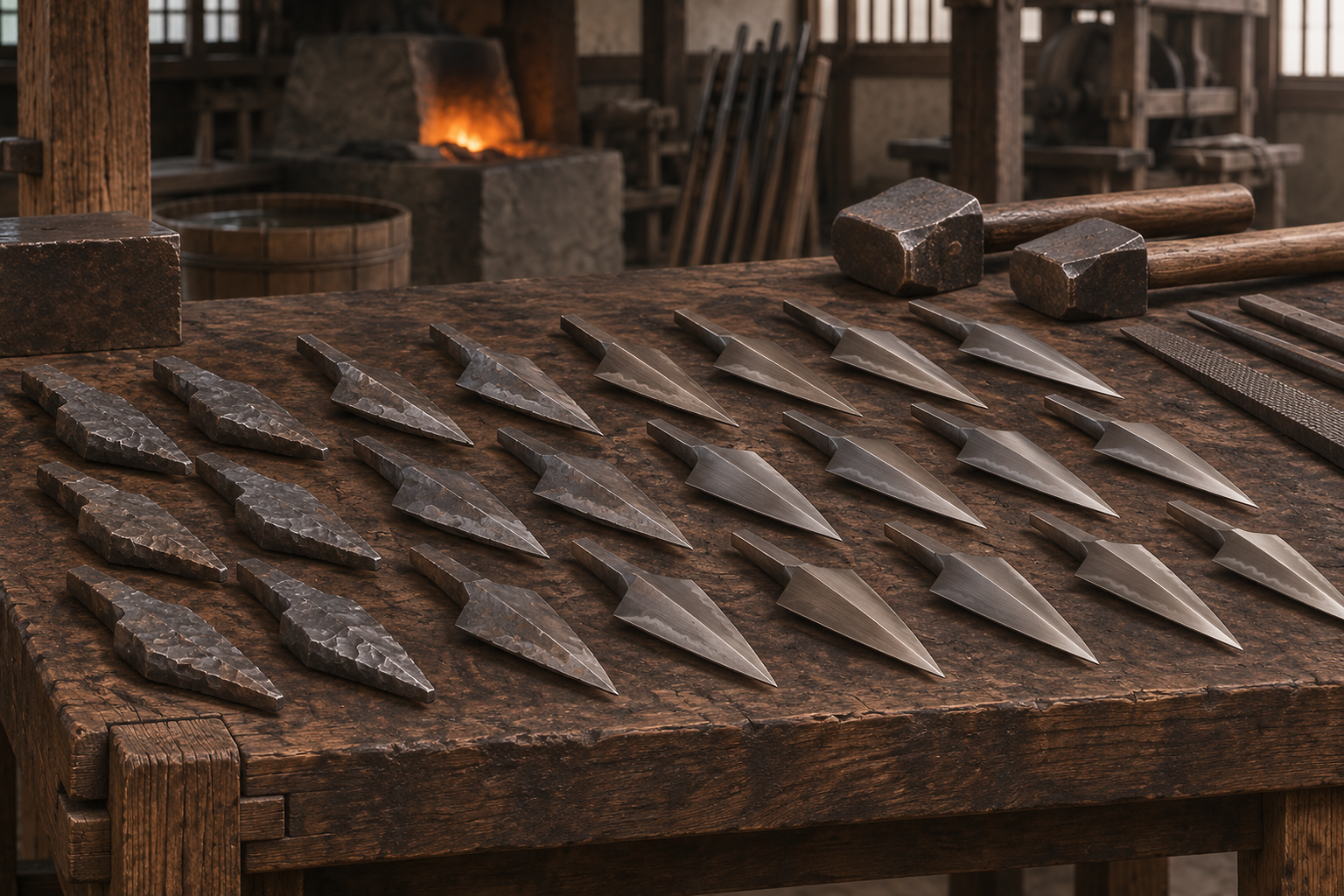
The insatiable demand for weapons during the late sixteenth century transformed Japanese metallurgy. Regional forging centers, most notably the Mino tradition based around Seki and the Bizen tradition along the Yoshii River, adapted their workshops for mass manufacture. Munition-grade blades produced in batches were known as kazuuchimono or mass-ordered products, distinct from individual commissions.
Smiths simplified the cross-sectional contours of sankaku yari to streamline production. Apprentices and lower-tier craftsmen hammered out blanks using heavy hand sledges, shaping the triangular facets over anvils before finishing them with coarse draw-filing. While master smiths rarely signed these rapid-turnaround blades, the steel remained functional: folded high-carbon steel formed the hardened edges and point, forged over a softer, more resilient iron core to resist catastrophic snapping.
Differential Hardening on Three Facets
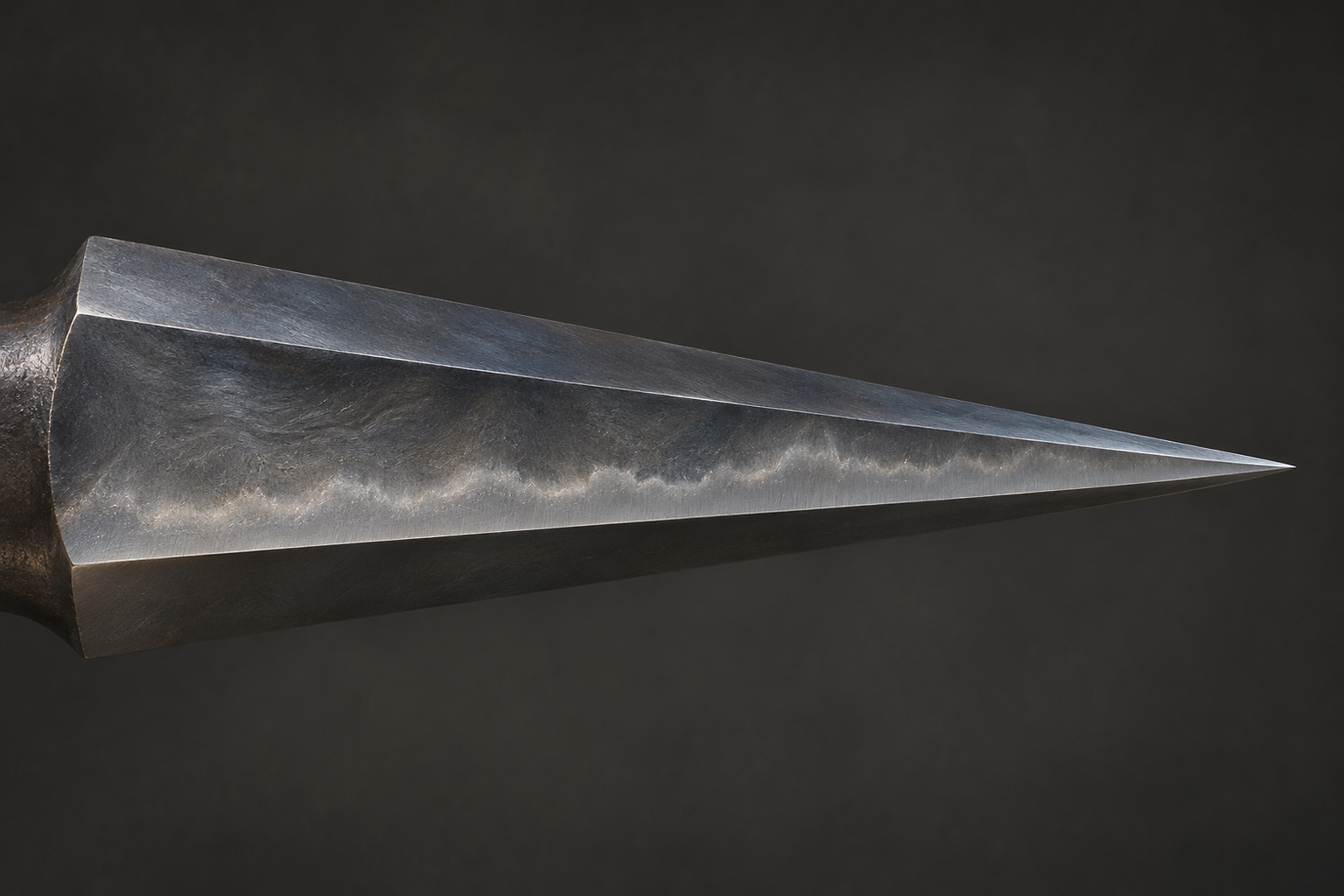
Like Japanese swords, high-quality spearheads underwent differential heat treatment. The smith applied an insulating clay mixture (yakibatsuchi) thickly along the spine and tang, leaving only the primary edges and point exposed or thinly coated. When quenched into water from critical red heat, the uninsulated edges formed hard martensite, visible as a distinct temper line (hamon).
On a sankaku yari, this thermal treatment presented an exacting challenge. Because the weapon possessed three distinct longitudinal corners rather than two flat edges, uneven contraction during the quench could easily pull the blade out of true, twisting the triangular spike into a corkscrew. Smiths had to regulate the water temperature and immerse the blade perfectly straight along its axis to prevent destructive thermal shock from warping the heavy point.
The Shaft: Timber Selection and Nagae Dimensions
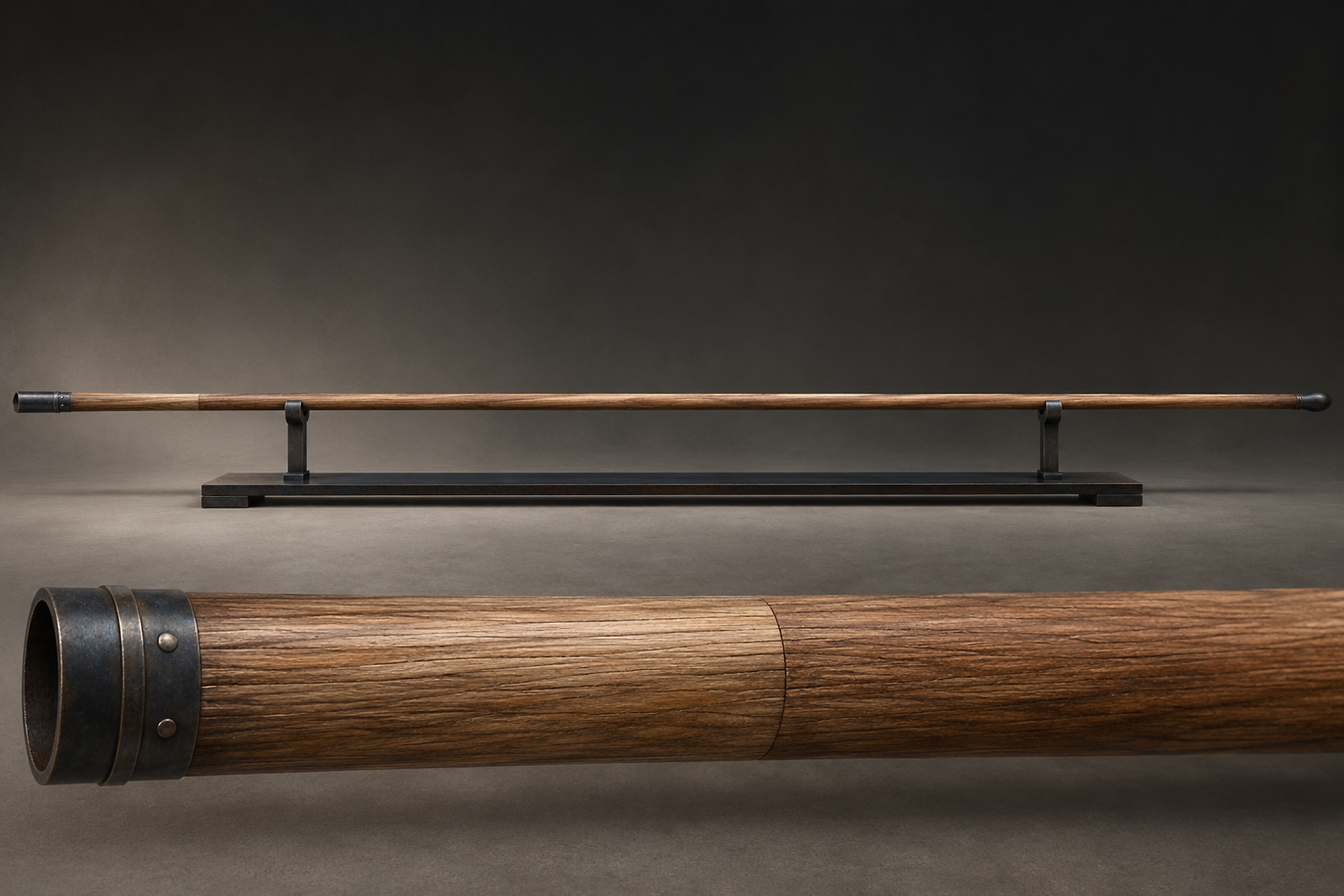
A spearhead was only as lethal as the lever behind it. For ashigaru pikes, designated as nagae yari, commanders demanded exceptional lengths. During the reign of the Oda and Toyotomi administrations, standard infantry spear shafts reached between 4.5 and 5.6 meters, vastly outranging the shorter three-meter spears traditionally used by individual samurai on foot or horseback.
To prevent such a lengthy pole from drooping uncontrollably under its own weight, armory craftsmen selected Japanese white oak (shirakashi) or occasionally red oak (akagashi). The wood had to be seasoned over years to prevent warping. Master woodcrafters selected straight-grained heartwood, split rather than sawn, ensuring the natural structural fibers ran uninterrupted from the grip to the blade socket without weak exit grain.
Reinforcing the Throat: Ferrules and Lacquer
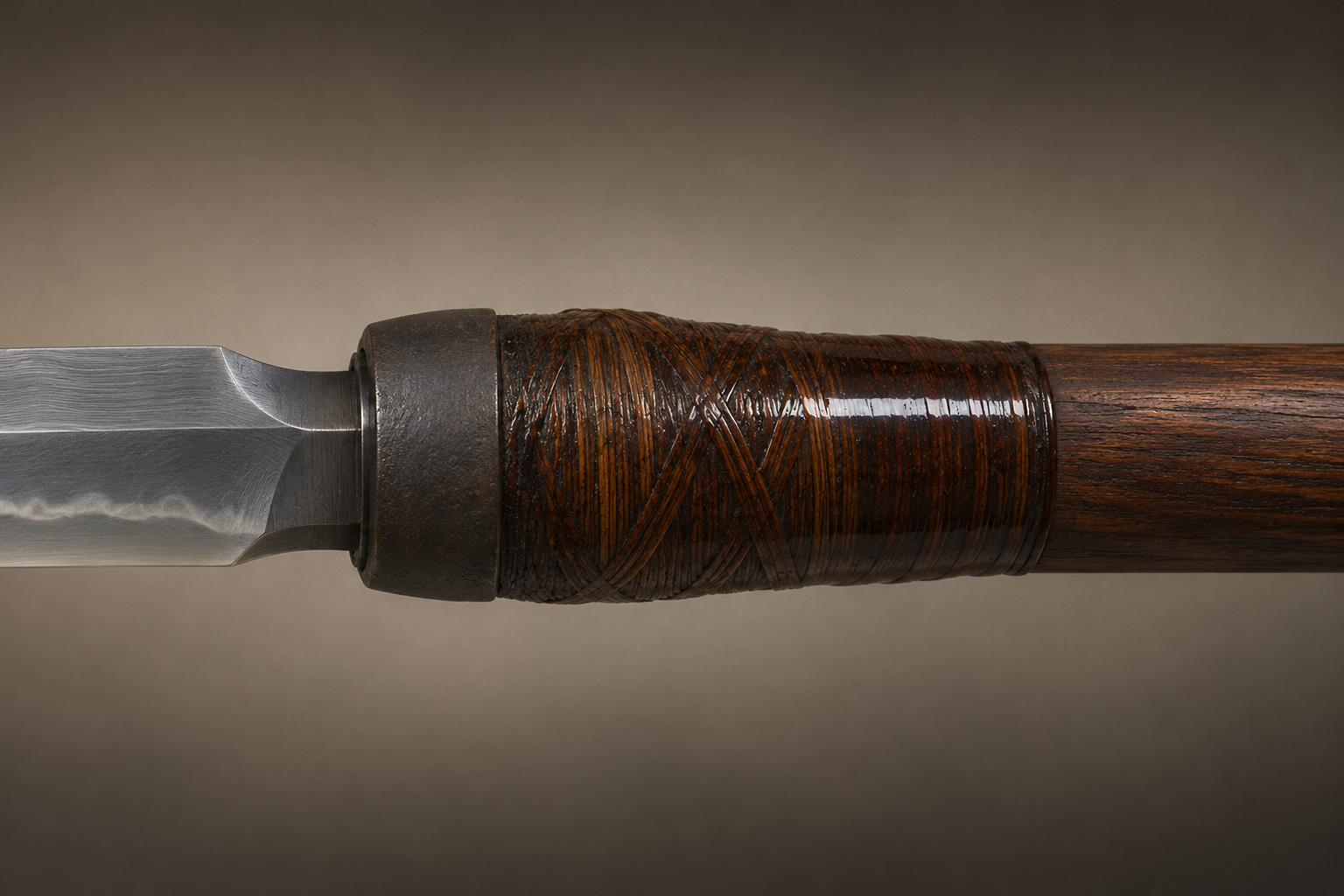
The vulnerable nexus of any polearm lies where the steel enters the wood. Left unprotected, the perpendicular thrust against a breastplate would drive the tang backwards like a wedge, splitting the shaft end-to-end. Armory workers countered this mechanical weakness through an elaborate system of external hoop reinforcement.
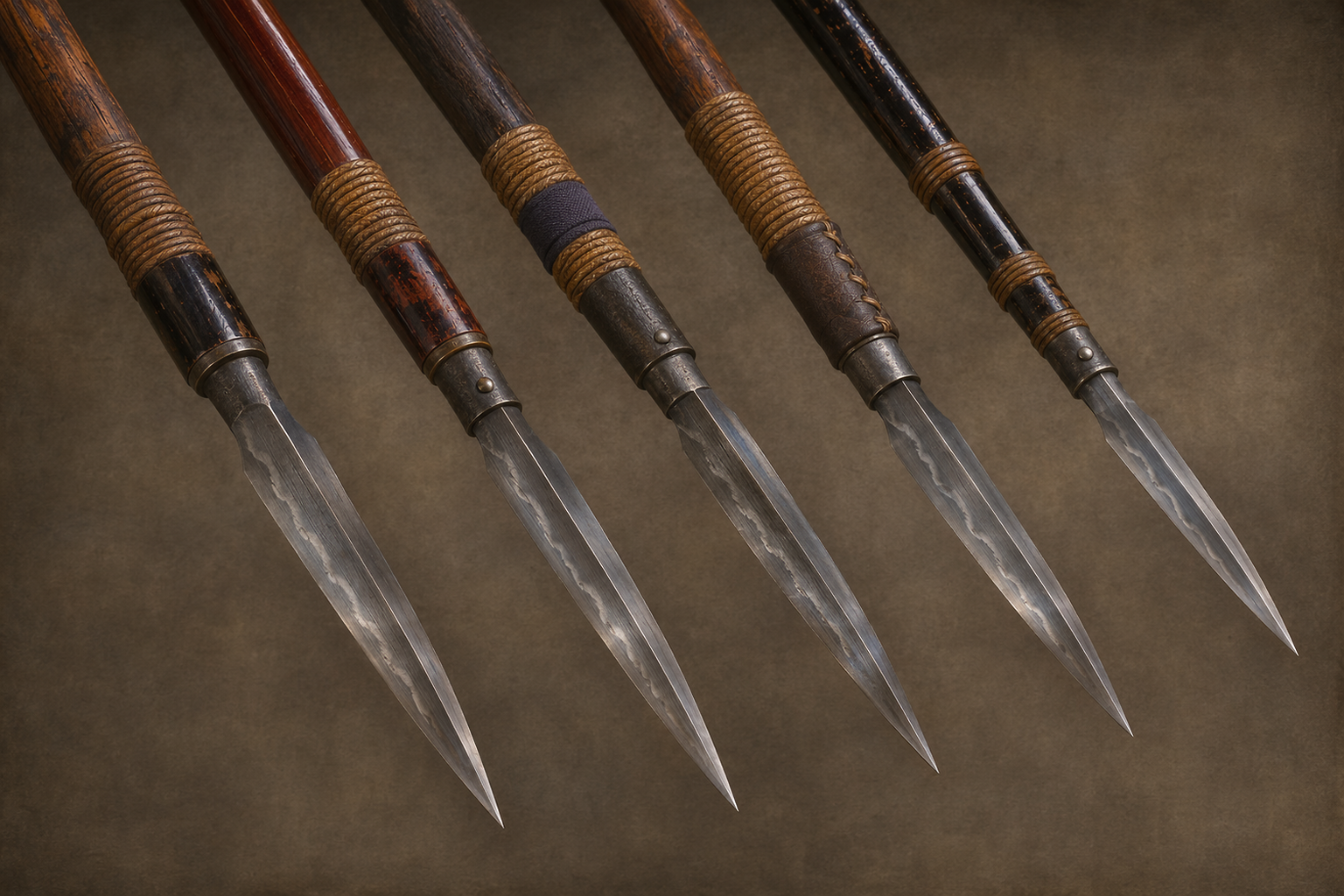
The forward wooden socket was grooved and tightly bound in rattan cane, hemp cord, or copper wire, a technique termed dankise or to-maki. Over this binding, craftsmen slid a heavy iron or cast copper collar called the kuchi-gane. The entire assembly was then repeatedly painted with natural urushi lacquer. This finish bonded the cord fibers into an impervious composite sheath, sealing moisture out of the interior mortise to prevent the hidden tang from rusting and the oak from rotting during rainy campaigns.
The Internal Lock: Habaki and Mekugi
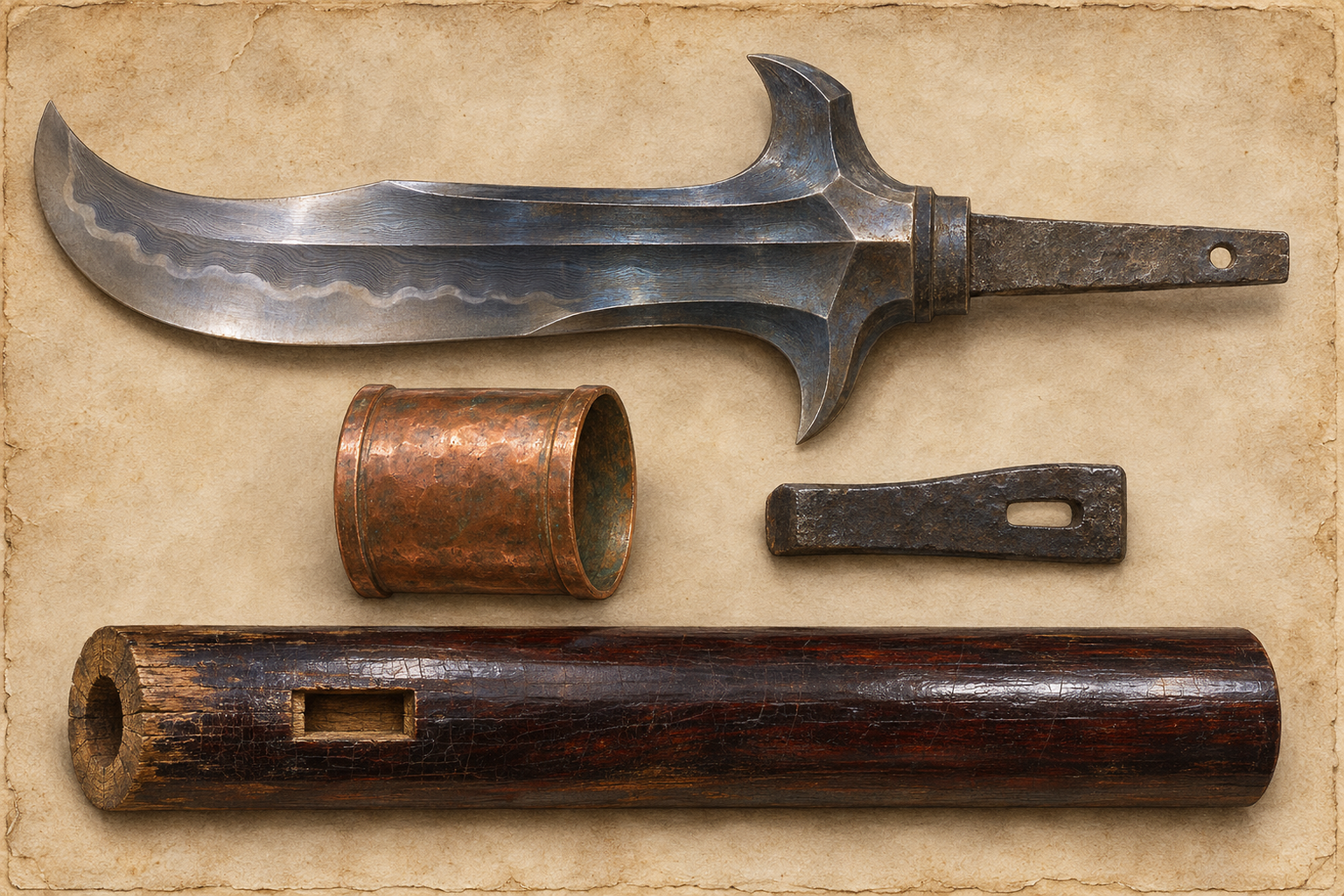
A tang-mounted sankaku yari was locked into its wooden housing by an interlocking assembly of specialized hardware. A thick copper or brass collar, the habaki, was fitted snugly around the blade shoulder just above the tang. This collar seated against the metal mouth of the shaft ferrule, preventing the blade from sinking deeper into the wood under heavy longitudinal impact.
To stop the head from pulling free when extracted from a target, a transverse hole (mekugi-ana) was drilled through both the wooden shaft and the unhardened tang. Through this aperture went a retaining pin, the mekugi. While samurai swords often used flexible smoked bamboo pins, military spears intended for battlefield service frequently employed iron or horn pins, often riveted or covered by secondary copper bands to ensure the blade could never detach during violent tugging in the press of ranks.
The Butt Spike and Dynamic Balance
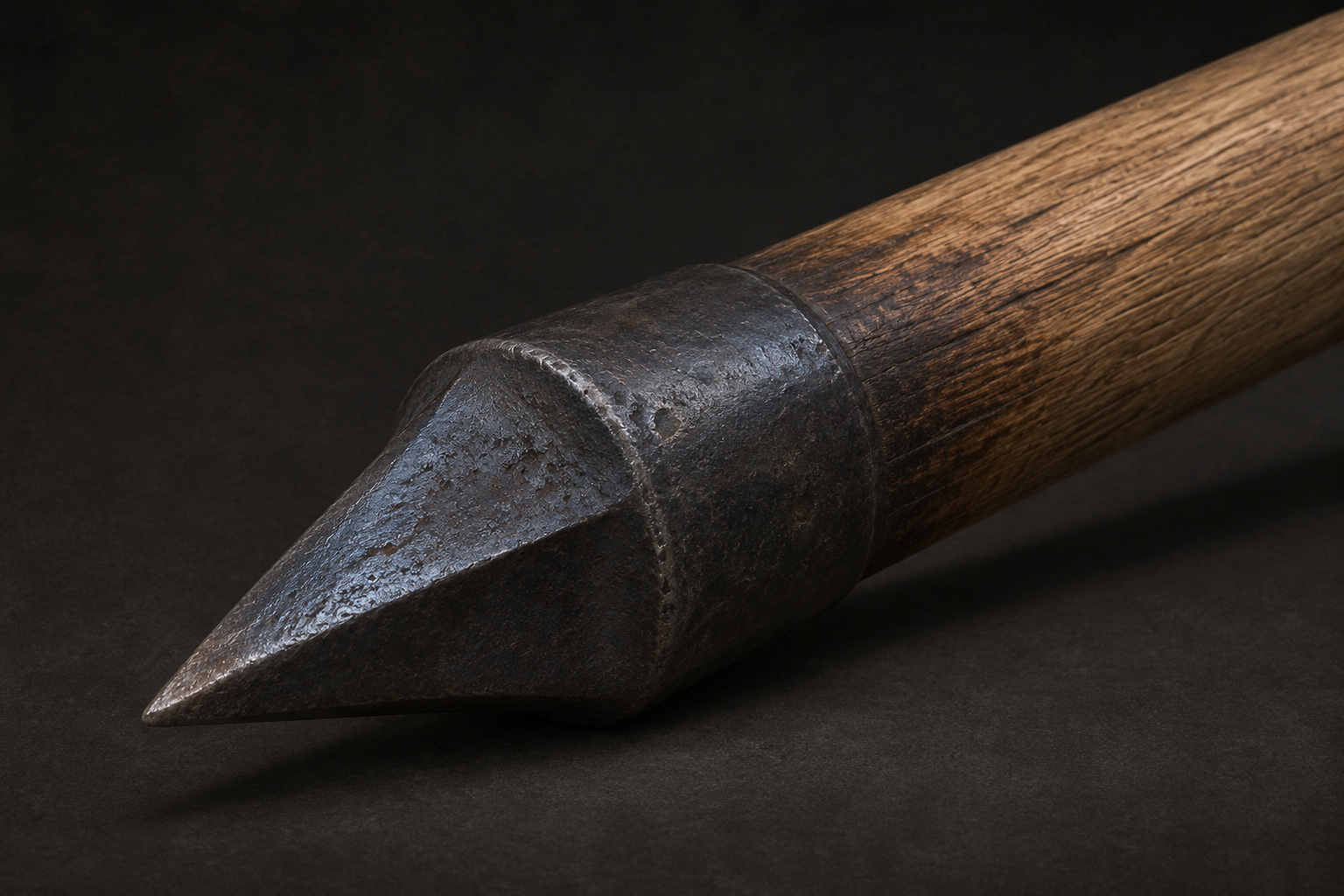
At the opposite terminal of the five-meter shaft sat the butt spike, the ishizuki. Forged of heavy iron, this component served three vital tactical functions. Mechanically, it provided a counterweight to the long steel blade and the reinforced throat at the front, shifting the center of balance back toward the wielder's hands and making rapid repositioning of the tip physically possible.
Practically, the ishizuki capped the base of the timber, keeping the dry grain out of muddy field soil where moisture would quickly induce rot. Tactically, it formed a secondary weapon. If a spear broke mid-shaft, the rear half became a functional club or short javelin; furthermore, in static defense, foot soldiers planted the pointed ishizuki firmly into the earth at an angle, transferring the impact of incoming cavalry directly into the ground rather than through the soldier's shoulders.
Tactical Realities: Striking Over Thrusting
Modern representations of pike formations frequently depict rigid phalanxes executing coordinated straight thrusts. While straight thrusting remained essential for penetrating individual armor plates, late Sengoku manuals such as the Zohyo Monogatari reveal that massed nagae yari units relied heavily on violent downward slapping strikes, known as tataki-yari.
Because an oak shaft exceeding five meters naturally whips when swung rapidly, an entire line of foot soldiers could bring down their spears in unison like flails. The heavy steel heads and reinforced metal ferrules crashed downward onto the helmets (kabuto) and shoulder guards (sode) of opposing formations. This concussive blow stunned opponents, dislodged helmet crests, severed lacings, and battered enemy spear tips to the earth, creating an open breach for the second rank to deliver fatal triangular thrusts.
Armor Interaction Against Tosei Gusoku
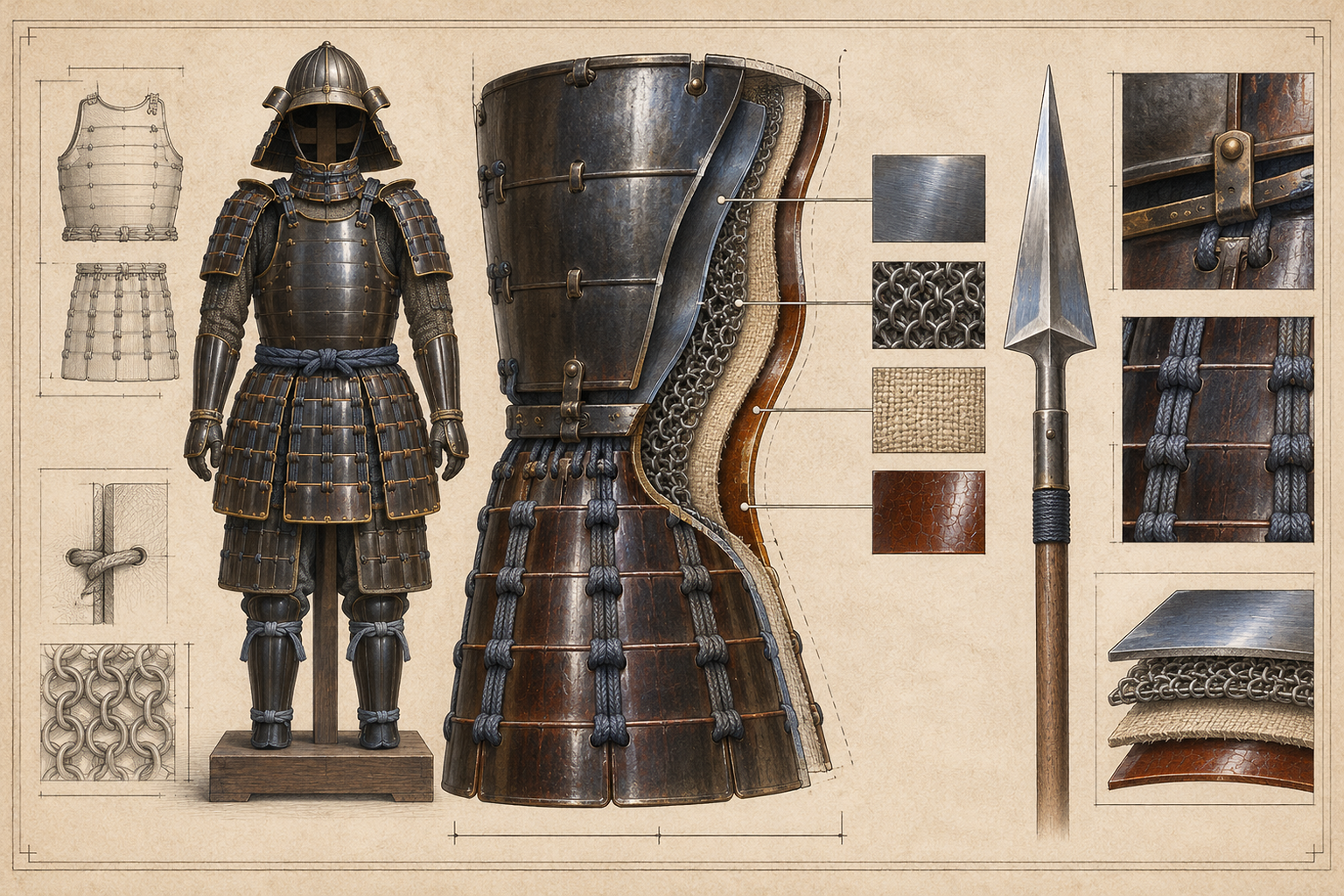
The emergence of the sankaku yari occurred in direct parallel with the development of tosei gusoku, the "modern armor" of the late sixteenth century. These suits replaced delicate silk-laced scales with solid, riveted iron plates capable of deflecting matchlock lead balls at distance and stopping traditional cutting swords entirely.
Against these solid iron breastplates, broad or flexible cutting edges glanced off rounded surfaces or buckled on impact. Japanese armorers developed the thick triangular spike to withstand heavy longitudinal shock without bending, giving massed foot formations an implement capable of either bursting through thinner metal defenses or finding seams between articulated plates.
Spearmen aimed especially for vulnerable gaps where armor plates met. Common targets included the throat beneath the neck guard (nodowa), the unarmored opening beneath the armpit, and the space between the hanging thigh skirts (kusazuri). Penetrating these seams did not require splitting heavy chest plates; driving a rigid chisel point into underlying mail (kusari) or severing defensive lacings disabled an opponent immediately.
The mechanical design solved three tactical problems simultaneously:
- Concentrated kinetic force at a narrow, unyielding chisel tip capable of cracking iron plate or severing chain links.
- Slender overall profile that bypassed overlapping defensive plates to target vital, unarmored gaps at the neck and joints.
- Non-jamming cross-section that prevented the blade from locking in bone or sheet metal during rapid rank maneuvers.
Arsenal Management and Clan Mobilization
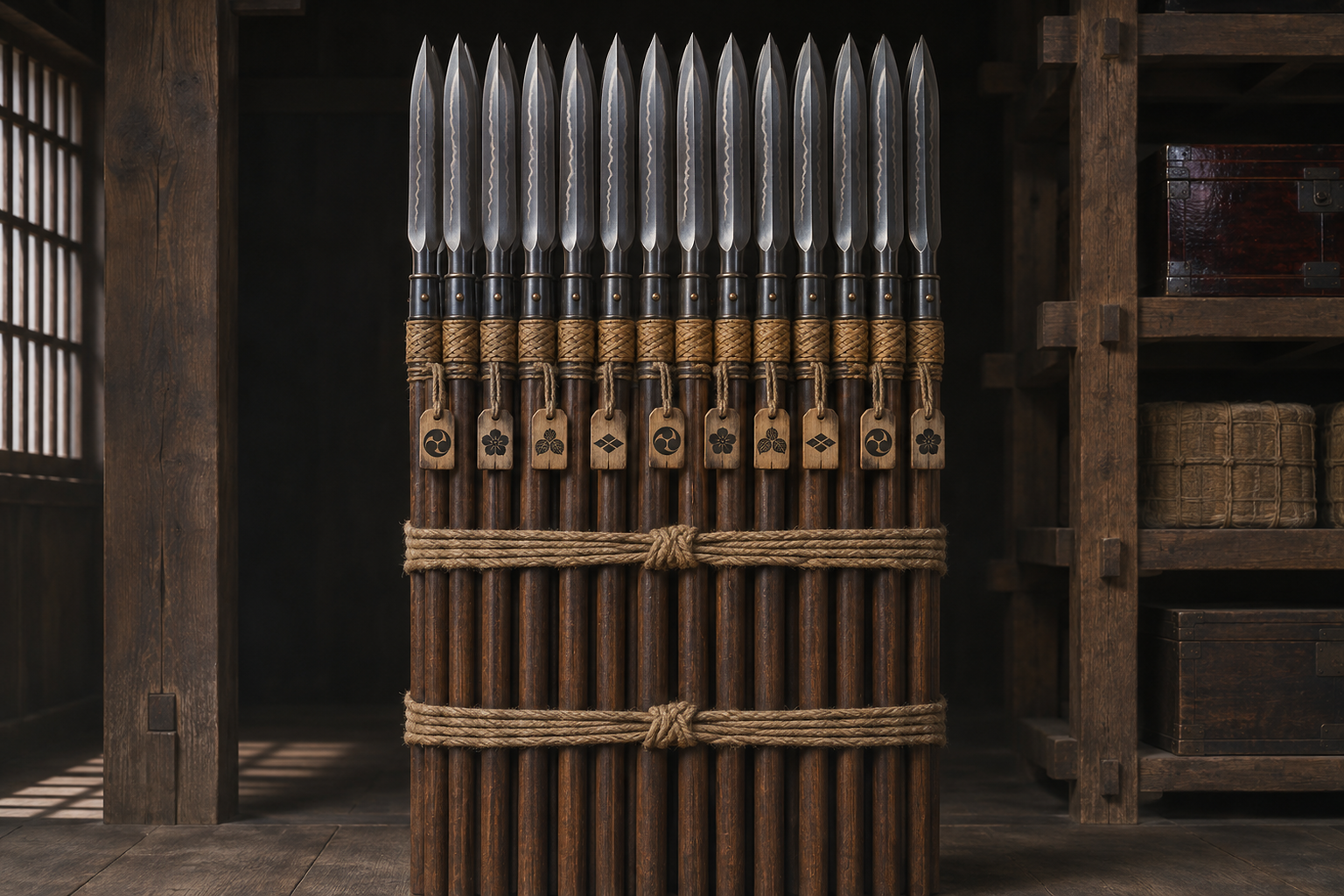
In a major daimyo domain, infantry spears were not the personal property of the common soldiers who carried them; they were state armory capital. Daimyo such as Oda Nobunaga, Uesugi Kenshin, and Tokugawa Ieyasu maintained expansive castle storehouses (buki-gura) packed with hundreds of identical polearms arranged in bundles called soku.
These munitions were marked with clan crests (mon) or distinctive colored lacquer wraps near the ferrule, enabling field officers to distinguish friend from foe amidst battlefield confusion. Standardizing tang dimensions and shaft diameters allowed armory blacksmiths and carpenters to service damaged weapons en masse, ensuring that hundreds of replacement heads could be fitted into generic pre-cut shafts during rapid troop mobilizations.
The Transition to Peace and Edo Afterlife
Following the siege of Osaka Castle in 1615 and the formal closure of the warring era under the Tokugawa Shogunate, the tactical role of the collective long pike evaporated. Peasant levies were disbanded, leaving weapons strictly in the hands of the samurai class. The unwieldy five-meter nagae yari had no place in peacetime domestic policing or street combat.
Massive stocks of sankaku yari were cut down, their shafts reduced to manageable lengths between two and two-and-a-half meters. Highly polished su yari and sankaku yari became prestigious escort weapons carried before lords during alternate-attendance (sankin-kotai) processions to Edo. The weapon transformed into an art object, stored in scabbards wrapped in ray skin, mother-of-pearl, or bearing painted clan insignia, preserving the deadly engineering of the civil wars as a symbolic relic of samurai authority.
Further reading
Follow the sources to examine the object and its historical context.
Sasama Yoshihiko, Nihon Katchu Bugu Jiten (Dictionary of Japanese Armor and Weapons)External reference · Opens in a new tab Kanzan Sato, The Japanese Sword: A Comprehensive GuideExternal reference · Opens in a new tab Roald Knutsen, Japanese PolearmsExternal reference · Opens in a new tab Stephen Turnbull, Ashigaru 1467–1649External reference · Opens in a new tab