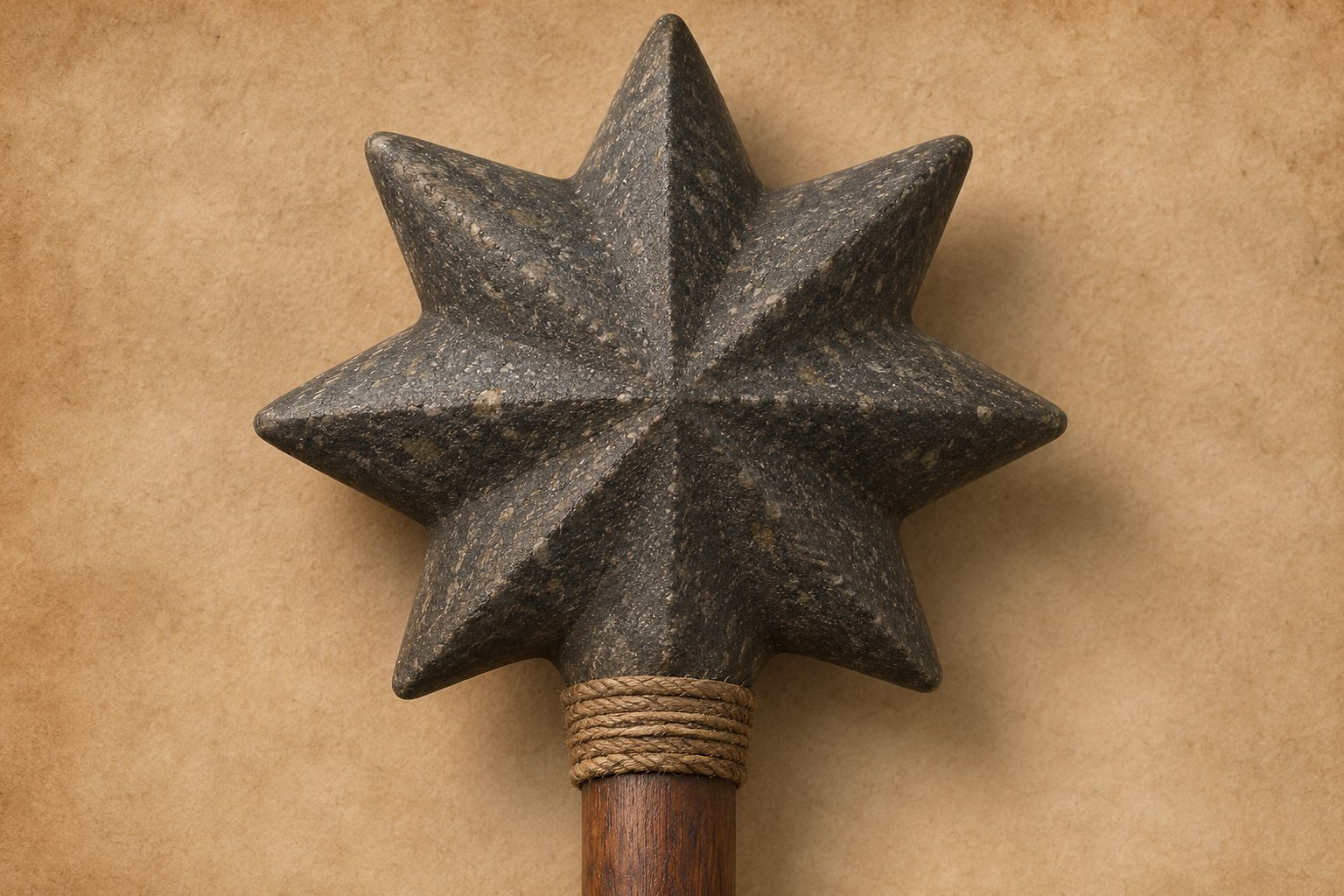
The Andean macana, characterized by its distinctive star-shaped stone head, remains one of the most recognizable percussive weapons in the archaeological record of the Americas. Often curated in museum displays as singular lithic artifacts, these stones were once integral to a complex assembly involving hardwoods and organic bindings, functioning as specialized tools of shock combat. Understanding the macana requires looking beyond the stone itself to the engineering of the haft and the forensic signatures left on human remains.
The Geometry of Percussion
The star-headed macana relies on the physics of concentrated force. By distributing the mass of the stone into five, six, or eight distinct radial points, the maker ensured that even a glancing blow delivered significant percussive energy to a small surface area.
The radial symmetry of these heads suggests a design optimized for armor penetration or concussive trauma. Unlike a flat-headed hammer, which disperses impact across a wider radius, the points of the star-headed macana act as focus points for force, theoretically maximizing deformation of helmets or shielding material.
Material Selection and Workshop Practice
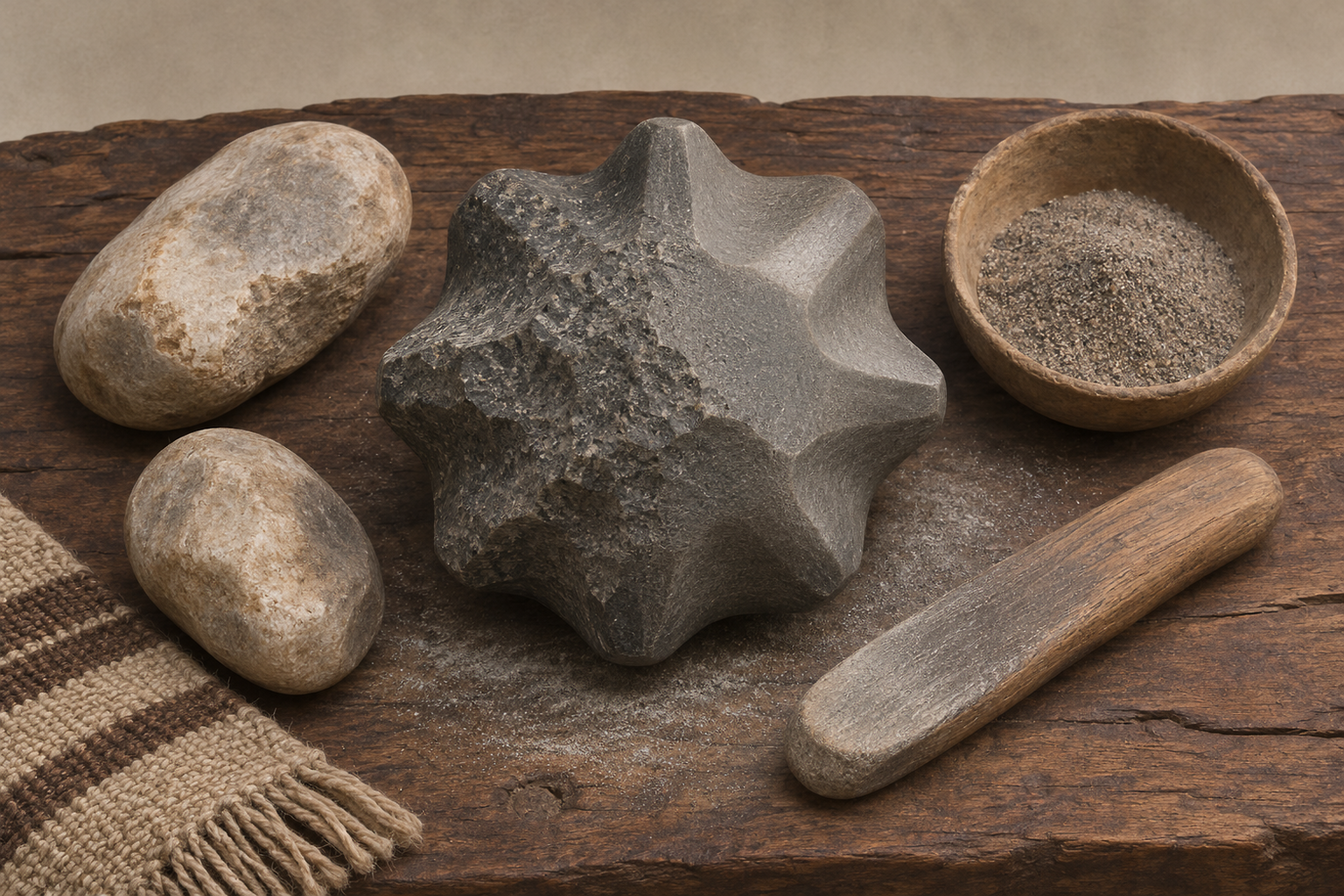
Andean artisans selected lithic materials for their specific properties. Hard, fine-grained igneous stones were chosen for their durability and capacity to be shaped through pecking, grinding, and polishing. Shaping a single head required weeks of consistent abrasion.
The aperture at the center of the head was often drilled from both sides to meet in the middle, a technique that minimized the risk of the stone splitting during the manufacturing process. This hole was typically slightly tapered, allowing for a tight friction fit with the wooden handle.
The Mechanics of the Haft
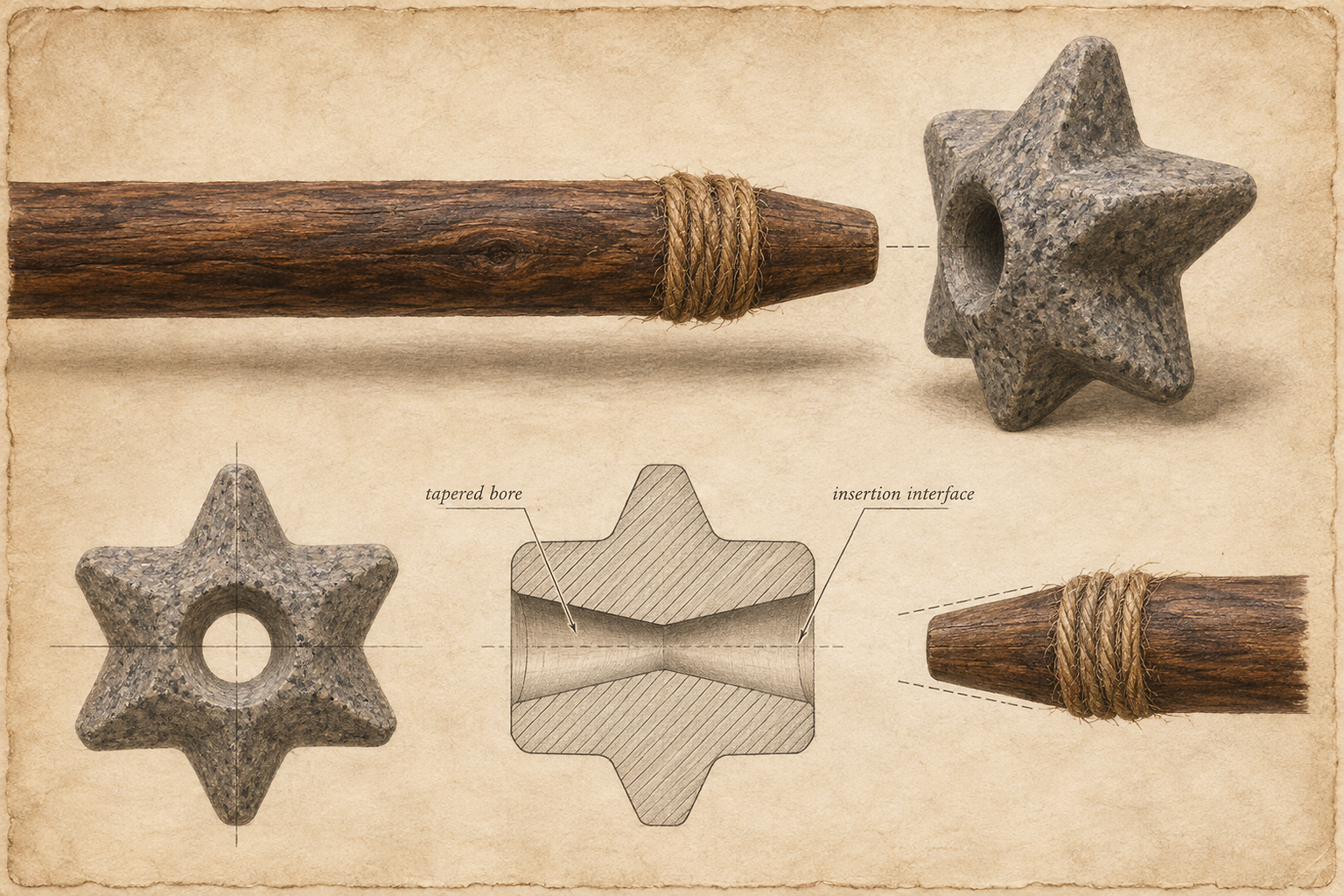
A stone head requires a secure connection to a handle to be effective. These shafts were generally constructed from dense, resilient hardwoods, such as the wood of the huarango tree. The rigidity of the shaft was essential to prevent energy loss during impact.
To keep the head from migrating up or down the shaft during use, creators employed a combination of friction-fit mechanics and secondary securing mechanisms. The head was often braced by a shoulder on the wood or secured by a ring of sinew or fiber immediately below the contact point.
Sinew Hafting Techniques
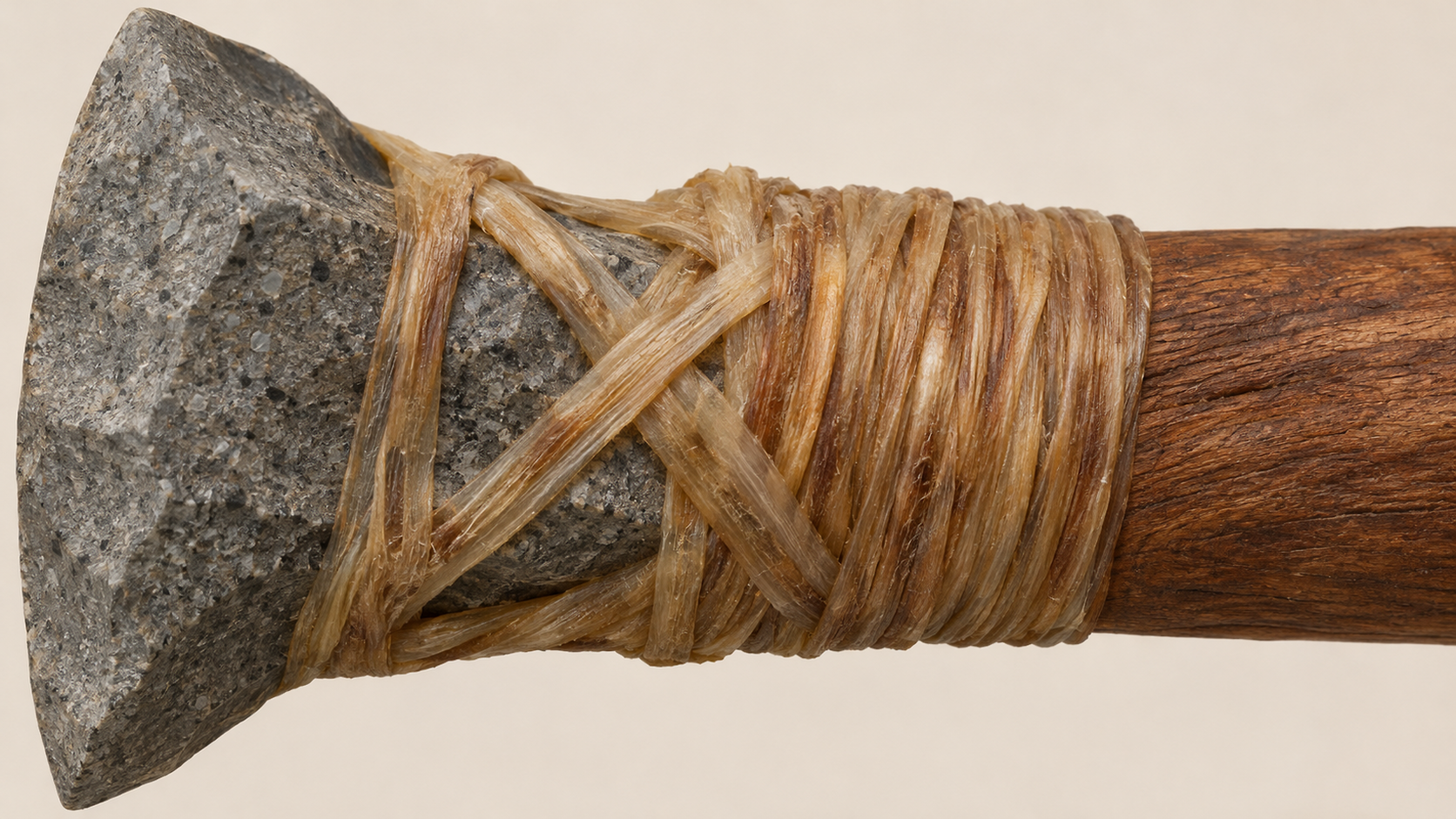
Sinew, derived from the legs of camelids like the llama or alpaca, was a critical component of Andean weapon engineering. When wet, sinew is pliable and easy to wrap; as it dries, it undergoes significant contraction, creating an incredibly tight, near-permanent bond around the head and the shaft.
This binding did more than just hold the parts together; it acted as a shock absorber. By wrapping the junction between the stone and the wood, the artisan minimized the risk of the shaft splitting at the point of contact when the weapon struck a target.
The application of sinew provided several structural advantages:
- Contraction during drying ensures a vibration-resistant fit.
- Resistance to the tensile stresses generated by glancing blows.
- Weight distribution assistance near the center of gravity.
Tactical Function in Andean Warfare
The macana was a primary tool for close-quarters combat. Given the absence of heavy metal plate armor in the Andean region prior to the European arrival, combat focused on padded cotton tunics and wooden shields.
In this context, the macana functioned effectively as a means of bypassing or crushing these defenses. The weapon did not require a sharpened edge to be lethal; instead, it used mass and velocity to induce blunt force trauma, capable of fracturing bones even through protective layers.
Forensic Analysis of Cranial Trauma
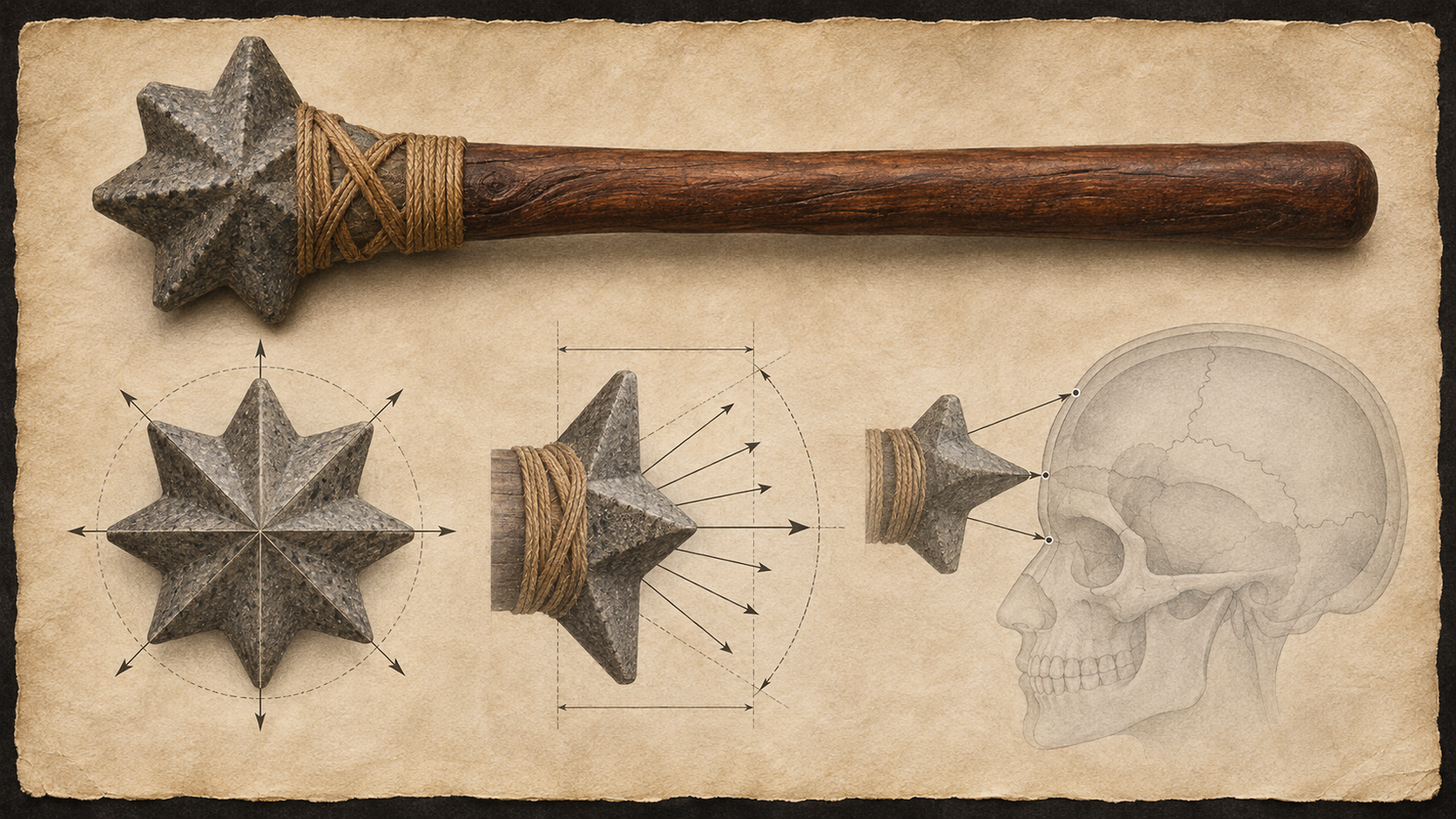
Archaeologists have identified consistent patterns of cranial trauma in skeletal assemblages from the region that align with the dimensions and shapes of star-headed macanas. These injuries are typically characterized by depressed, star-shaped fractures on the vault of the skull.
Unlike sharp-force trauma, which shows clean cuts or incisions, these impact sites show radiating fractures and evidence of severe comminution. The consistency of these patterns identifies the macana as a functional implement of lethal force.
Regional Variations in Style
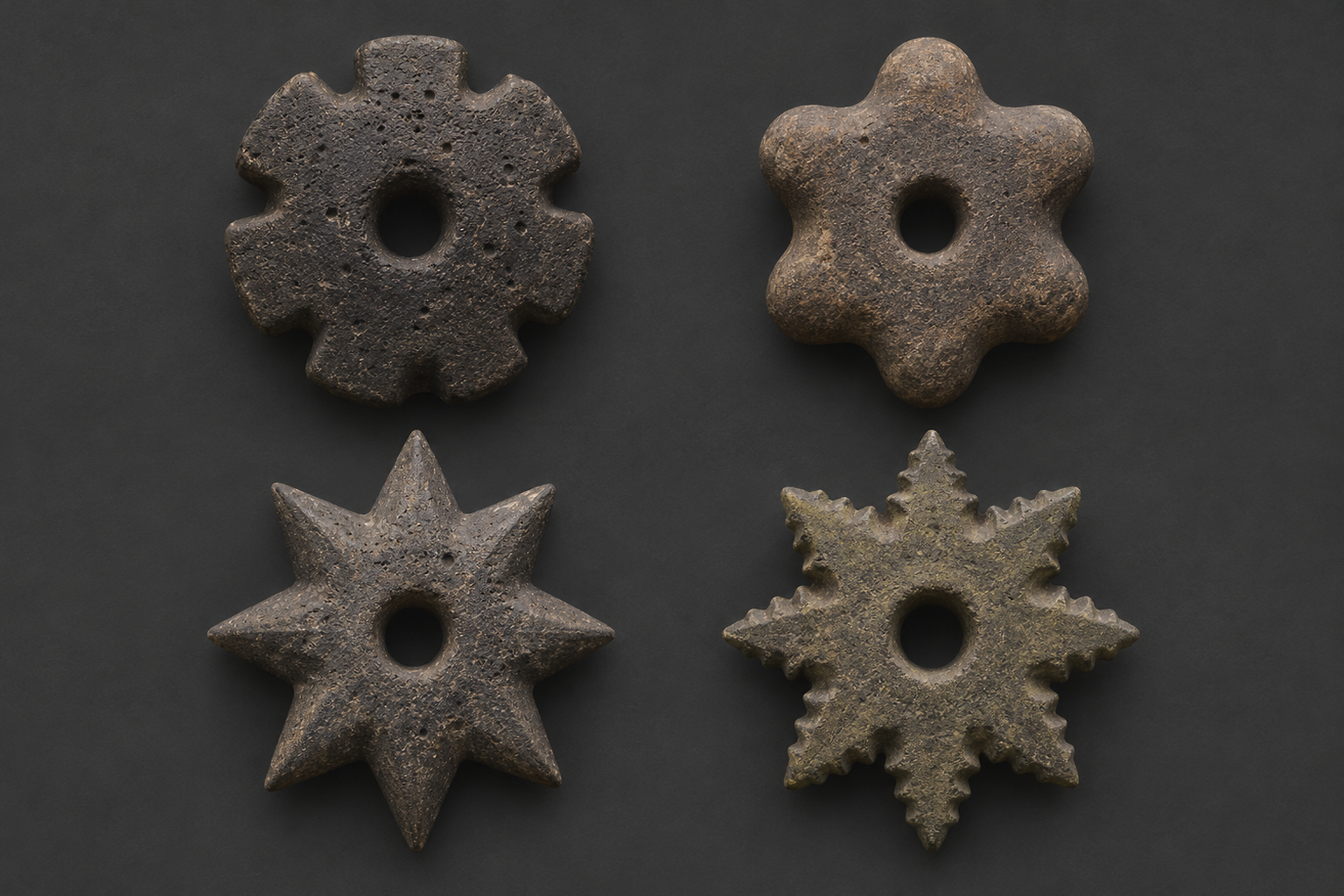
Weapon design in the Andes was not static. Different cultures, from the Wari to the Chimú, developed distinct aesthetic and functional preferences for their club heads. While some regions preferred simpler, disc-shaped clubs, others emphasized the aggressive geometry of the multi-pointed star.
The expansion of the Inka Empire led to a greater standardization of weapon types. Archaeological evidence suggests that the state incentivized the production of uniform macanas to equip a standing professional military, leading to a reduction in local stylistic diversity.
The Challenge of Organic Decay
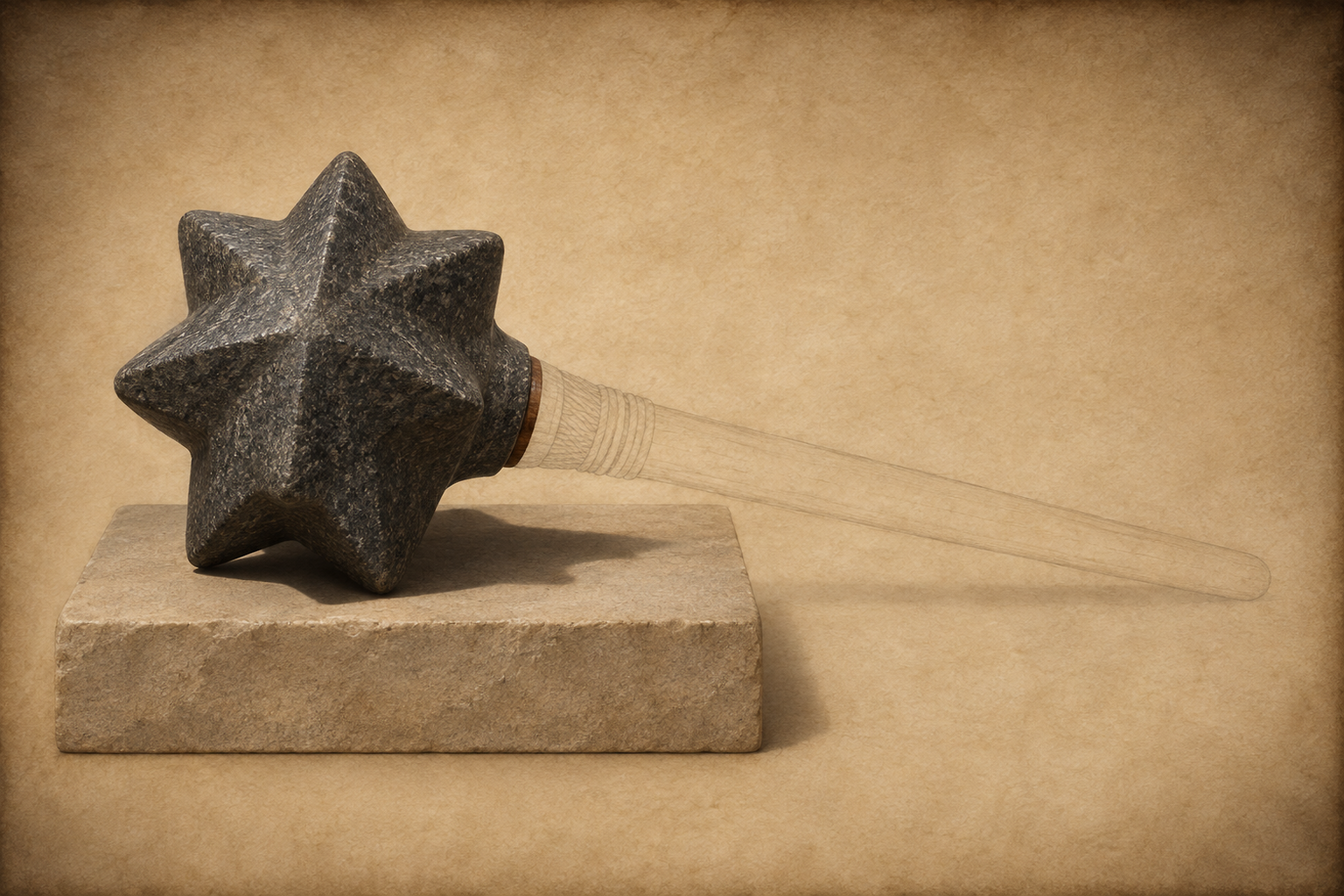
The vast majority of recovered macanas consist only of the stone head, with the wood and bindings lost to decay. This creates a significant gap in our understanding of weapon balance and reach.
Experimental archaeologists attempting to reconstruct these weapons must rely on artistic depictions, such as those found on Moche pottery, to infer shaft length and grip style. Because these representations can be stylized or idealized, reconstruction remains an approximation rather than a verified historical replica.
Modern Forensic Interpretation
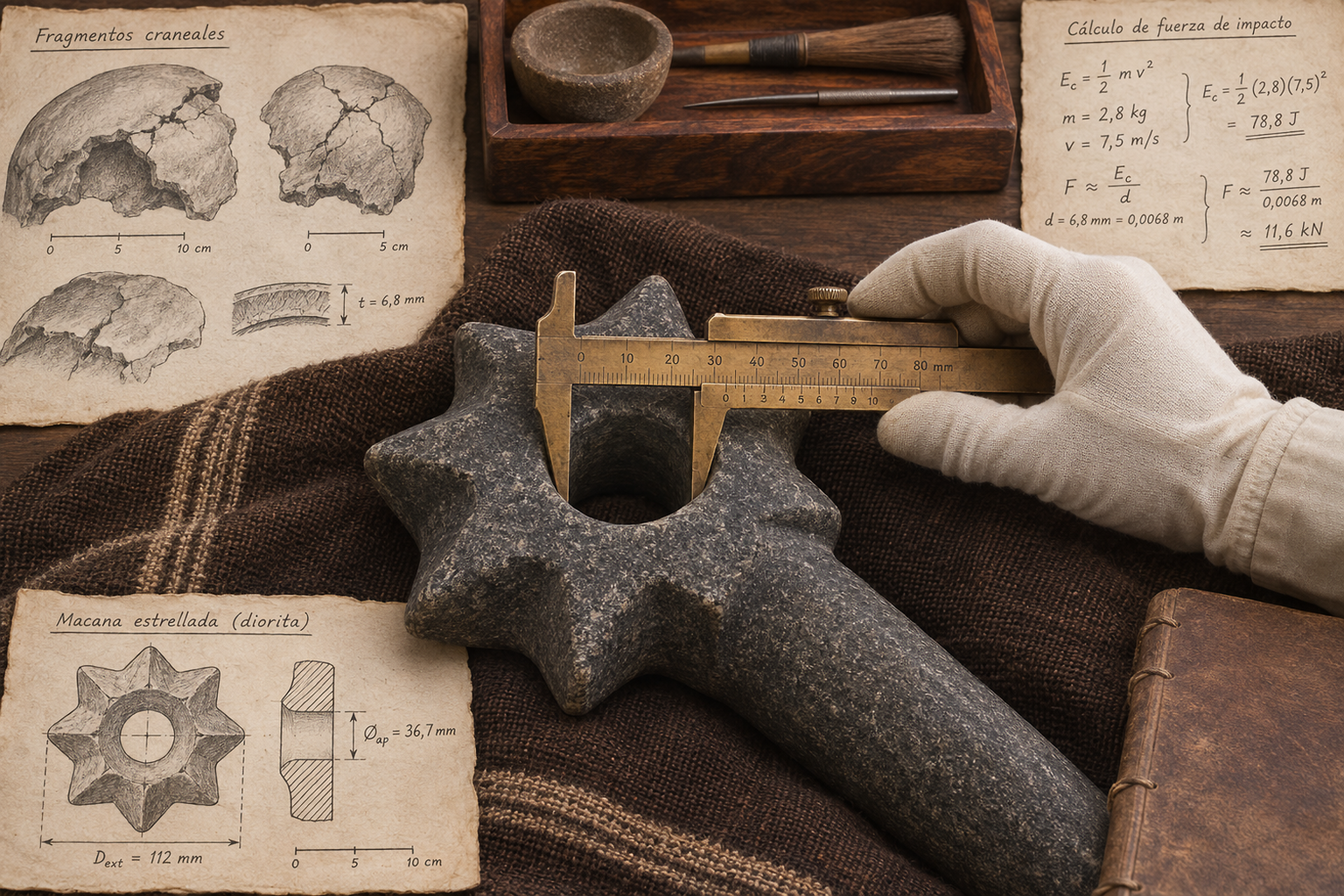
Modern researchers balance physical evidence with historical accounts of the period. Forensic evidence offers a direct view of Andean combat reality that addresses potential inaccuracies in early colonial chronicles.
The trauma patterns observed in the skeletal record are clinical and direct. By analyzing the force necessary to produce such fractures, researchers have gained a better understanding of the typical weight of a combat-ready macana.
Museum Conservation and Display
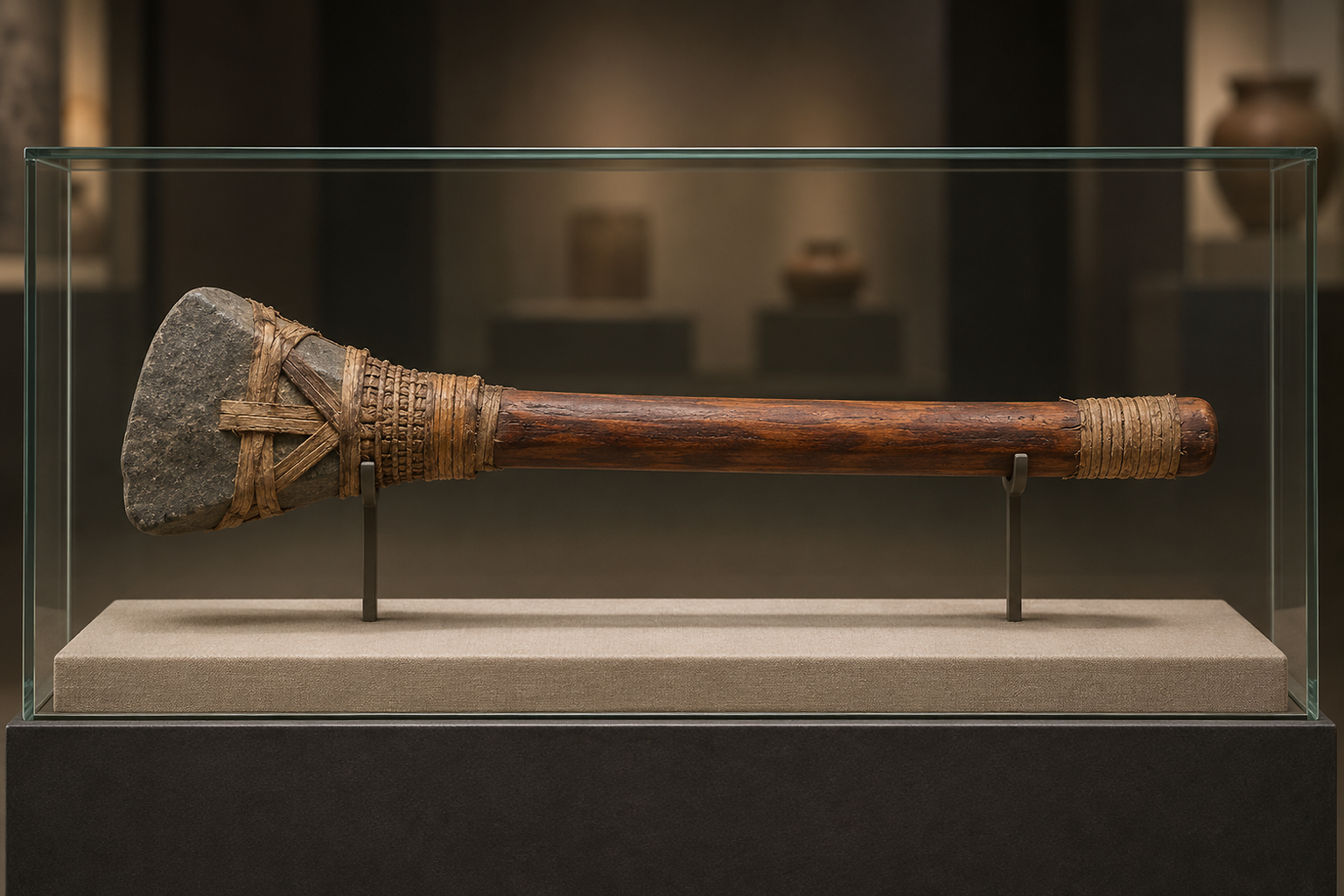
Preserving stone artifacts is relatively straightforward, but managing the few surviving examples with original hafts requires careful environmental control. The organic materials—wood and sinew—are highly sensitive to humidity fluctuations, which can cause the wood to swell or the sinew to become brittle.
Current museum practice emphasizes stabilizing these composite objects without altering the historical integrity of the hafting. This often involves low-light storage and strict climate control, ensuring that future generations can study the original techniques used to assemble these weapons.
Conservation priorities include:
- Maintaining stable humidity to prevent sinew contraction or expansion.
- Avoiding aggressive chemical cleaning of the stone surfaces.
- Documenting the remaining traces of organic fibers for material analysis.
Further reading
Follow the sources to examine the object and its historical context.
American Museum of Natural History, Andean CollectionExternal reference · Opens in a new tab Museum of Fine Arts, Boston: Pre-Columbian CatalogExternal reference · Opens in a new tab