Across the open grasslands and arid scrublands of the West African Sahel, mounted warfare shaped the political boundaries and trade routes of regional polities. Among the horse-rearing communities of the Mandinka, cavalrymen relied on long, straight-bladed sidearms carried in distinctive flared leather sheaths. Surviving blades and accoutrements held in museum collections reflect a synthesis of local metallurgical traditions, specialized leatherworking, and equine tack designed for savanna operations.
Sahelian Metallurgy and Indigenous Smelting
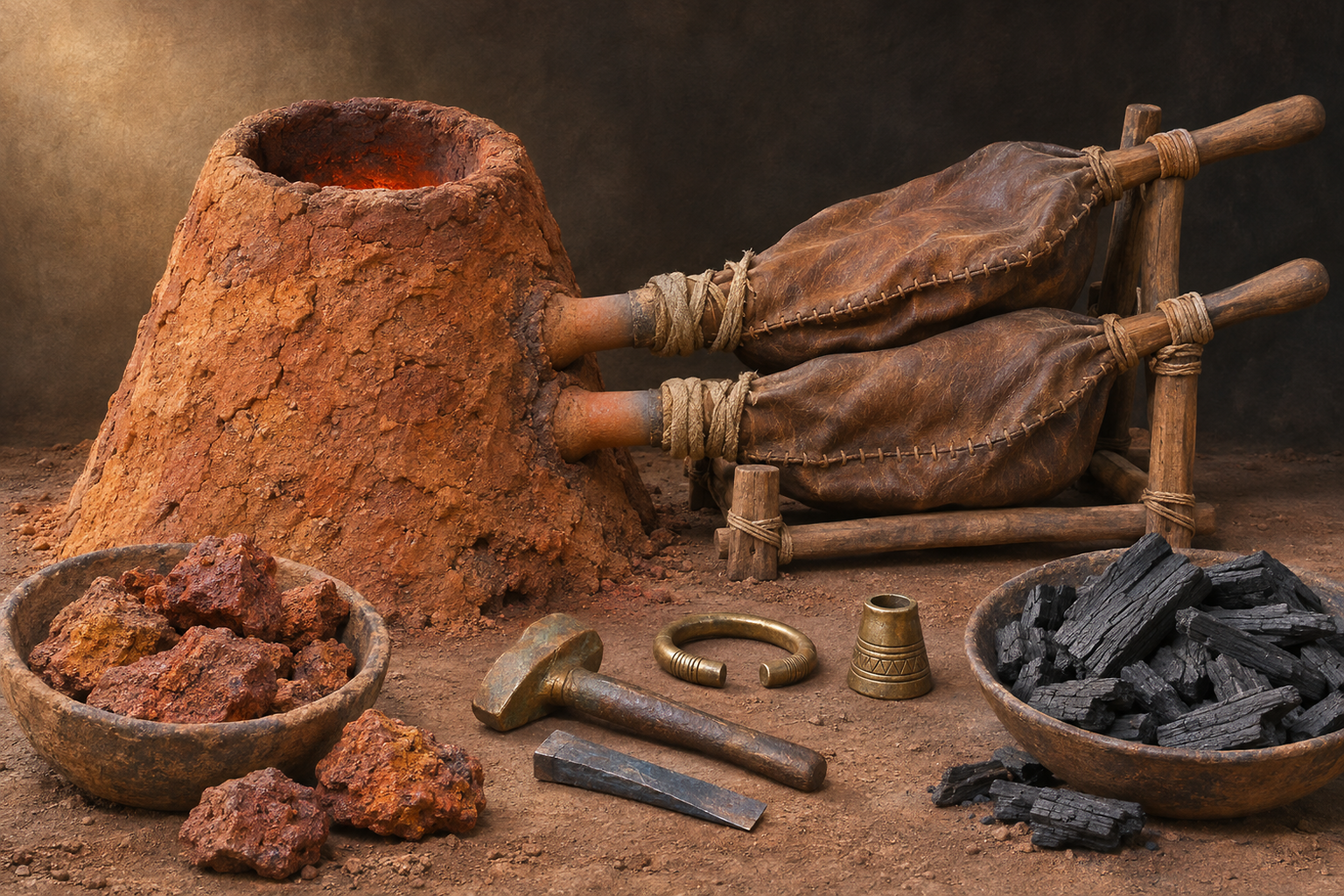
The production of iron blades in the West African Sahel depended on traditional bloomery furnaces operated by specialized smithing lineages. Local ironworkers constructed clay shaft furnaces, charging them alternating layers of processed laterite ore and charcoal. Forced draft was supplied through ceramic tuyeres connected to large goat-skin bellows, achieving the temperatures necessary to reduce iron ore into a spongy bloom. This labor-intensive smelting process required deep empirical knowledge of mineral selection and thermal regulation.
Once extracted, the raw iron bloom underwent repeated cycles of heating and consolidation to expel slag impurities. Smiths worked the metal on stone or low iron anvils using stone and forged iron hammers. While long-distance trade routes occasionally brought European or North African trade steel into the Sahel, local bloomery iron remained a primary material for regional weapon production well into the nineteenth century. The resulting metal possessed varied carbon content, requiring careful differential quenching and thermal treatment by the smith.
Blade Geometry and Cutting Mechanics
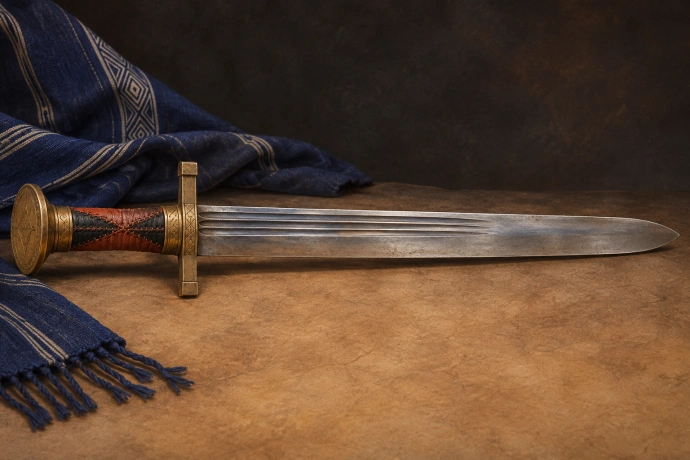
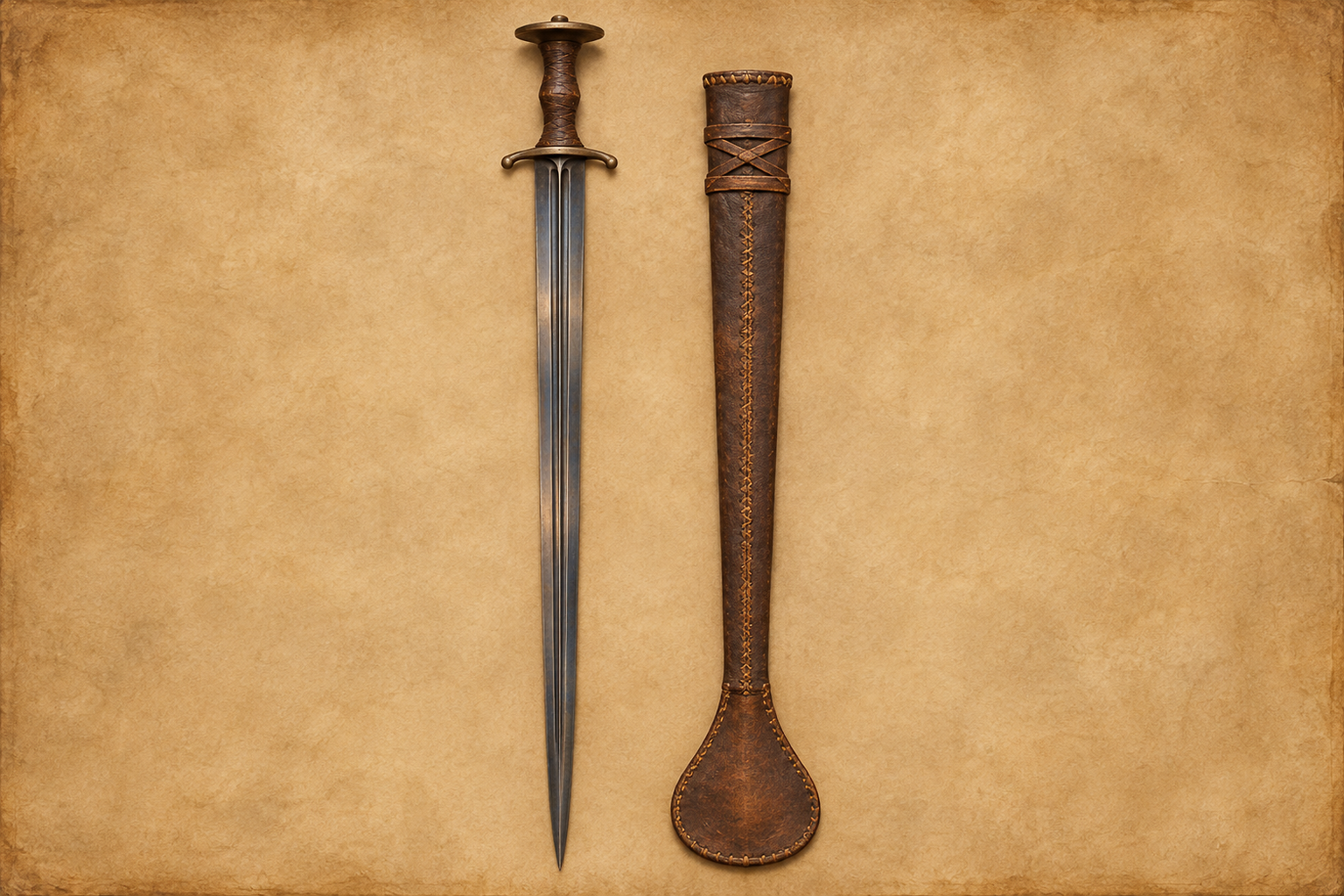
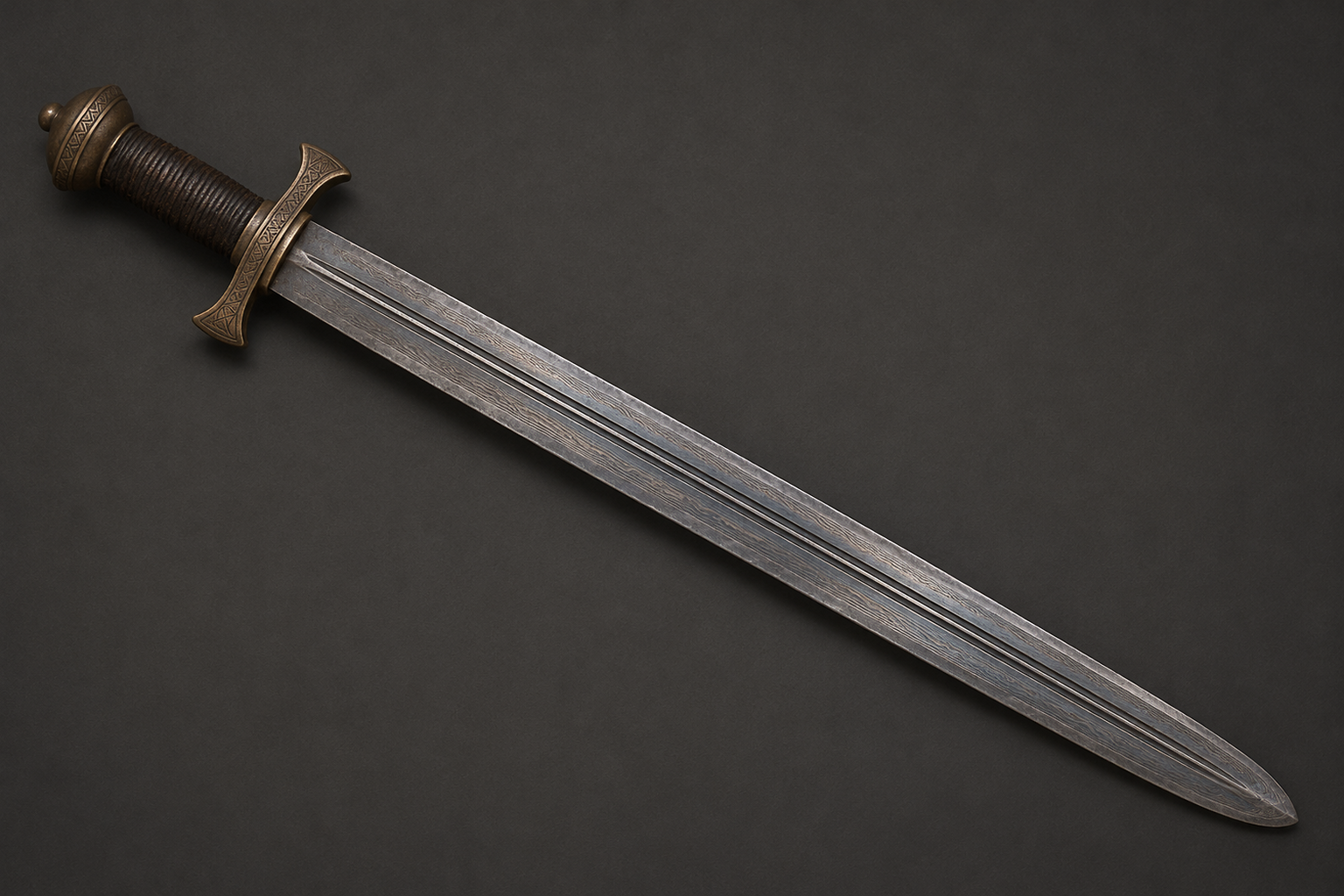
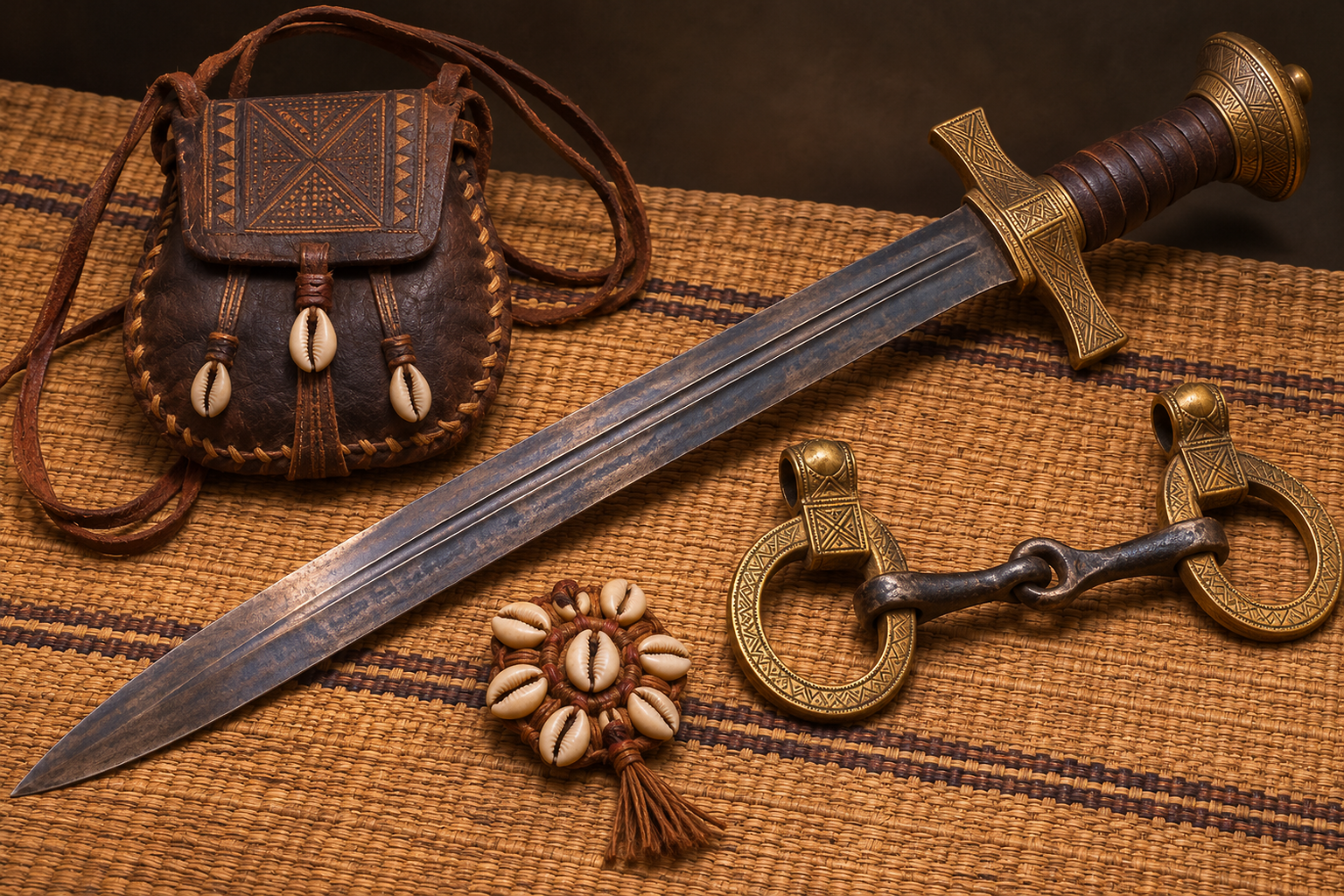
Mandinka cavalry swords feature long, straight blades designed principally for cutting and percussive strikes rather than precise thrusting. Surviving museum examples generally display parallel or very gradually tapering edges that terminate in a rounded or obtuse point. Cross-sections typically exhibit a flat or lenticular profile reinforced by two or more narrow fullers running parallel to the central axis. These fullers lightened the blade structure without sacrificing the lateral rigidity needed for mounted combat.
The distal taper of these blades was calibrated to shift the center of percussion outward, increasing the kinetic energy of a sweeping blow delivered from a galloping horse. While European and Middle Eastern steel imports were frequently utilized when available, smiths forged blades to local preferences regarding weight distribution and balance. The geometry favoured wide, sweeping cuts against unarmored or lightly protected opponents, aligning with the tactical realities of Sahelian warfare.
Hilt Architecture and Ergonomics
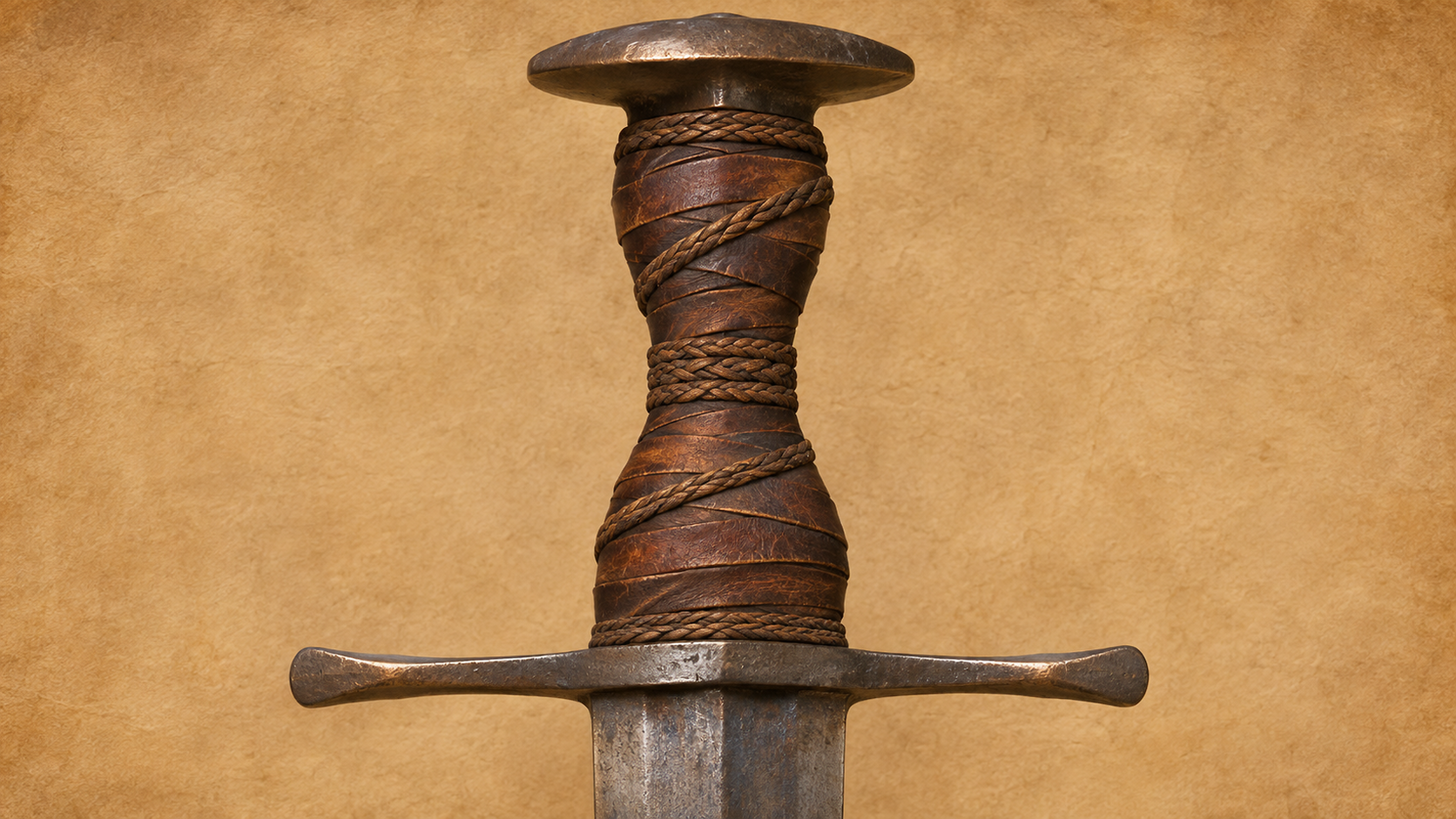
The hilt assembly of a Mandinka cavalry sword was engineered to withstand the rotational forces experienced during a mounted engagement. A carved wooden core formed the structural foundation, shaped into an hourglass or gently swelling grip that conformed to a gloved or bare hand. This core was typically wrapped in finely tanned leather, dyed textile strips, or tightly braided cord to ensure a firm grip in hot and humid conditions.
Guards were generally minimal, consisting of a simple iron or brass crossguard that prevented the hand from sliding forward onto the edge without encumbering wrist movement. The pommel took the form of a flattened disk or a flared wooden cap pinned securely to the tang end. This construction balanced the lengthy blade, shifting the pivot point close to the hand for rapid recovery after a missed or glancing blow.
The Flared Leather Scabbard
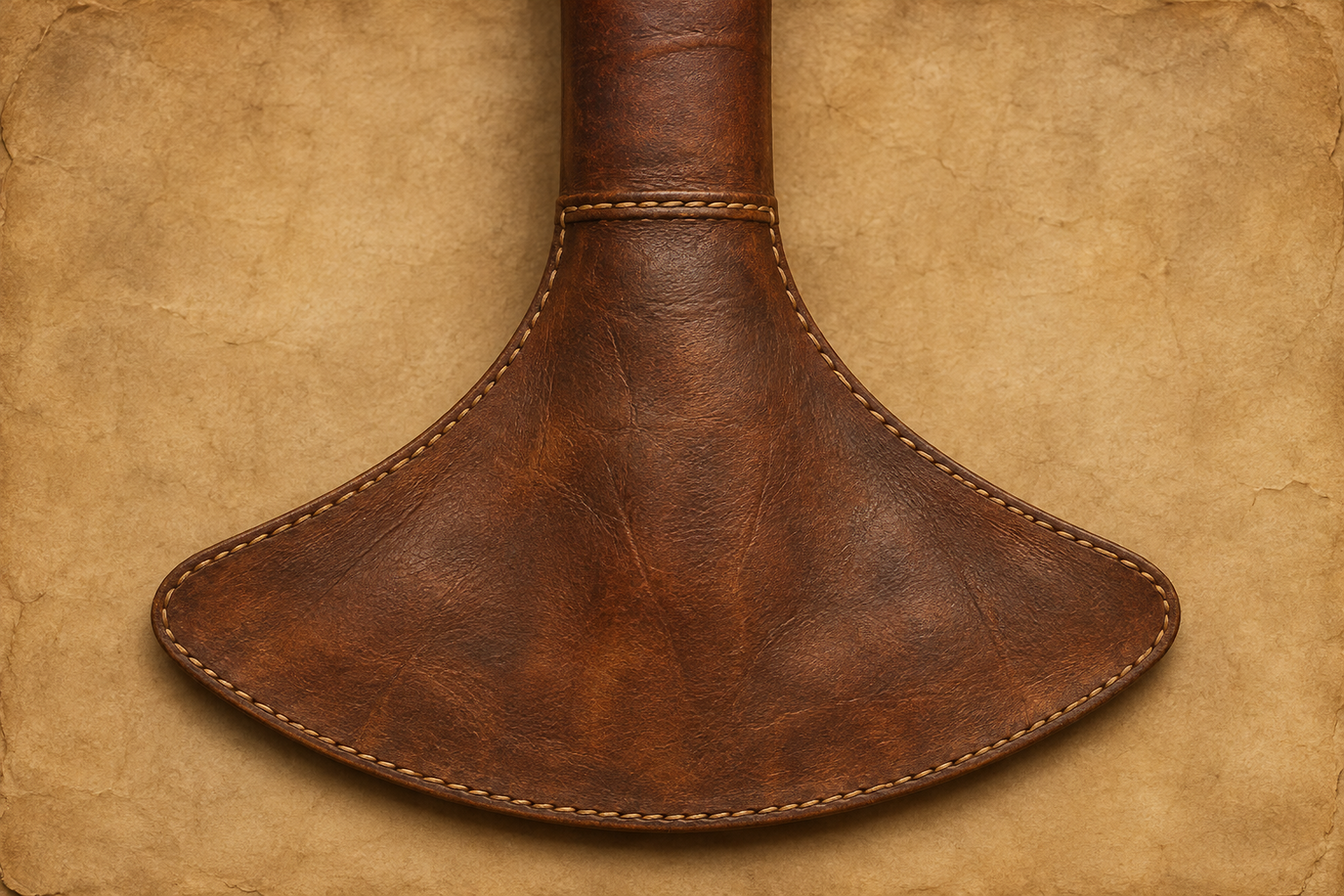
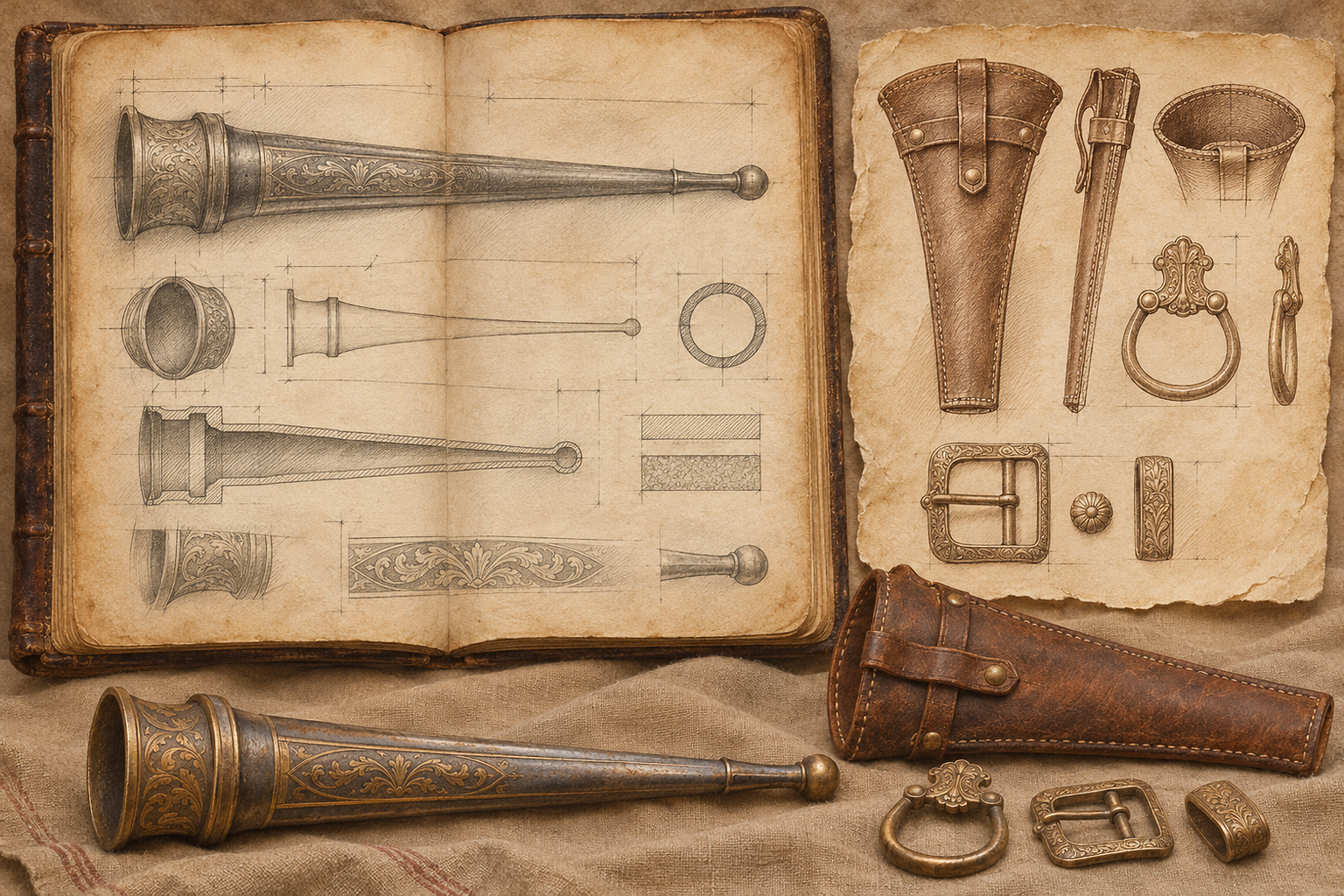
One of the most visually distinctive features of Sahelian sidearms is the leather scabbard with its exaggerated, paddle-like terminal flare. Crafted by specialized leatherworkers, the scabbard comprised a rigid wooden core encased in stitched goat or cattle hide. The upper portion fit the straight profile of the blade snugly, while the lower third expanded into a broad, symmetrical or asymmetrical fan shape.
This flared geometry served multiple practical functions in a cavalry environment. It prevented the long scabbard from catching on tall savanna grass or undergrowth while the horse was in motion. Furthermore, the broad surface acted as a physical barrier between the rider's leg and the horse's flank, reducing friction and protecting both rider and mount from accidental abrasion during sharp maneuvers.
Leatherwork Traditions and Surface Ornamentation
The leather surfaces of Mandinka scabbards and suspension baldrics served as canvases for complex decorative programs. Artisans employed vegetable tanning agents derived from local acacias and barks, producing shades ranging from rich ochre to deep dark brown. Surface patterns were applied through a combination of incising, stamping, and leather-appliqué techniques, incorporating geometric motifs, interlaced strapwork, and symbolic amulets.
Leather strips and braided thongs were also used to construct suspension systems that secured the weapon across the rider's back or at the hip. These attachments allowed the sword to hang at an angle that facilitated rapid drawing while mounted. The integration of leatherwork and smithing demonstrated a high degree of craft specialization within Mandinka society, where metalworkers and leather artisans maintained distinct hereditary guilds.
Cavalry Tactics in the Sahel
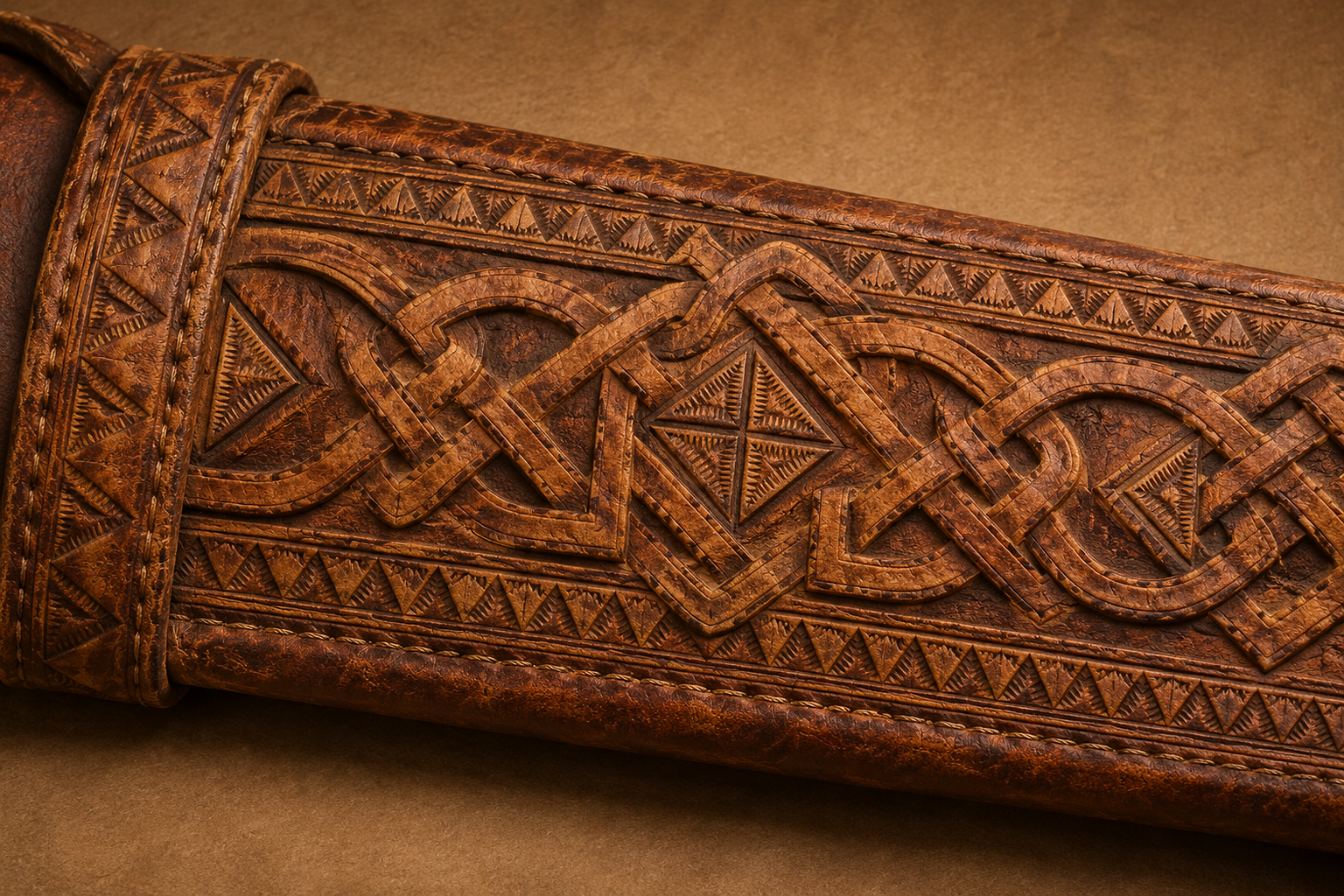
Mounted warriors formed the elite core of Mandinka armies, operating across the expansive savannahs where unobstructed terrain favored cavalry mobility. Horses, imported from North Africa or bred regionally under specialized management, were conditioned for endurance and rapid acceleration. Tactical doctrine emphasized hit-and-run raids, flanking maneuvers, and coordinated charges designed to disrupt enemy infantry formations before retreating beyond counter-attack range.
In these engagements, the sword functioned as a secondary weapon following the discharge of throwing irons or light lances. The rider used the length of the blade to reach adversaries on foot or engage opposing cavalrymen in melee. The stability provided by high-cantle saddles and short stirrups enabled riders to deliver powerful downward and lateral cuts without losing their seat during a collision.
Equine Harness and Tack Integration
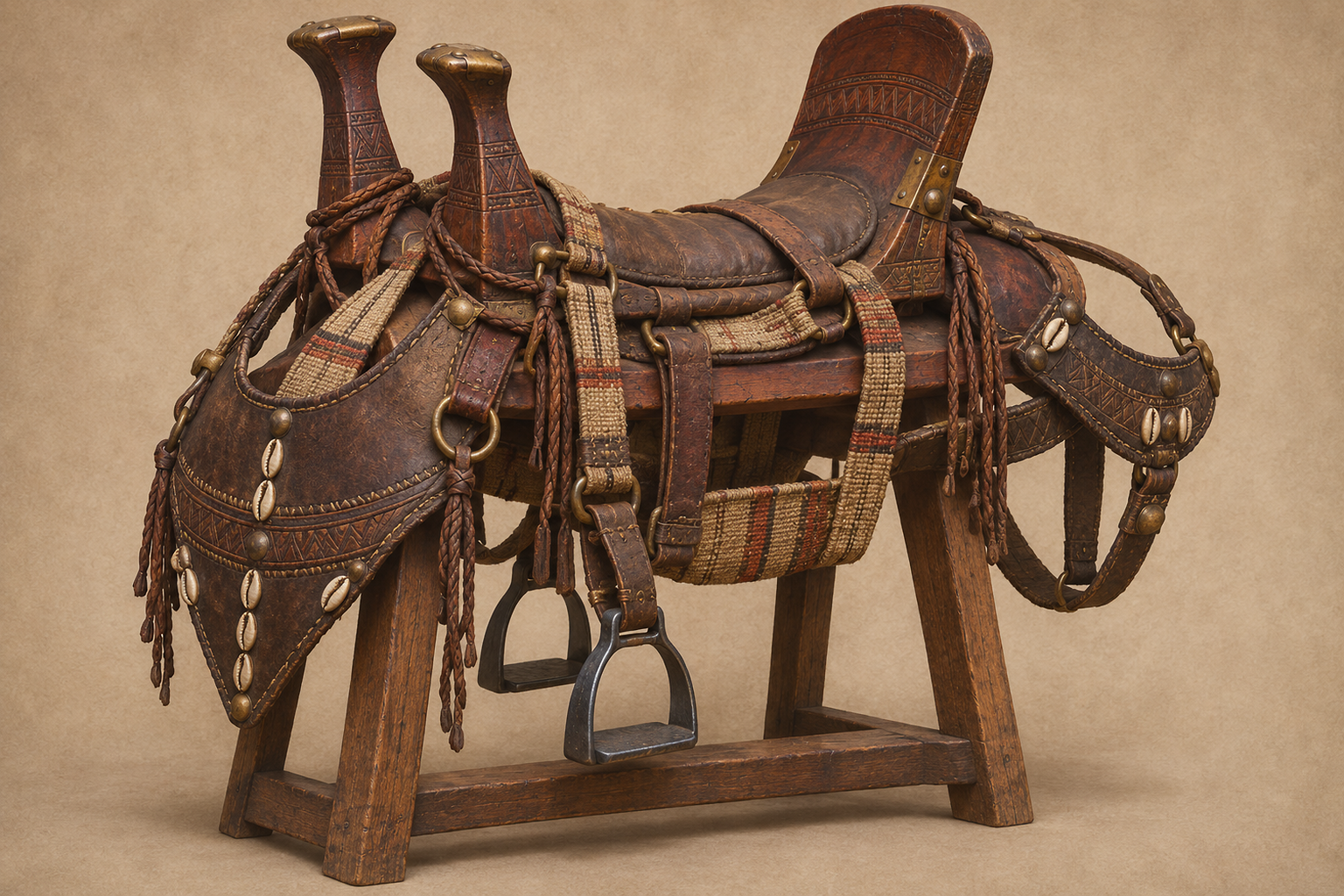
The effectiveness of a Sahelian cavalryman depended entirely on the compatibility of his horse harness, saddle, and weapon carriage. Saddles featured elevated wooden pommels and high cantles that locked the rider into position during violent shocks, freeing both hands to manage reins and weapons. Breastplates and cruppers constructed of heavy leather kept the saddle from shifting during rapid turns or abrupt halts.
Weapon mounting points on the saddle or baldric were positioned to prevent the heavy flared scabbard from swinging uncontrollably into the horse's flanks. The harness often incorporated brass ornaments, cowrie shells, and leather amulets intended to provide spiritual protection to both mount and rider. This material integration reflected a holistic approach to military equipment where horse and weapon functioned as a single tactical unit.
Trade Networks and Material Exchange
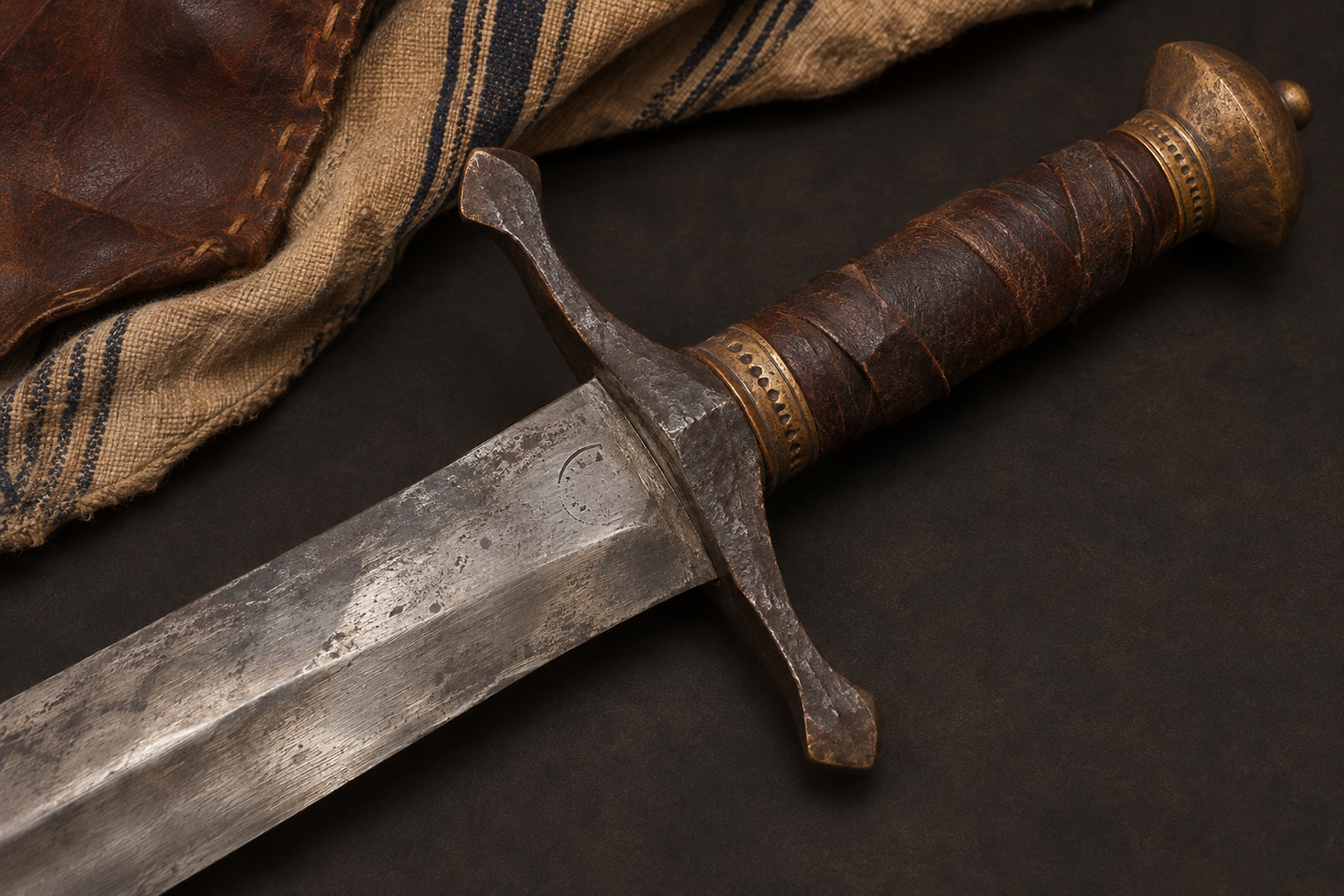
The production of these arms relied upon trans-Saharan trade routes that connected the Sahel to North African ports and European markets. While local iron smelting satisfied baseline material needs, high-status swords frequently incorporated imported European trade blades stamped with maker marks or pseudo-European inscriptions. These foreign blades were routinely re-hilted and fitted with local leather scabbards by regional craftsmen.
Brass wire, sheets, and red trade cloth moved southward along the same caravan routes, finding application in hilt decoration and scabbard accents. This exchange demonstrated that indigenous smiths did not operate in isolation; instead, they selectively integrated external materials into traditional designs, balancing aesthetic prestige with functional durability.
Social Status and Regalia
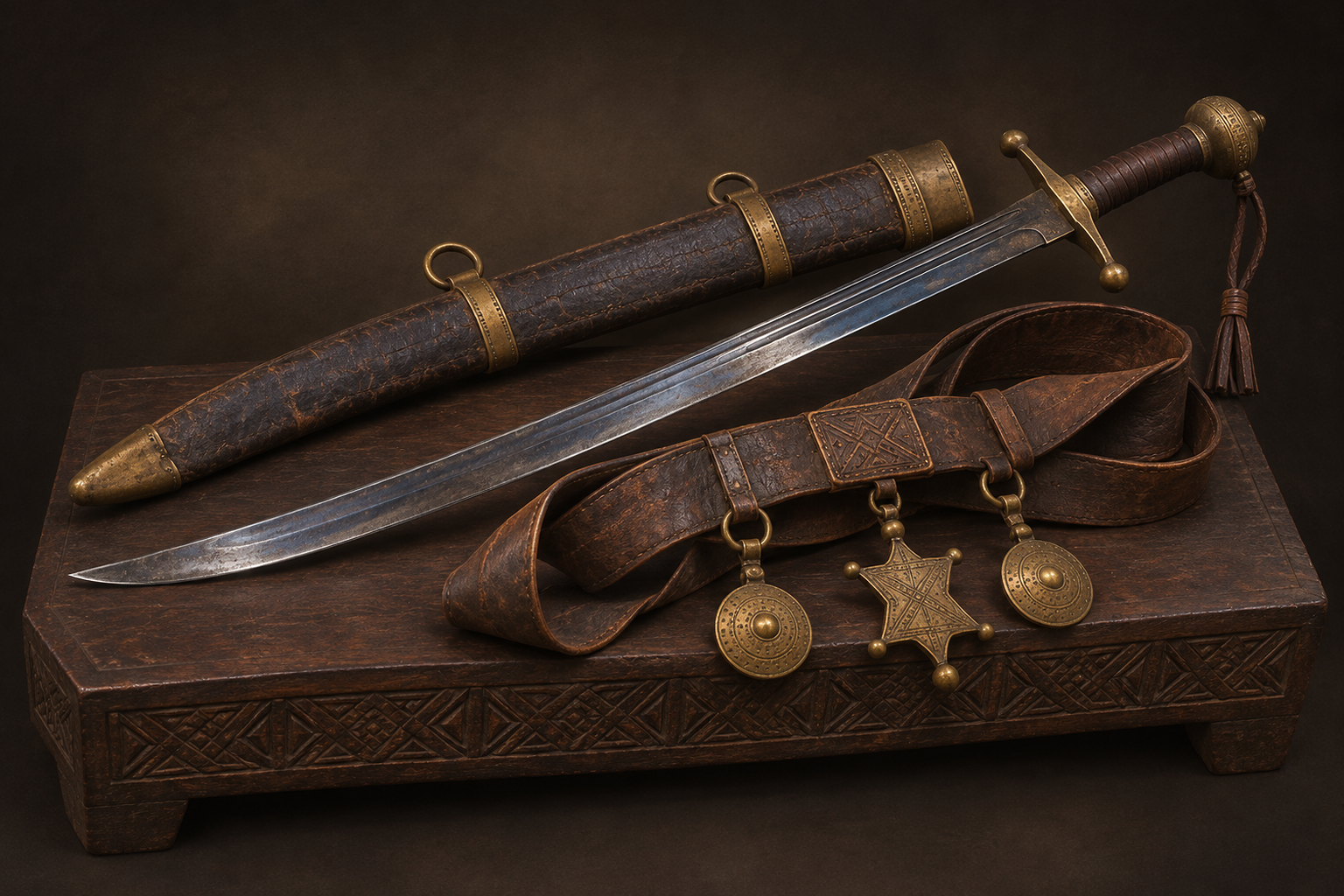
Beyond their utility as combat weapons, swords and their elaborate mountings functioned as prominent markers of social rank, wealth, and authority among the Mandinka. Chiefs, cavalry commanders, and wealthy traders wore ornamented sidearms during public assemblies, religious festivals, and diplomatic receptions. The quality of the leatherwork, the presence of imported brass fittings, and the length of the blade communicated the owner's standing within the hierarchy.
Oral histories and praise songs frequently commemorated the owners of notable swords, linking the weapon's history to the exploits of specific lineages. These arms were often passed down as heirloom objects, accumulating symbolic value across generations. In this context, the physical artifact served as a repository of collective memory and political legitimacy.
Colonial Encounters and Collection History
During the late nineteenth and early twentieth centuries, French and British colonial expansion into the Western Sudan resulted in the documentation and systematic collection of indigenous weaponry. Military officers, colonial administrators, and ethnographic expeditions acquired swords from local rulers, markets, and battle sites. Many of these pieces were subsequently deposited in European museums, where they were cataloged as examples of African craftsmanship.
Colonial accounts often recorded the tactical deployment of Mandinka cavalry during resistance campaigns against European advance. These written observations, while frequently framed through the perspective of colonial military reports, provide valuable context regarding how these weapons were carried, maintained, and utilized in late pre-colonial conflicts.
Museum Preservation and Material Degradation
Surviving Sahelian swords in international collections present specific conservation challenges due to the organic nature of their construction materials. While steel blades are subject to active oxidation and corrosion, the leather scabbards, wooden hilt cores, and textile wraps are vulnerable to humidity fluctuations, insect damage, and desiccation. Over decades in storage or display, organic adhesives and tanning agents can degrade, causing leather to stiffen and split.
Modern conservation practices focus on stabilizing active corrosion on the metal components while maintaining the integrity of original leather and cordage without applying invasive modern treatments. Curators must balance the preservation of organic residues—such as old protective oils or ritual applications—with the need to prevent structural collapse of the flared scabbard bodies.
Modern Interpretation and Cultural Representation
In contemporary West Africa, traditional swords and associated regalia remain powerful symbols of heritage, featured prominently in cultural festivals, durbars, and commemorative events. Descendants of traditional smithing and horse-rearing communities preserve oral knowledge surrounding the manufacture and use of these arms, passing techniques through family workshops and cultural associations.
International museum exhibitions and academic studies have increasingly shifted focus toward recognizing the sophisticated technological systems behind Sahelian metallurgy and leatherwork. Rather than viewing these objects merely as ethnographic curiosities, contemporary scholarship emphasizes their status as high-performance items born of complex regional industries and adaptive tactical requirements.
Further reading
Follow the sources to examine the object and its historical context.
The British Museum Collection OnlineExternal reference · Opens in a new tab Quai Branly Museum CollectionsExternal reference · Opens in a new tab