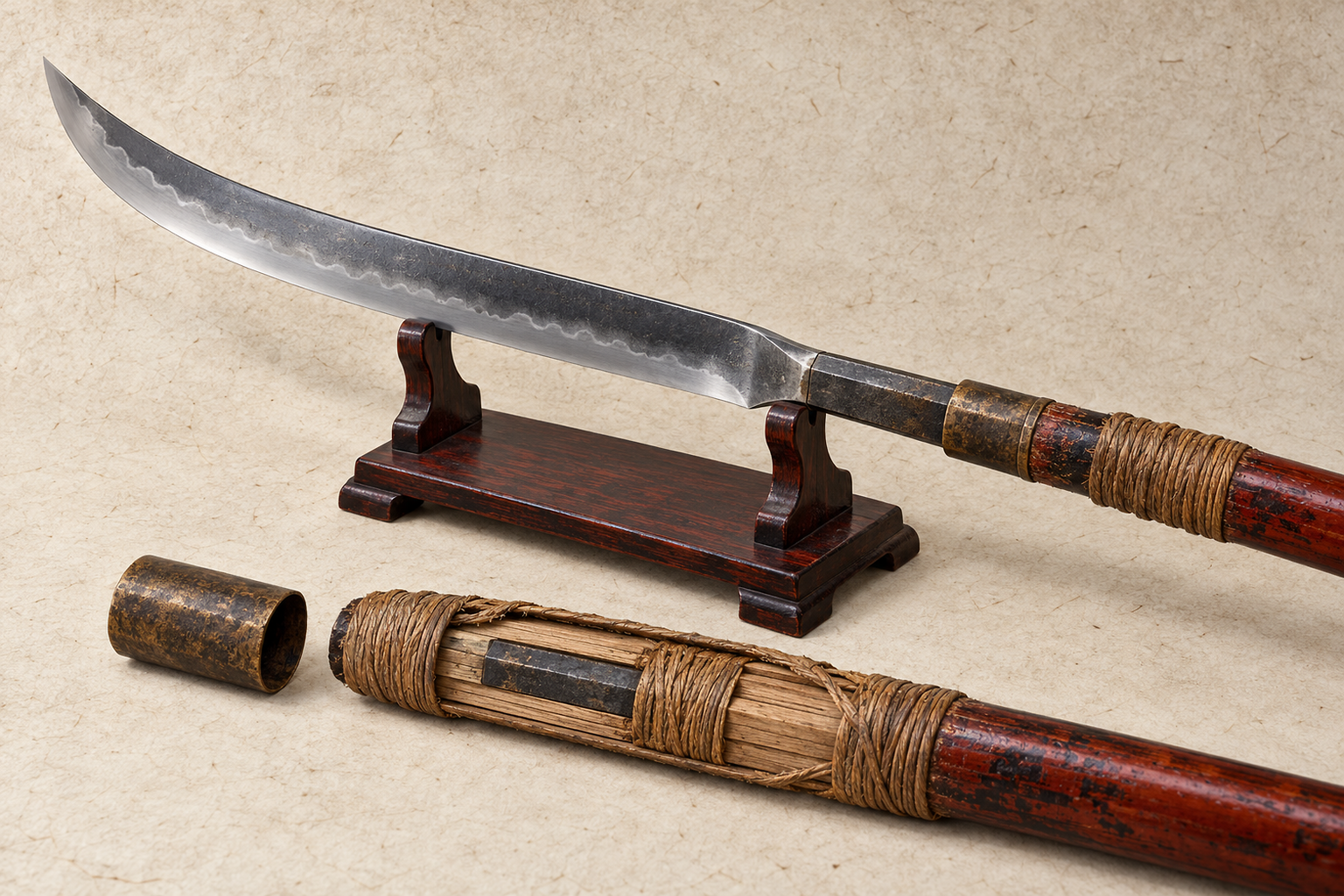
The Kikuchi yari occupies a distinctive space in the history of Japanese polearms, serving as a transitional form between the short sword and the traditional spear. Unlike the double-edged, diamond-section heads typical of later yari, these implements feature a wide, single-edged blade reminiscent of a tanto or short katana, mounted on a long, sturdy shaft.
Origins in Higo Province
The development of the Kikuchi yari is closely tied to the shifting military landscape of the Nanboku-cho period. As warfare became increasingly focused on swift engagement and the protection of infantry against mounted units, local warlords sought weapons that provided both reach and the cutting capacity of a sword.
The Kikuchi clan, based in Higo, are documented in local records as early proponents of this form. By repurposing short-bladed steel into hafted weapons, they equipped their retainers with a tool that could effectively parry and strike within the chaotic melee characteristic of the era’s battlefield clashes.
Metallurgy and Blade Geometry
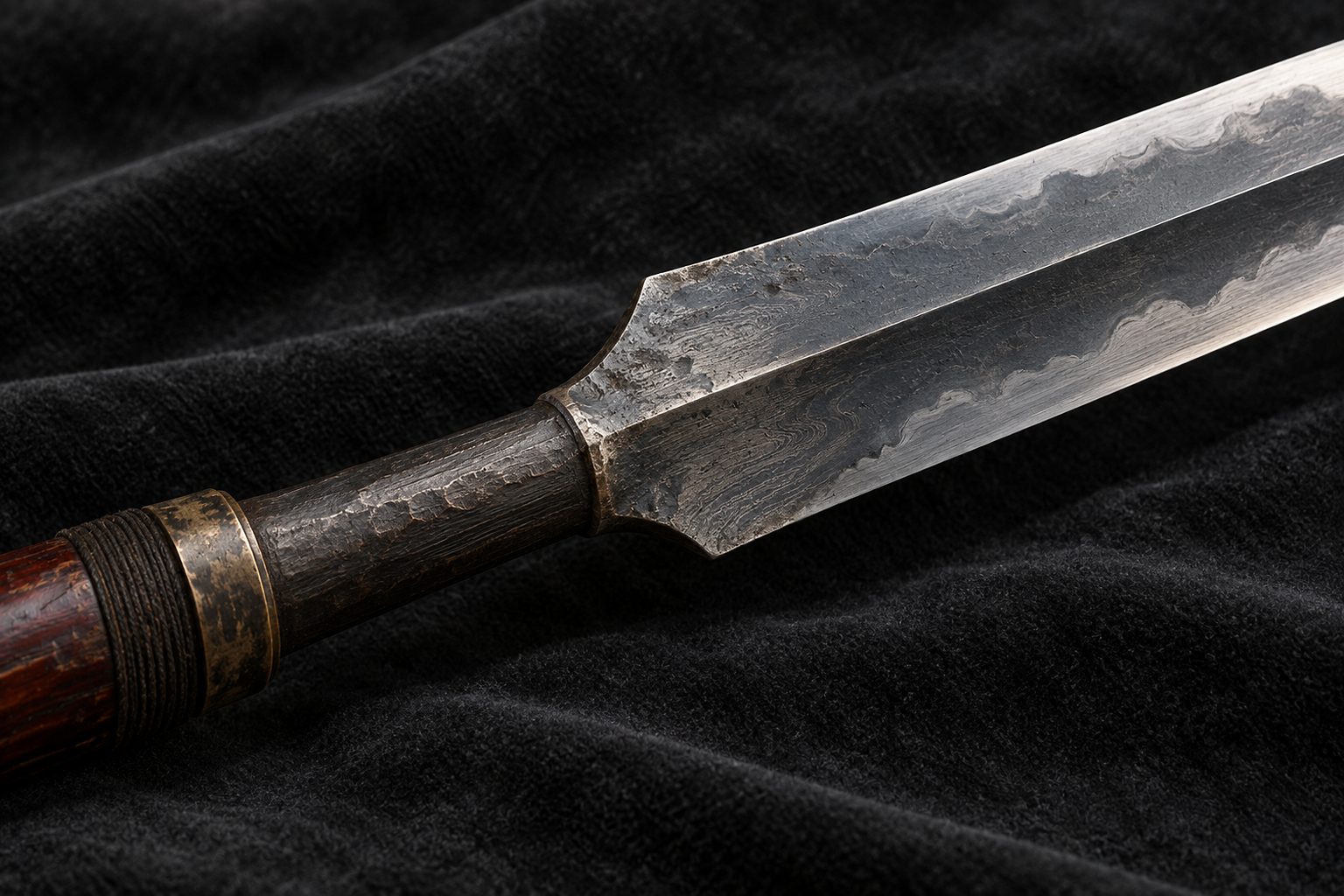
These blades exhibit the sophistication of fourteenth-century smithing, characterized by differential hardening or hamon. While many yari are designed purely for thrusting, the Kikuchi yari’s edge geometry suggests it was also intended for slashing, placing unique stresses on the steel during impact.
Mounting a sword-style blade on a haft requires a balance of hardness at the edge and resilience in the tang. Metallurgical analysis of surviving fragments indicates that the smiths maintained a consistent tempering process to prevent brittle failure at the point where the blade meets the wooden haft.
The Construction of the Tang
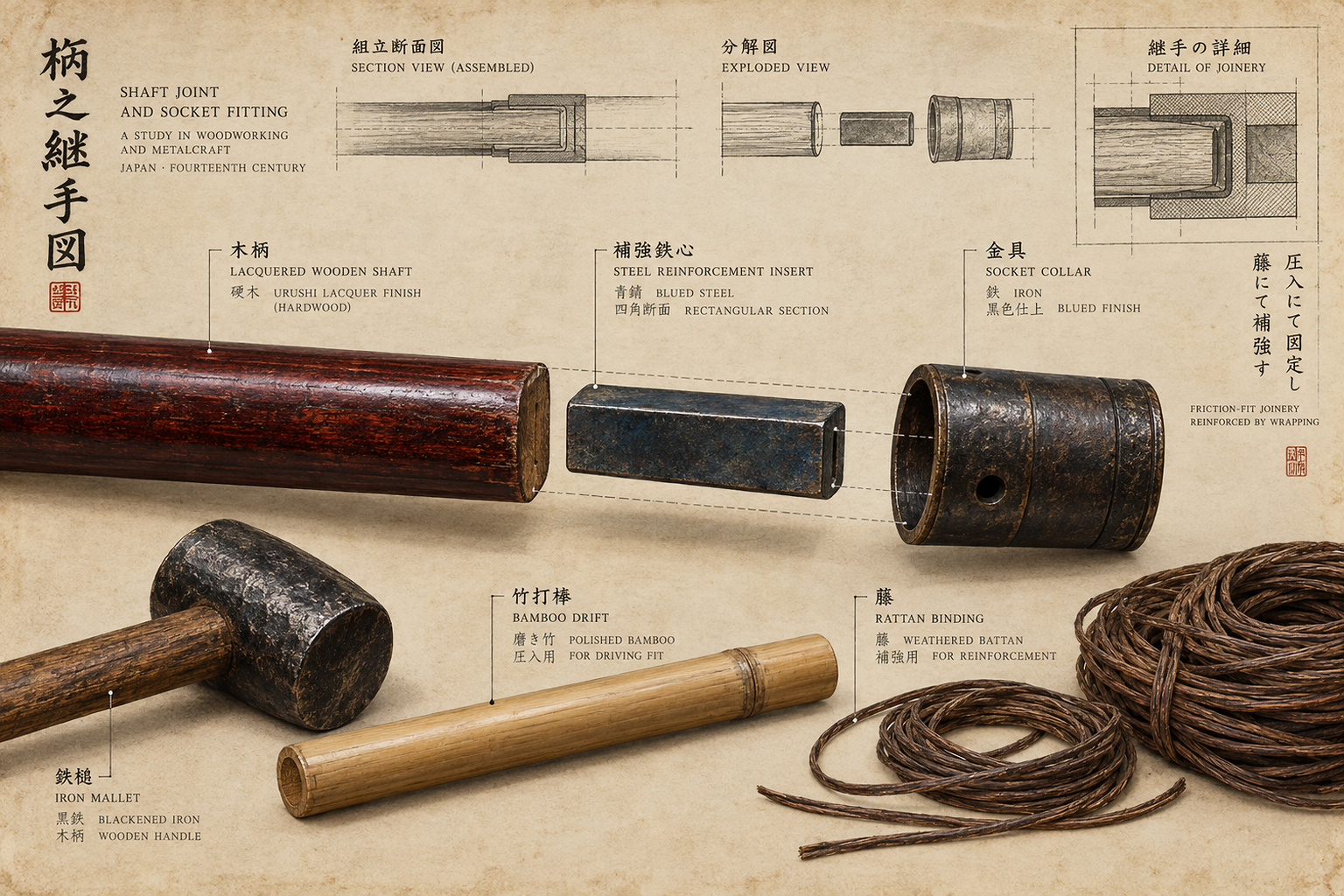
The tang, or nakago, serves as the critical junction between the steel head and the wooden pole. Unlike modern socketed spears where a metal sleeve encompasses the wood, the Kikuchi yari utilizes a long tang driven into the shaft.
This design necessitates robust reinforcement of the proximal end of the pole. Period artisans likely used wrapped rattan or metal collars to prevent the wood from splitting under the high-frequency vibration of impact.
Factors influencing the stability of the mount include:
- The length and taper of the tang
- The density of the selected hardwood shaft
- The application of organic adhesives like urushi lacquer
- The tension of the exterior bindings
Tactical Application
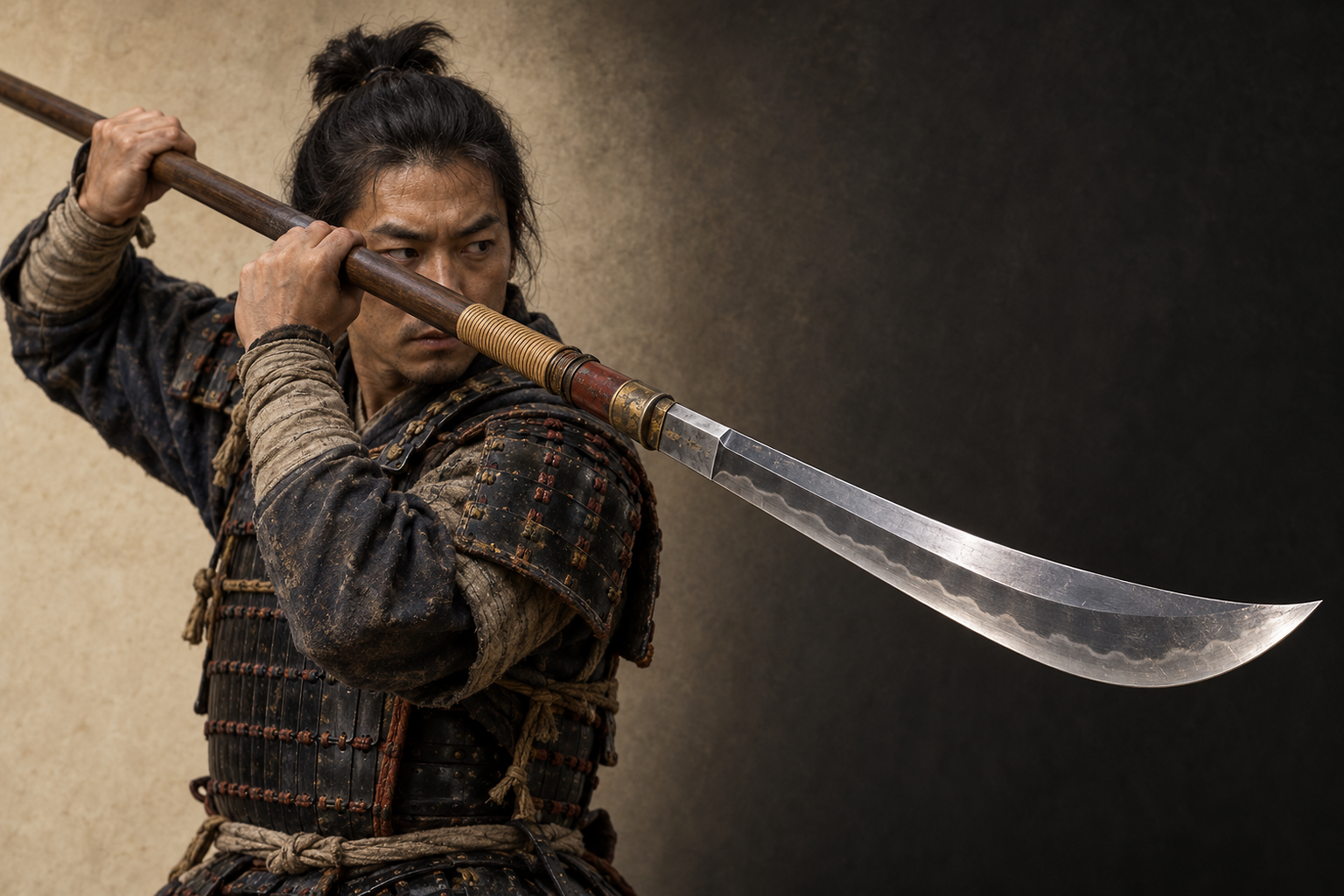
On the battlefield, the Kikuchi yari provided a versatile counter to both mounted warriors and infantry. The length of the shaft offered a distance advantage, while the single-edged blade could function as a hook or a shearing implement against armor gaps.
Historical accounts from the period describe the weapon’s utility in close-quarters maneuvers. Unlike the later, specialized spear-heads designed for piercing, the broad blade enabled a user to deliver wider, sweeping strikes.
Battlefield Dynamics
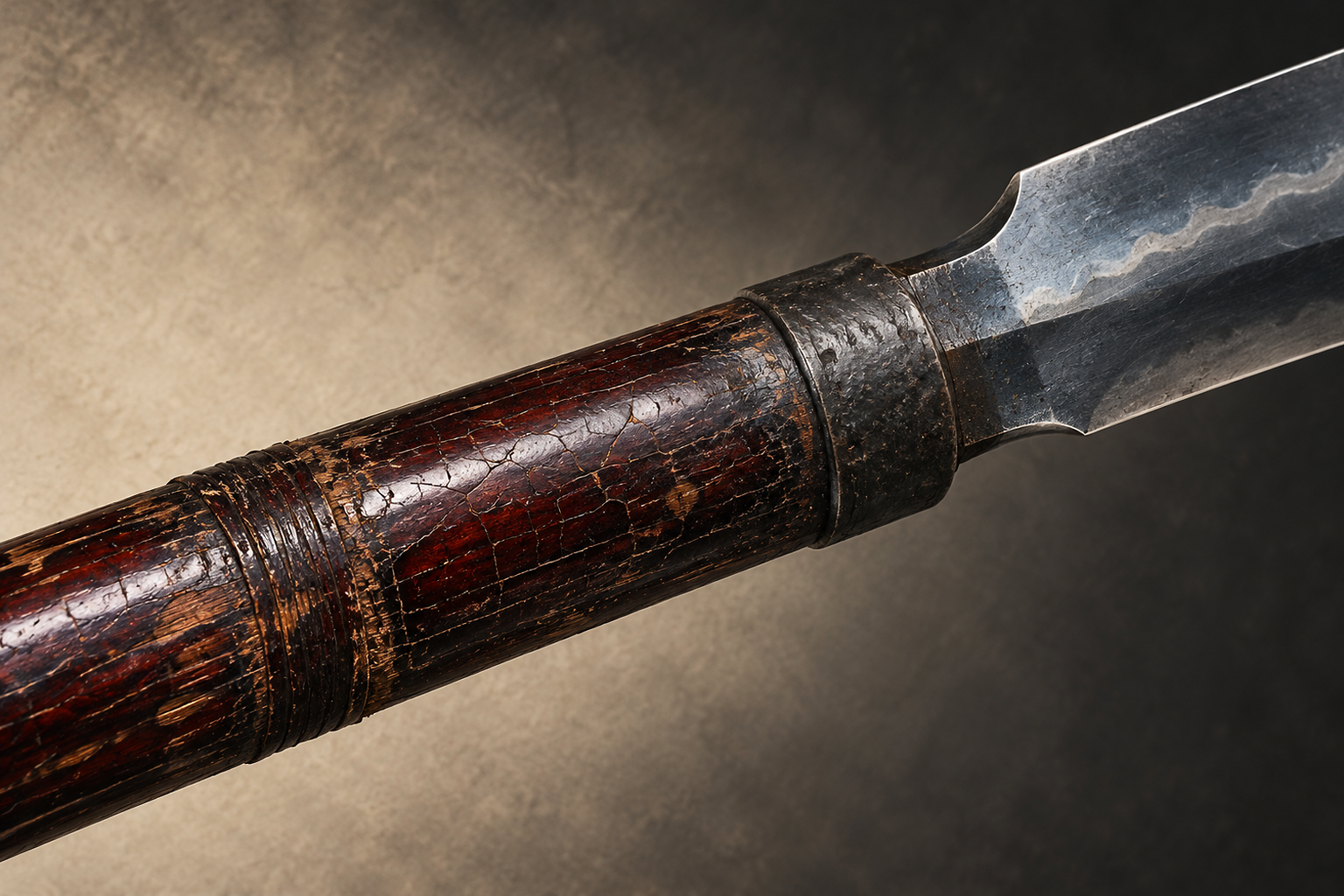
The weapon flourished during an era when samurai combat moved away from ritualized archery toward intense, foot-based melee. The ability to switch between stabbing and cutting allowed a soldier to remain effective even after closing the distance against an enemy spearman.
Because the Kikuchi yari mirrors the curvature of a short sword, it allowed practitioners to utilize familiar sword-fencing principles at an extended range. This provided a crucial tactical edge in the confined spaces of siege defense or village skirmishes.
Comparison to Traditional Yari
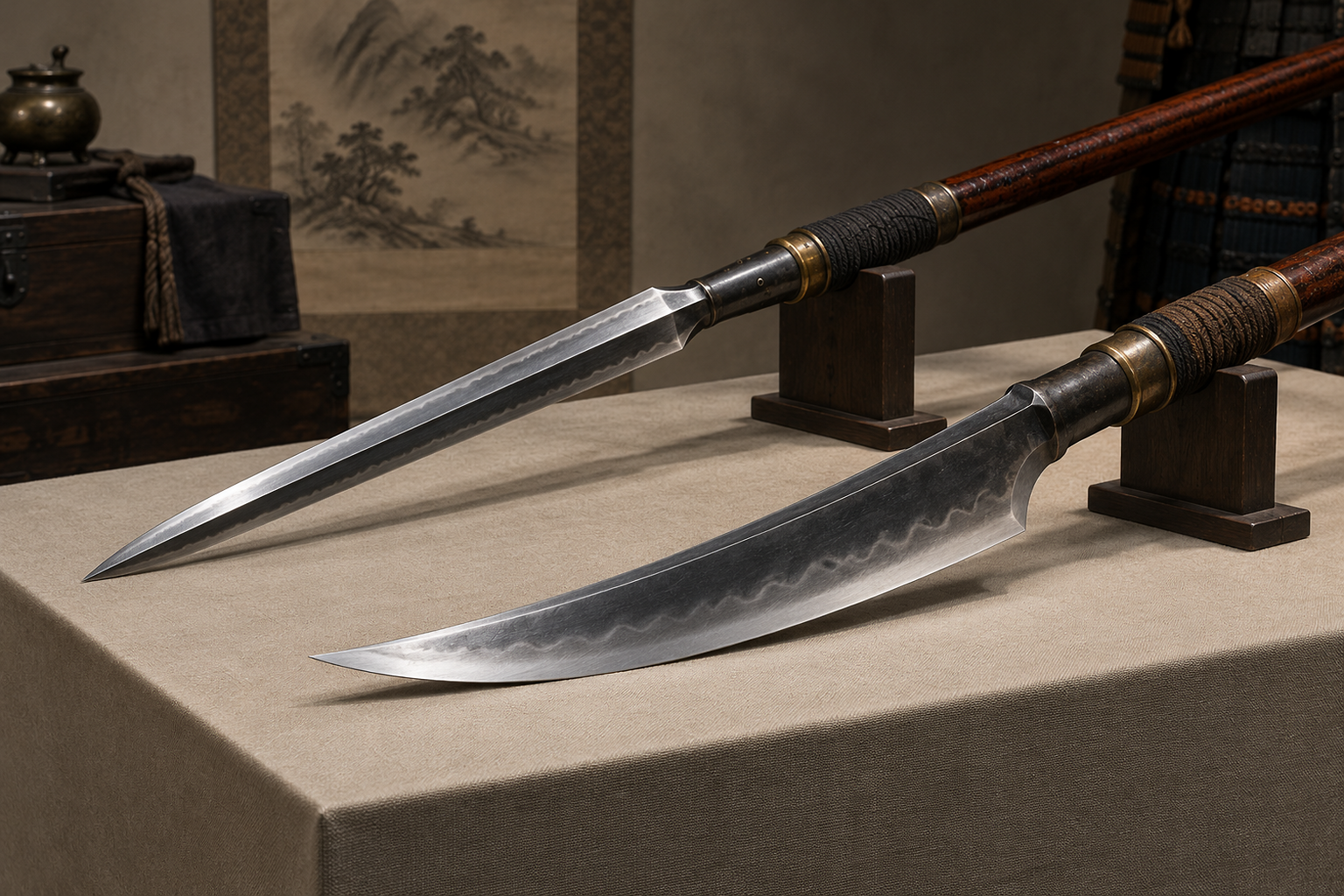
Traditional yari heads are typically double-edged and often feature triangular or diamond cross-sections designed for maximum armor penetration through thrusting. In contrast, the Kikuchi yari retains the flat or slightly curved face of a sword blade.
This distinction meant the Kikuchi yari was less efficient at piercing hardened lamellar armor but superior at causing lacerating wounds against softer targets or exposed gaps in armor plates.
Differences in weapon design include:
- Cross-sectional geometry
- Primary intended strike mechanism
- Armor interaction performance
- Maintainability in the field
Surviving Artifacts and Condition
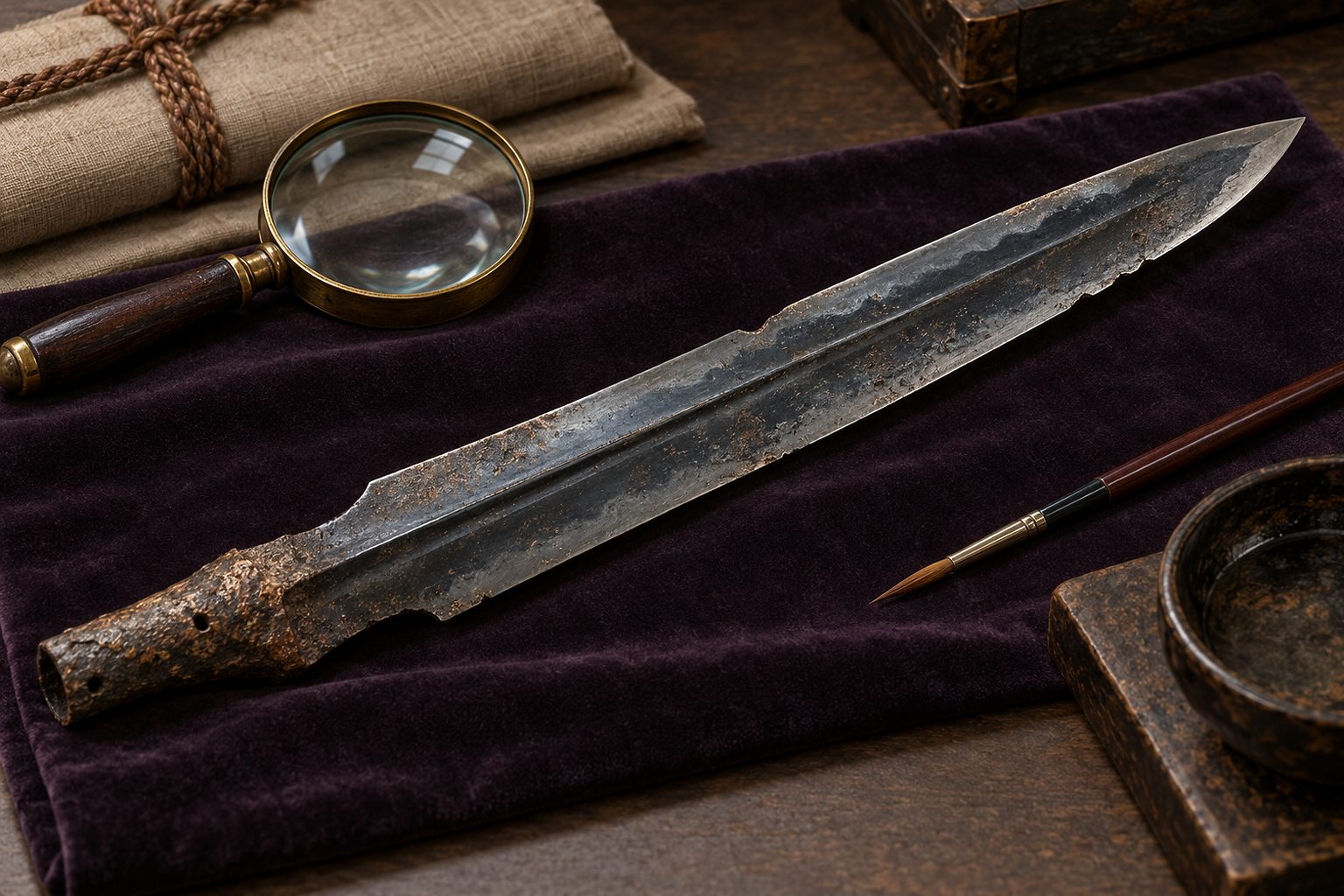
Relatively few authentic Kikuchi yari from the fourteenth century survive in museum collections today. The natural decay of wooden shafts means that most extant examples consist only of the steel head, often showing signs of heavy use or later re-mounting.
When examining these artifacts, conservators look for the specific profile and the remains of the mounting sleeve. Wear patterns along the edge provide insight into the intensity of the combat in which they were likely employed.
Provenance and Dating Challenges
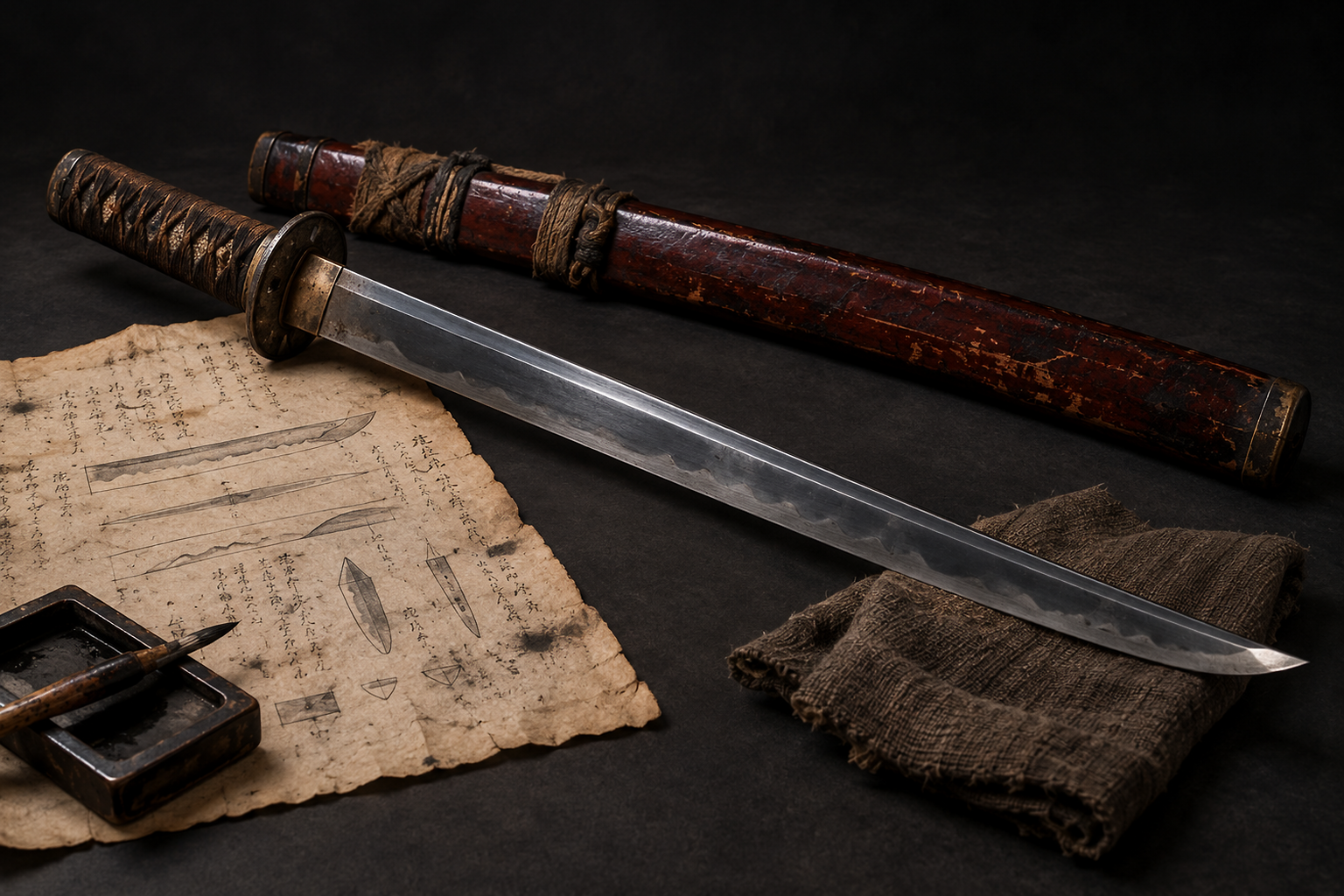
Dating these objects is difficult due to the scarcity of signed examples. Many blades lack the specific smith’s signature common on long swords, as they were often treated as utility equipment rather than high-value artistic objects.
Scholars rely heavily on the blade’s curvature and the presence of specific transition-era features to estimate their manufacture. Without archaeological context, attributing a blade to a specific workshop or clan often remains an informed approximation.
The Role of Urushi Lacquer
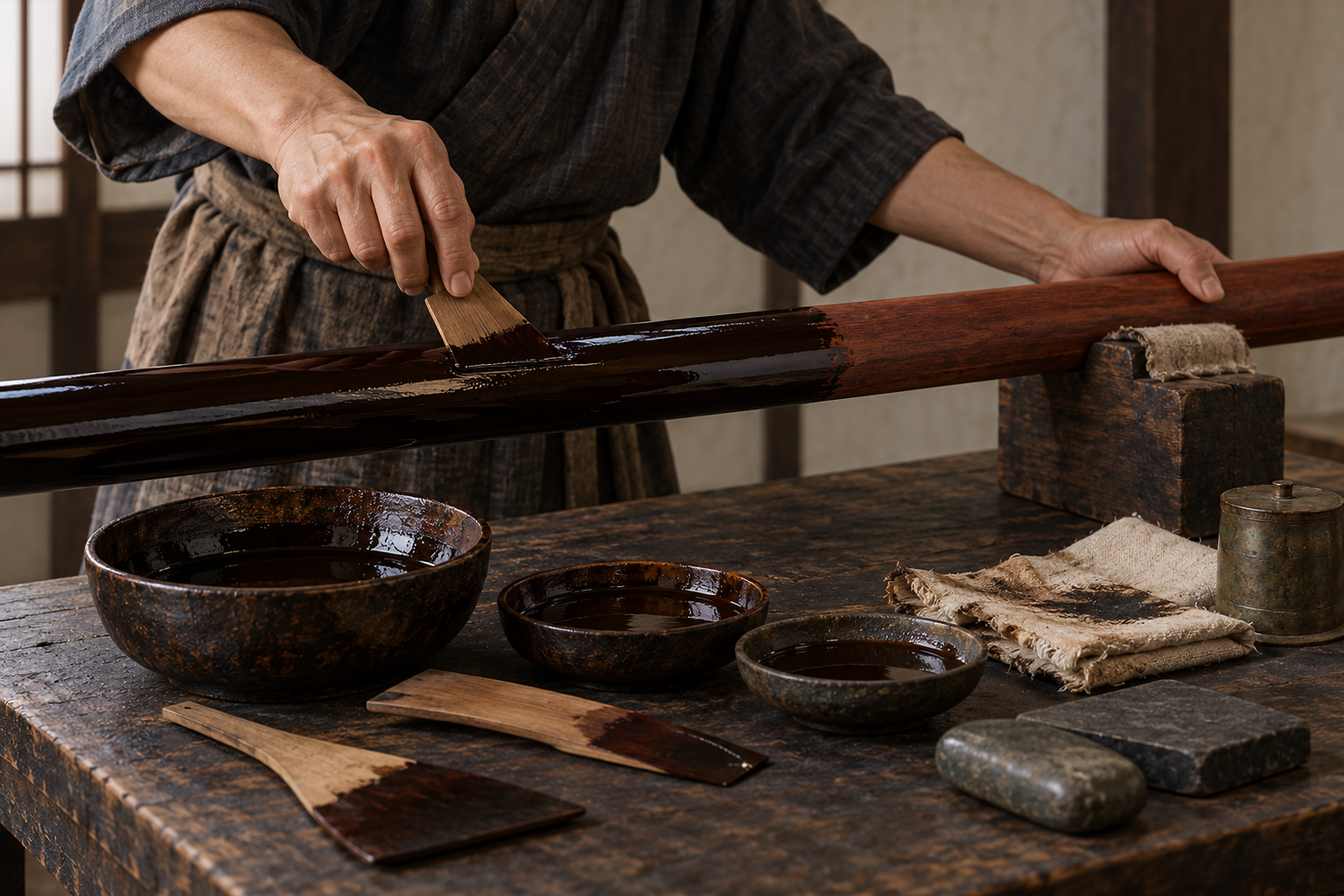
The use of urushi, a natural lacquer derived from trees, was essential for the preservation and functionality of these weapons. It served as both a protective sealant for the wooden pole and an adhesive for structural components.
Archaeological evidence shows that the quality of the lacquer finish often dictated the longevity of the pole-arm assembly. In environments prone to high humidity, the lacquer acted as a vital barrier against fungal decay and moisture-induced warping of the wooden core.
Experimental Archaeology
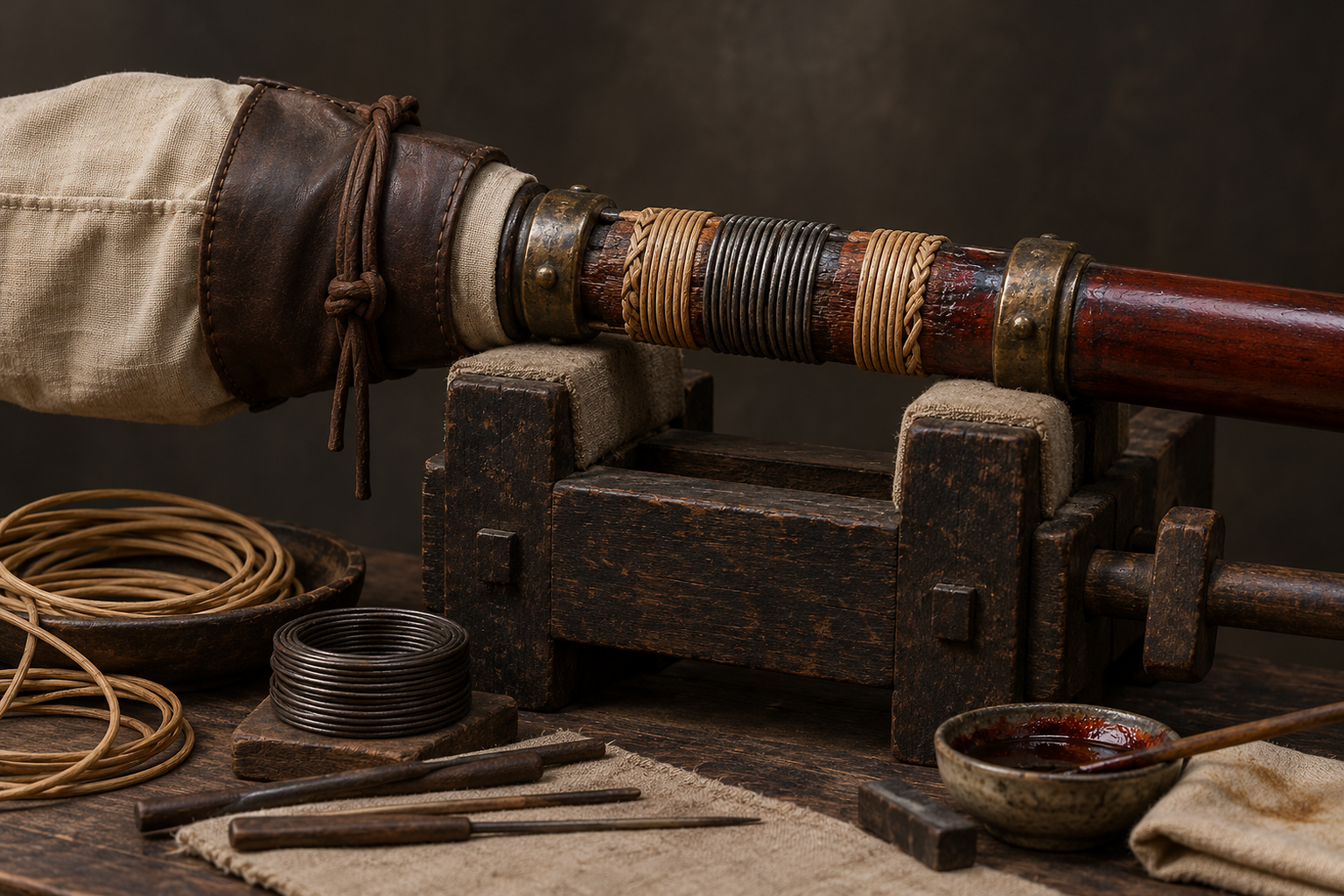
Recreating these implements allows researchers to test the balance and weight distribution inherent in the original designs. Modern replicas constructed using traditional charcoal-fired steel provide valuable data on how the weapon feels in motion.
Controlled testing allows practitioners to assess the strain on the tang-to-shaft interface during high-impact strikes. These experiments indicate that while the Kikuchi yari was a potent tool, it required significant maintenance to remain functional.
Observed characteristics in replica testing:
- Higher rotational inertia than standard spears
- Increased susceptibility to shaft vibration
- Effective cutting range similar to a short sword
Legacy and Modern Interpretation
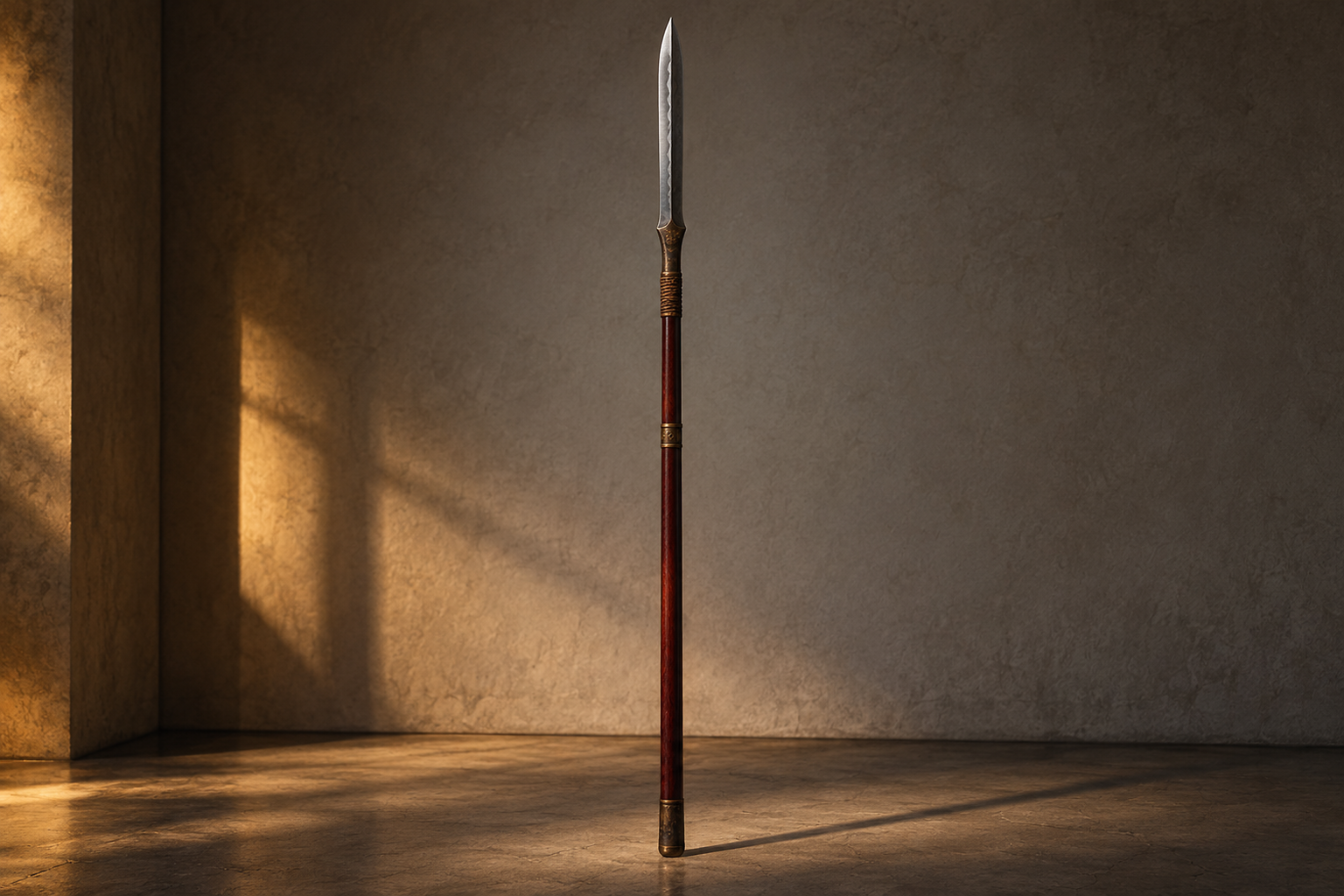
In modern discourse, the Kikuchi yari is often romanticized as the weapon of choice for a specific, heroic warrior class. However, archival evidence suggests it was a pragmatic solution to a tactical problem, reflecting the functional flexibility of Japanese military hardware.
The weapon reflects the innovative nature of the Nanboku-cho period, where smiths and warriors adapted their tools to the demands of a changing battlefield.
Further reading
Follow the sources to examine the object and its historical context.
Tokyo National Museum, Arms and Armor CollectionExternal reference · Opens in a new tab Japanese Sword Society of the United States, Journal of ResearchExternal reference · Opens in a new tab