The jumonji yari stands apart among Japanese polearms for its branching, crescent-like cross-blades. Emerging alongside the refinement of professional infantry tactics, this weapon offered a departure from the simple, linear thrusting capabilities of the basic su-yari. By providing secondary cutting edges and the ability to hook or trap an opponent's weapon, the jumonji yari reflects the increasing complexity of battlefield engagement during a volatile era of Japanese history.
Anatomical Geometry of the Jumonji
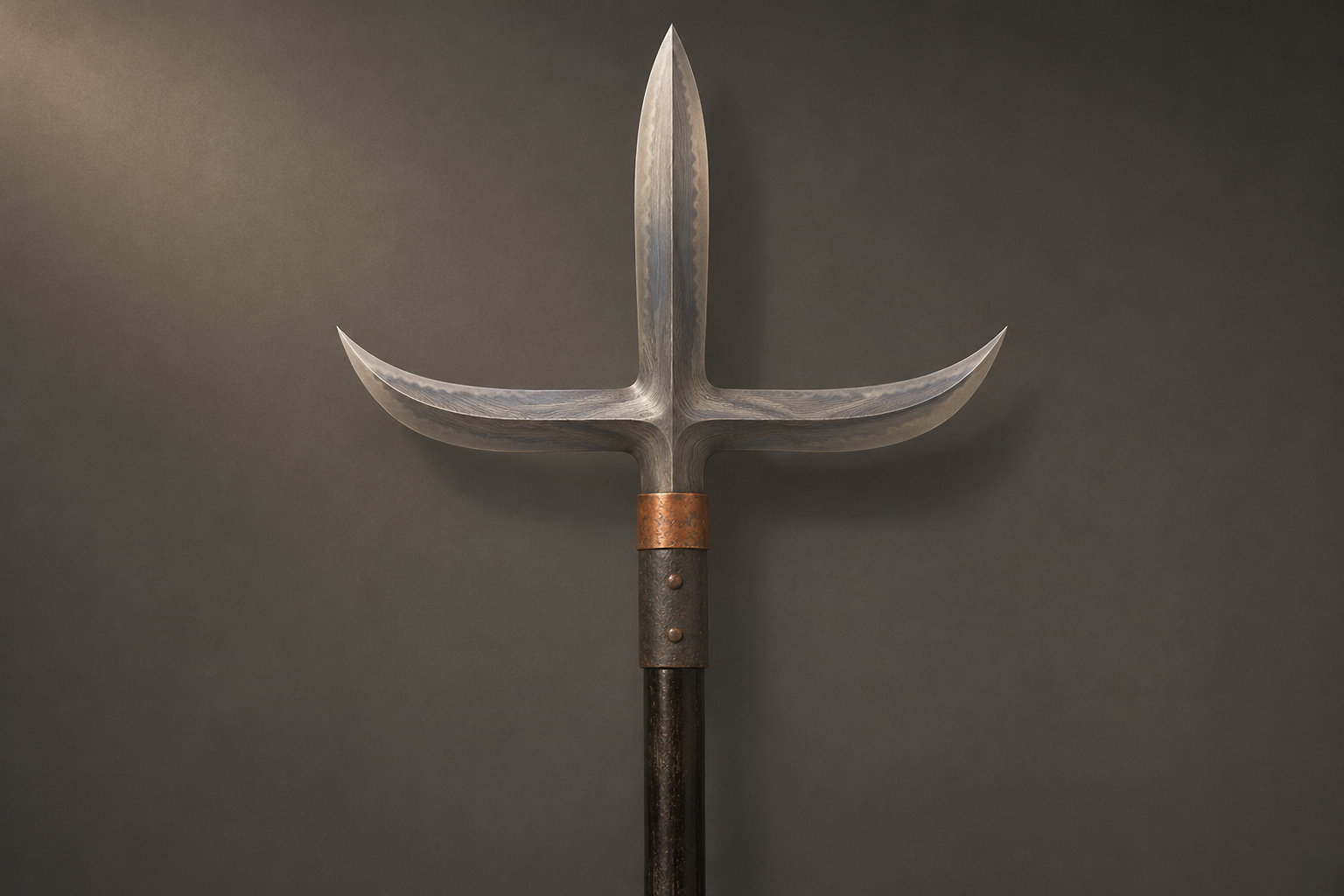
The defining feature of the jumonji yari is the arrangement of its three blades. While the central spike provides the primary piercing element, the lateral tsu-hoko blades extend outwards, often curving slightly toward the point. This geometry catches an incoming blade or hooks the edge of an opponent's armor.
The balance point of a jumonji yari is significantly altered by the weight of these lateral appendages. Smithing such a head required precise control to ensure the integrity of the junctions where the lateral blades meet the central spine. If these joints were too weak, the stresses of a parry could fracture the head, rendering the spear useless in the heat of combat.
Evolution of Polearm Tactics
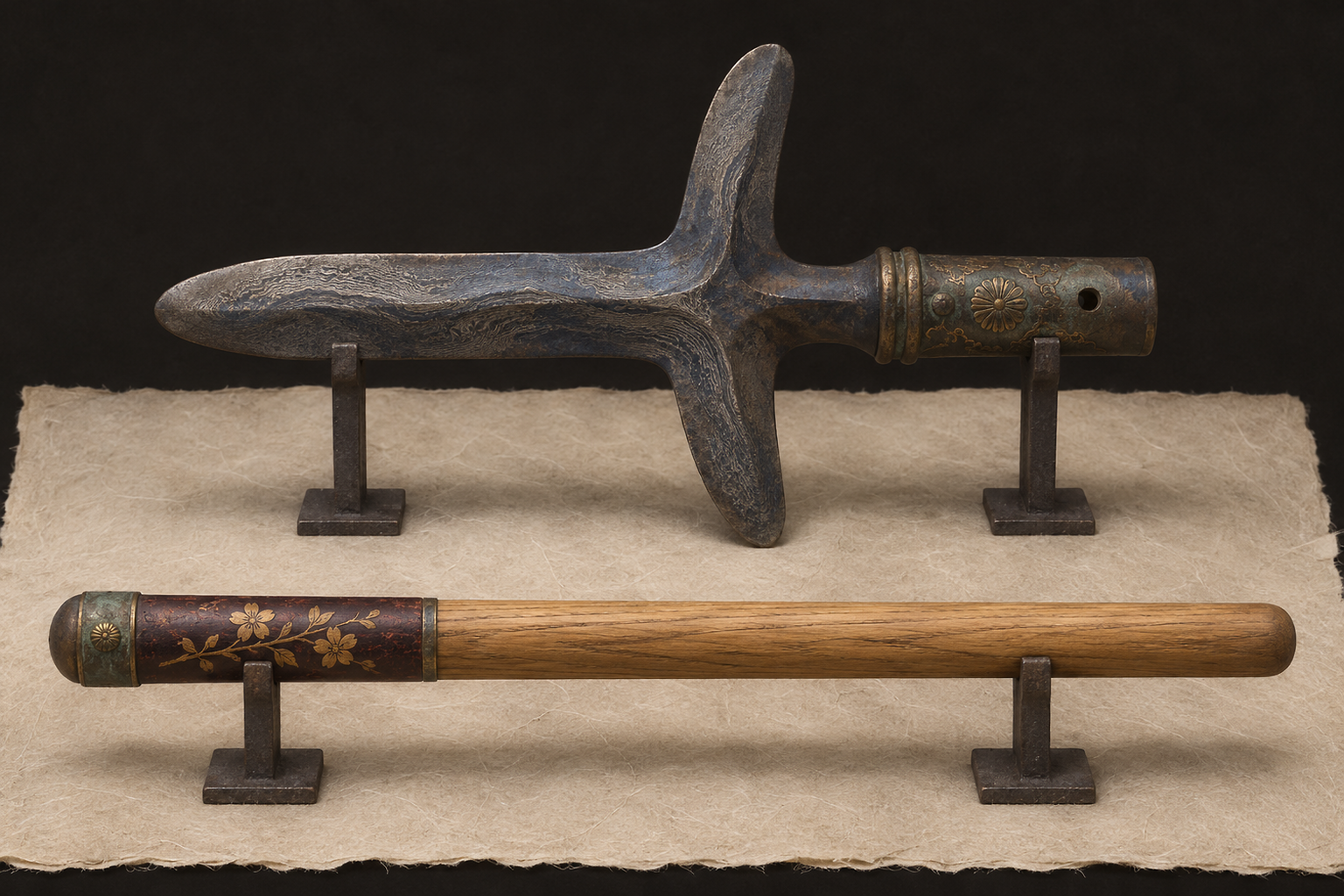
As the Muromachi period progressed, the nature of warfare shifted from aristocratic mounted archery to larger, more organized infantry clashes. This shift created a demand for weapons that could address a variety of threats simultaneously. The jumonji yari allowed a warrior fighting on foot to maintain an effective defensive sphere against both infantry and mounted riders.
Historical treatises suggest that the cross-spear was particularly valued for its ability to snag an opponent's weapon. By catching a rival polearm in the crook of the tsu-hoko, a fighter could pull the opponent off-balance or guide the weapon aside, creating an opening for a decisive thrust.
Tactical advantages documented in period manuals include:
- The ability to parry incoming strikes while maintaining the spear point toward the opponent.
- The capacity to hook armor plates or helmet rims to displace a defender.
- Creating a wider visual and physical deterrent against multiple attackers.
Parrying Dynamics
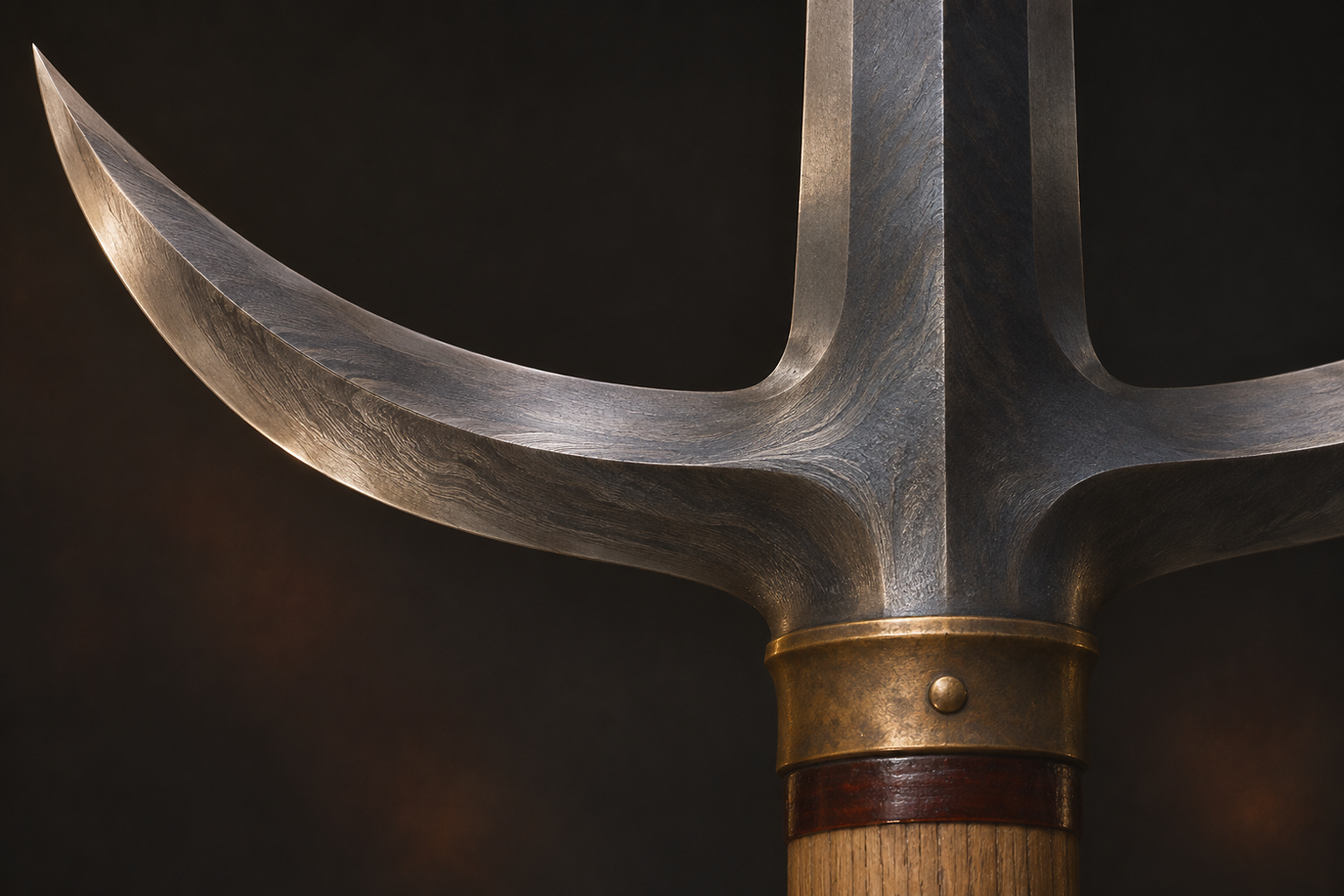
The defensive utility of the jumonji yari relies on the principle of circular movement. Instead of blocking with the shaft, which could be cumbersome, a practitioner could use the lateral blades to deflect force away from the centerline of the body. This redirection allows for a continuous flow from defense into counter-attack.
Modern practitioners of Japanese spear arts (sojutsu) and martial historians emphasize that the leverage provided by the cross-blades allows for subtle control. A small flick of the wrist can move the cross-spear head several inches, which is often sufficient to deflect a charging spear or a downward cut from a sword.
Smithing and Structural Integrity
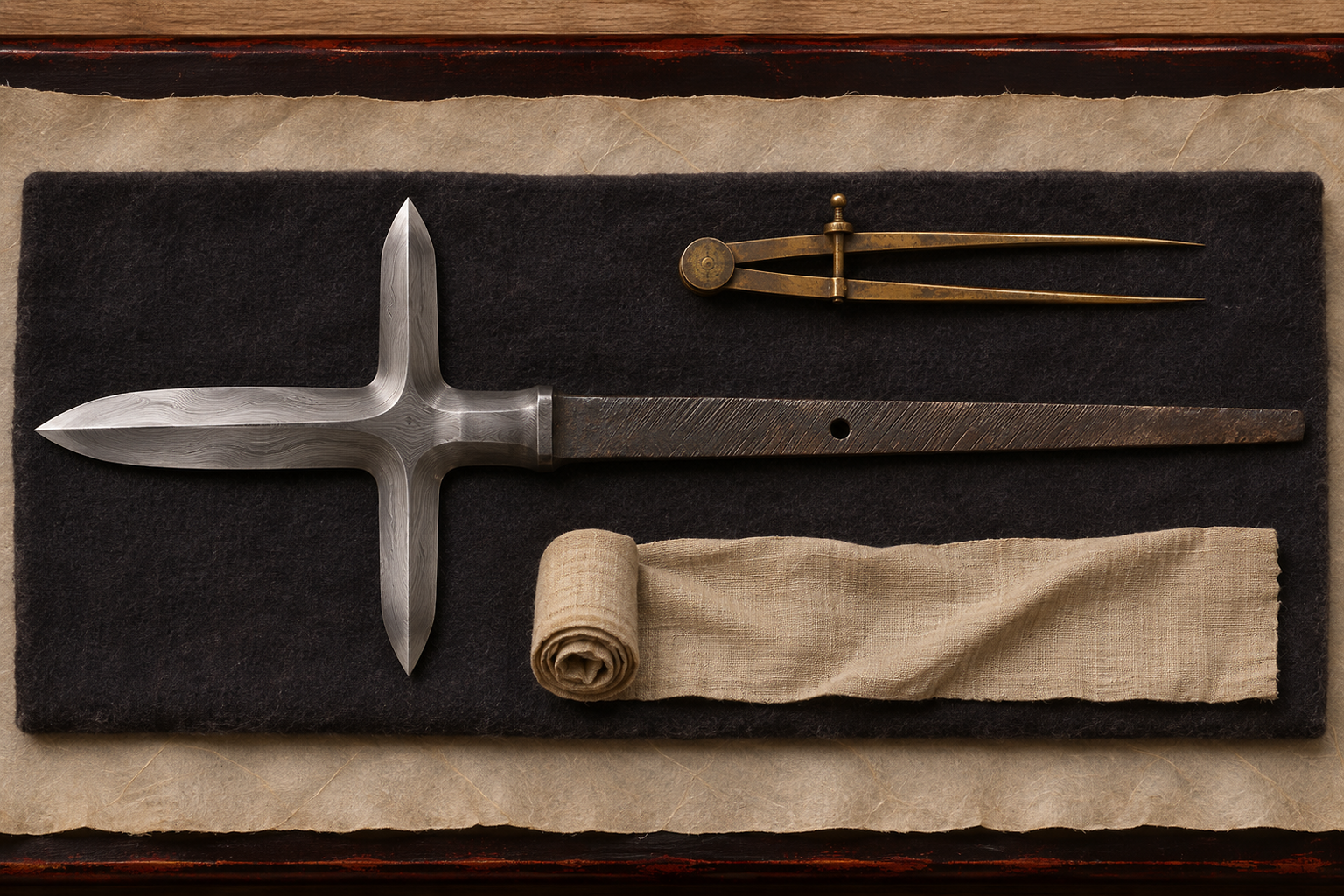
Constructing a jumonji yari head is a feat of complex forging. Unlike a simple stabbing spear, the smith must forge-weld multiple pieces of steel together while maintaining the grain structure of the metal to ensure durability. The lateral blades are particularly susceptible to bending if the heat treatment is not perfectly uniform throughout the object.
The tang (nakago) must also be robust, as the leverage exerted on the head during a parry is substantial. Examining extant museum pieces reveals that many heads feature a deeply seated, thick tang that extends well into the wooden shaft, providing the necessary stiffness to withstand the forces of combat.
Combat Treatises and Ma-ai
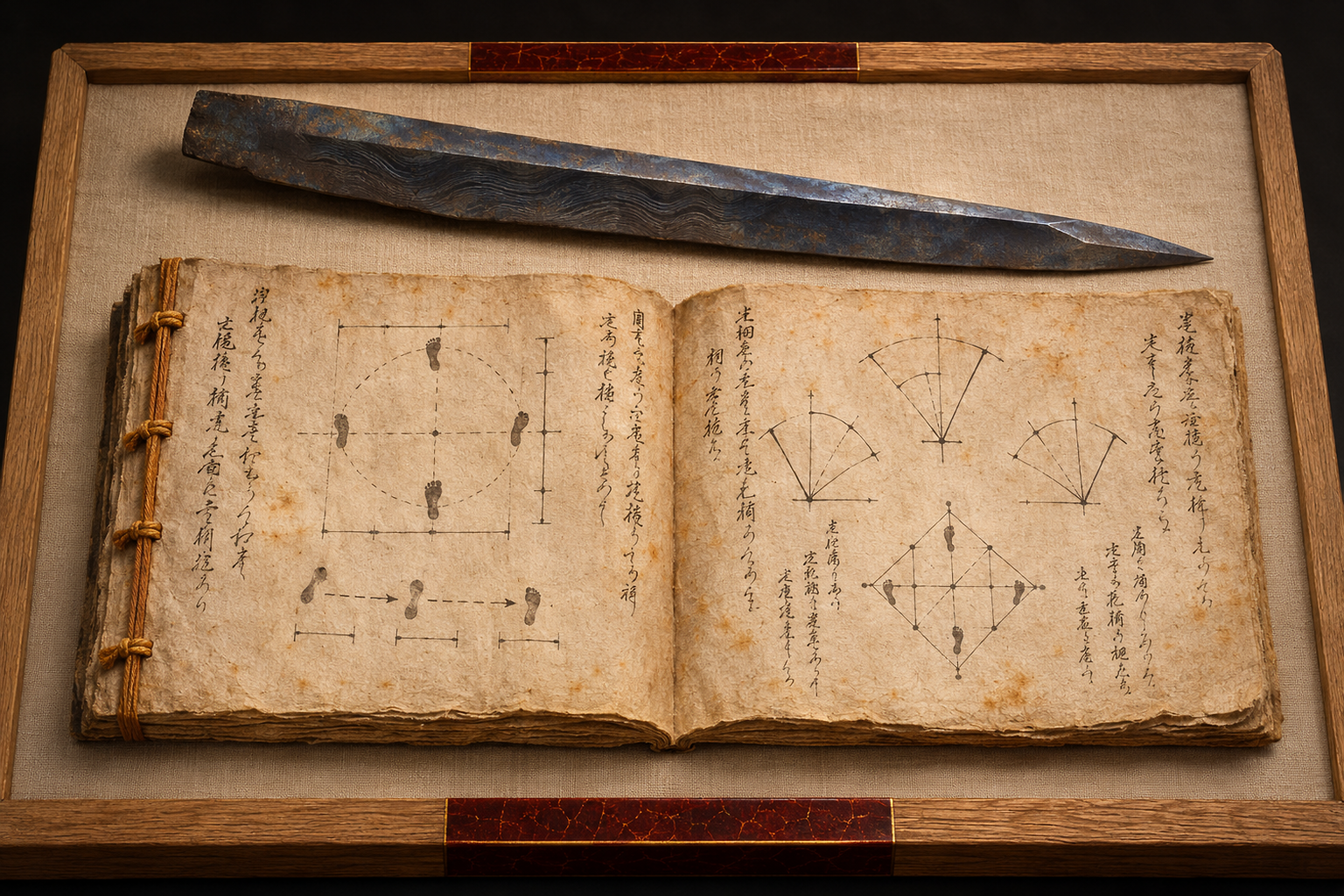
Period scrolls (densho) often contain detailed instructions on the handling of the yari. These texts emphasize 'ma-ai,' or the management of distance. The jumonji yari, with its wider reach and defensive capability, was treated as a weapon that dictates the terms of the engagement.
The manuals often describe specific postures (kamae) that leverage the cross-blades. By keeping the weapon in a constant state of flux, the fighter minimizes the chance of being caught in a static position, allowing the jumonji yari to function effectively against various weapon types.
Cross-Spear Materiality
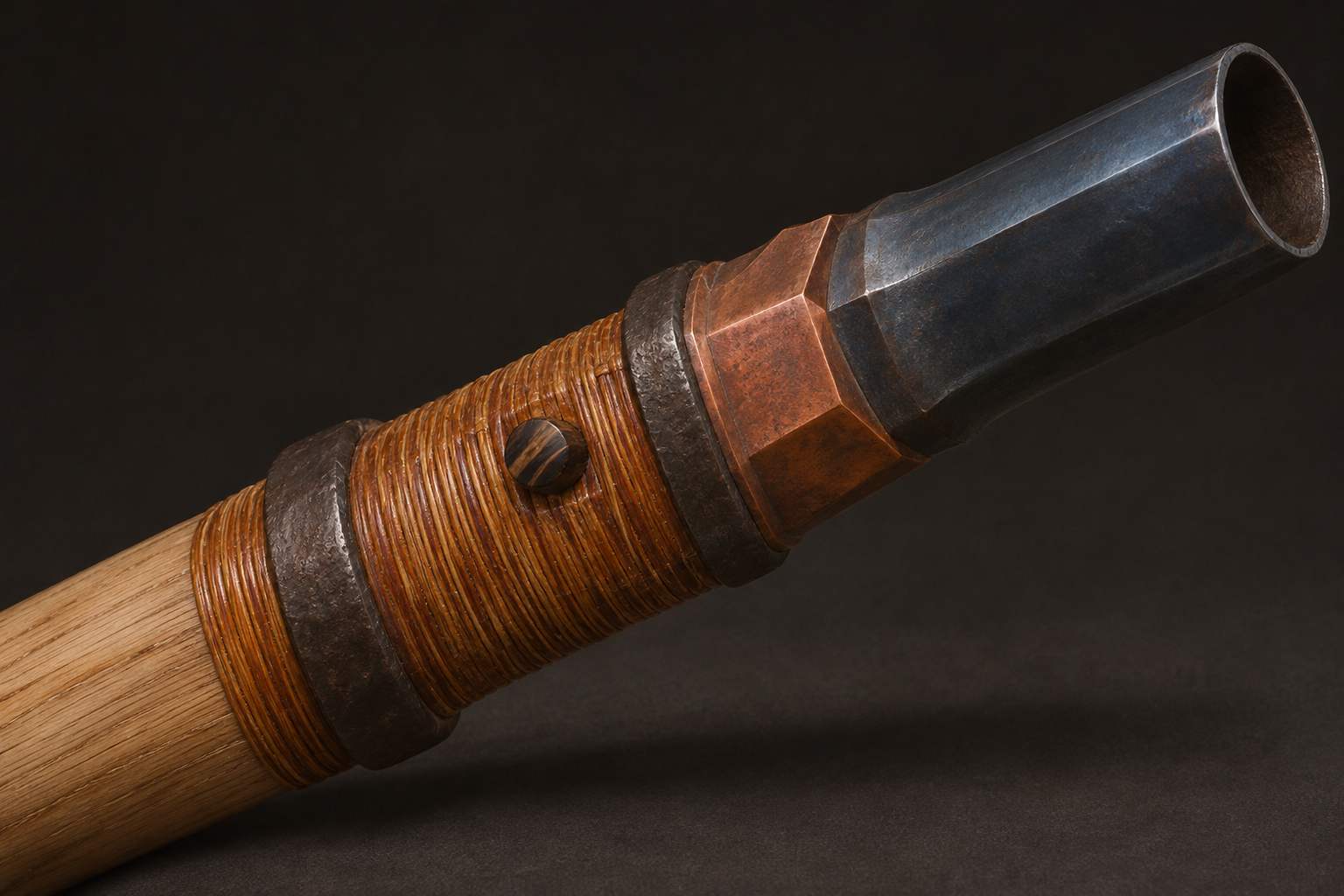
Beyond the forging of the blade itself, the shaft or 'ebu' played a critical role in the weapon's overall performance. Typically constructed from hard woods like white oak, the shaft had to balance rigidity with a degree of flexibility to absorb the shock of impact.
The mounting process was also rigorous. The junction where the blade tang entered the shaft was reinforced with metal collars and sometimes wrapped with rattan or cord to prevent the wood from splitting under intense lateral pressure during parries.
Battlefield Functionality
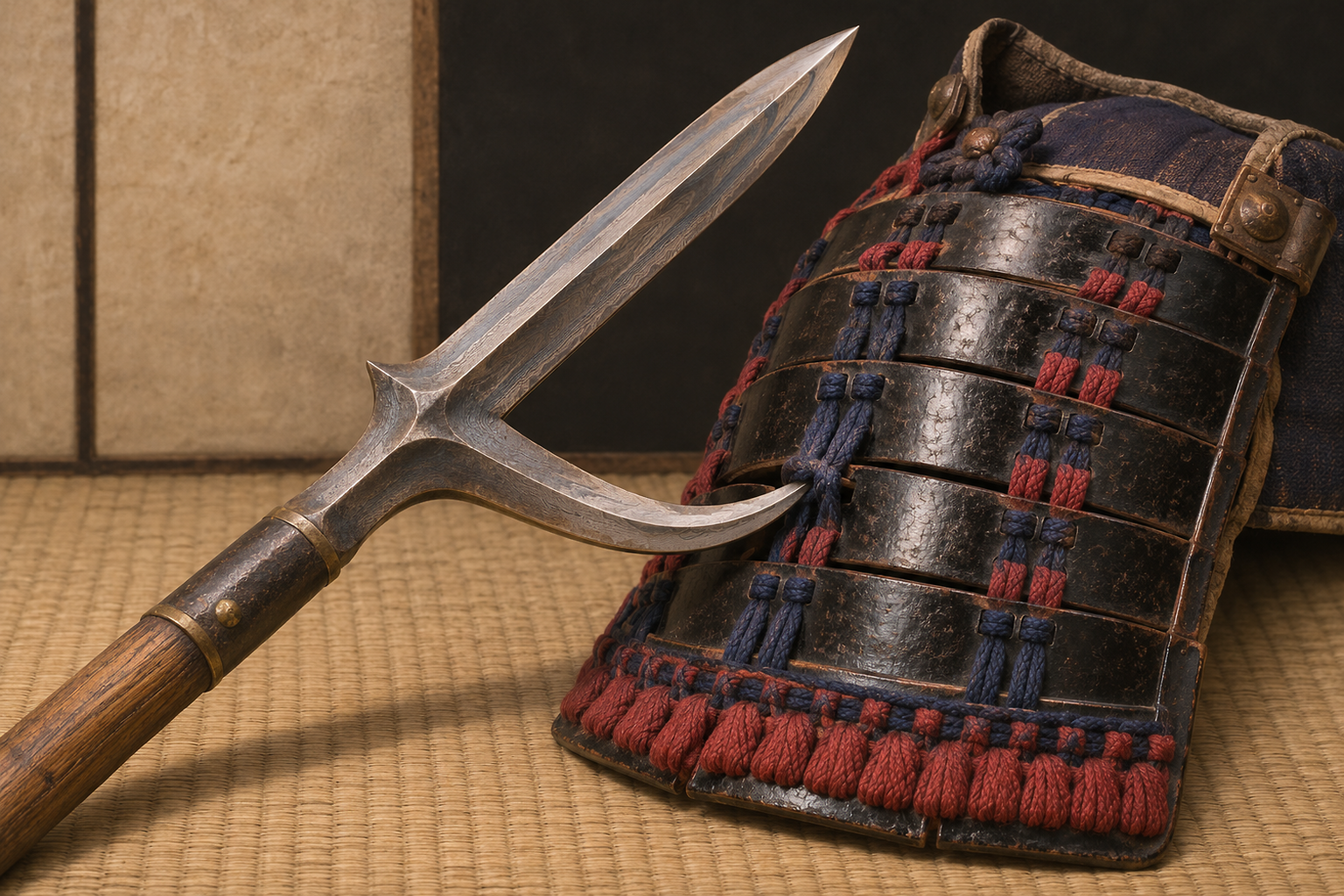
Rather than being issued to massed ashigaru pike formations, where its lateral blades could snag adjacent weapons, the jumonji yari was typically wielded by commanders, mounted samurai, or skilled individual retainers. In looser engagements or personal defense, the cross-blades created a wide obstacle that discouraged opponents from closing in.
Conversely, in offensive maneuvers, the hooked blades could be used to snag the lacings of traditional lamellar armor. By ripping through the structural connections of an opponent's armor, a user could create significant vulnerability in a single motion.
Variation in Regional Styles
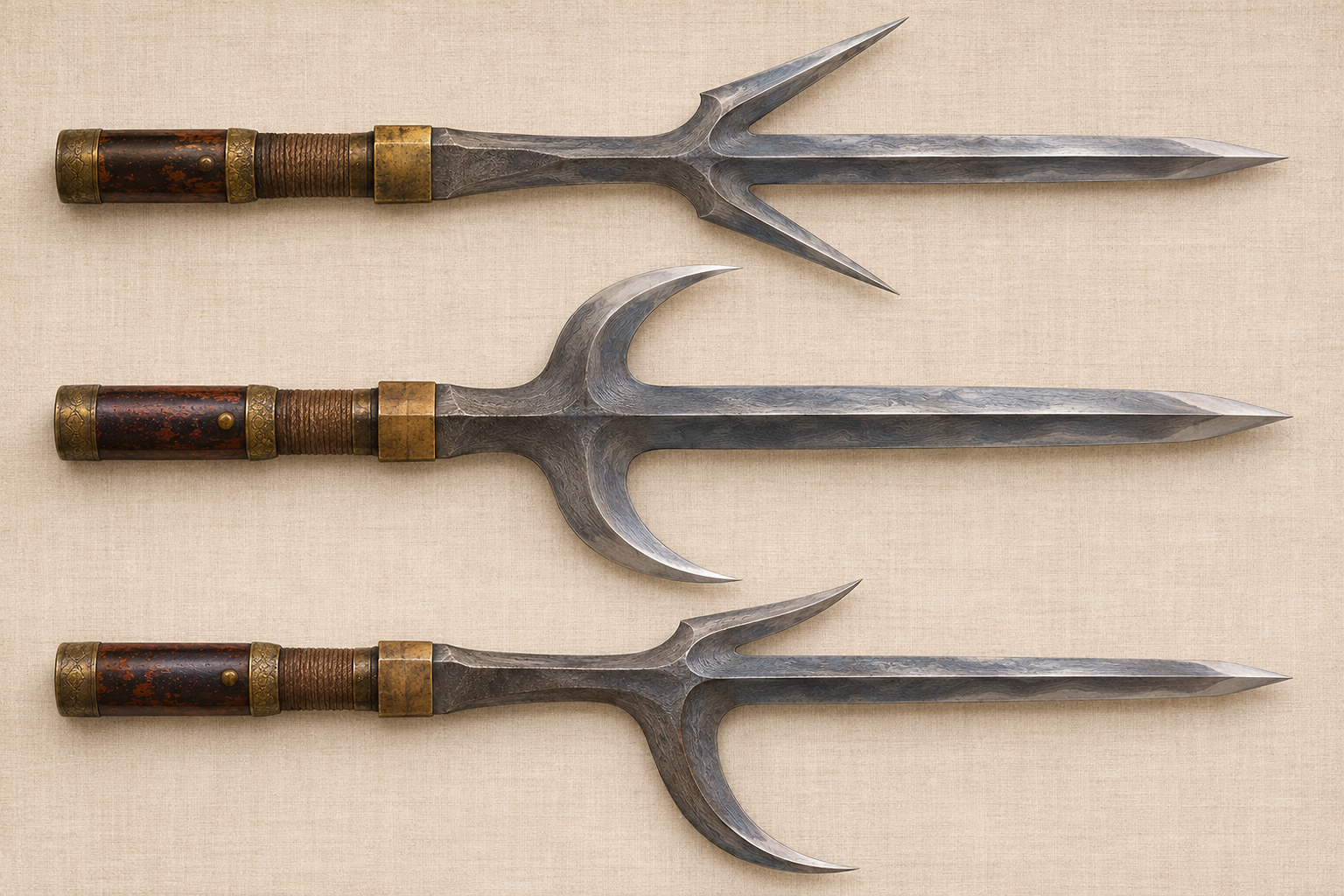
While the term jumonji yari refers to the general cross-spear type, significant variations existed in the length, angle, and sharpness of the tsu-hoko blades. Some regions favored wider, more aggressive hooks, while others preferred narrower, more piercing-oriented lateral blades.
These regional differences often mirrored the specific combat environments of the area. Styles developed for flat, open plains differed from those refined for mountainous terrain, where shorter, more agile polearms were advantageous.
Historical Preservation
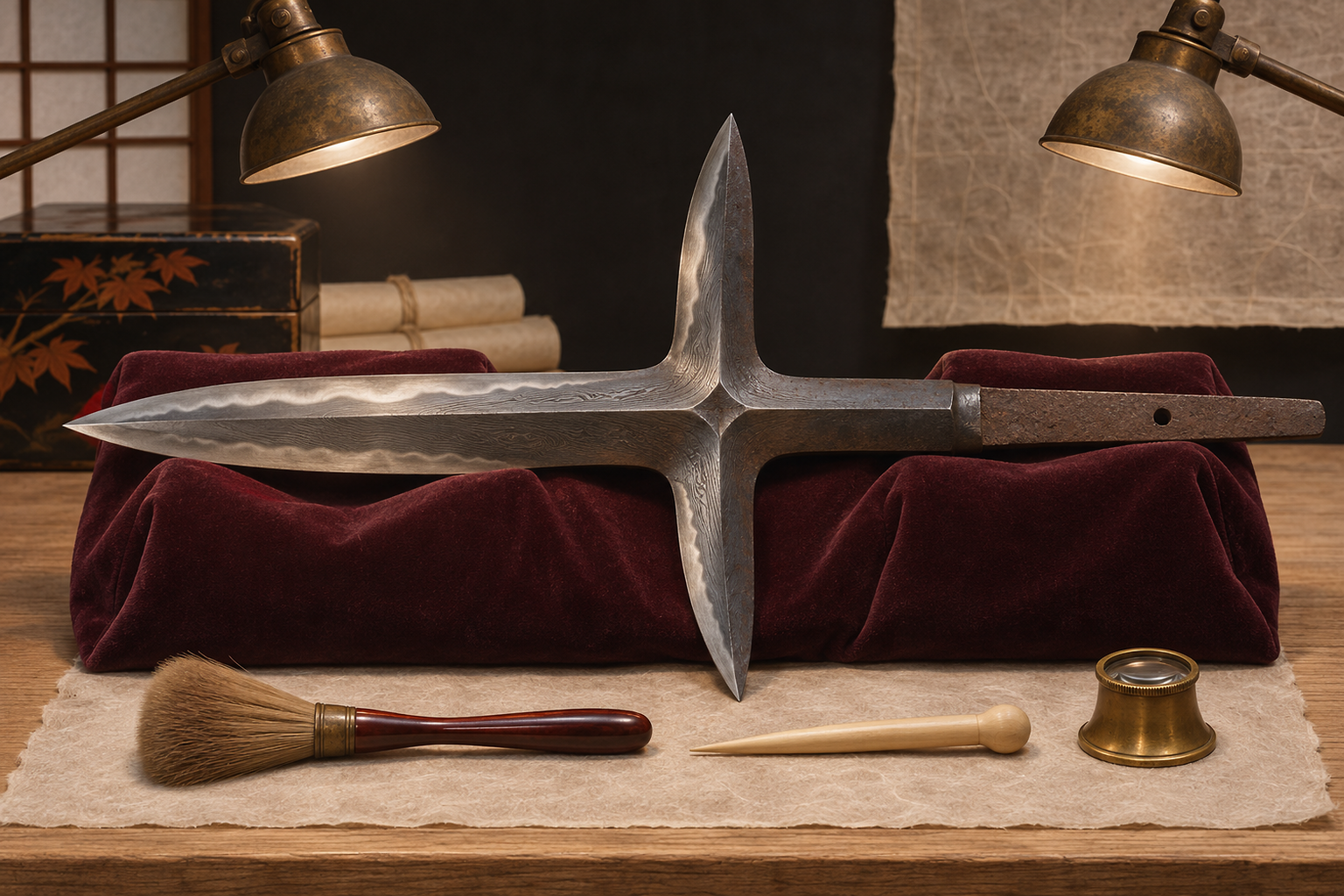
Surviving jumonji yari are highly prized by collectors and museums alike, though they are fewer in number than standard katana or simple yari. The complexity of their blade geometry makes them challenging to maintain and susceptible to stress-related damage over centuries.
Modern conservation efforts focus on stabilizing the oxidation on the blade surfaces and inspecting the integrity of the internal tang, which remains hidden within the shaft. These efforts provide valuable insights into the original smithing techniques employed by medieval craftsmen.
Legends and Artistic Representation
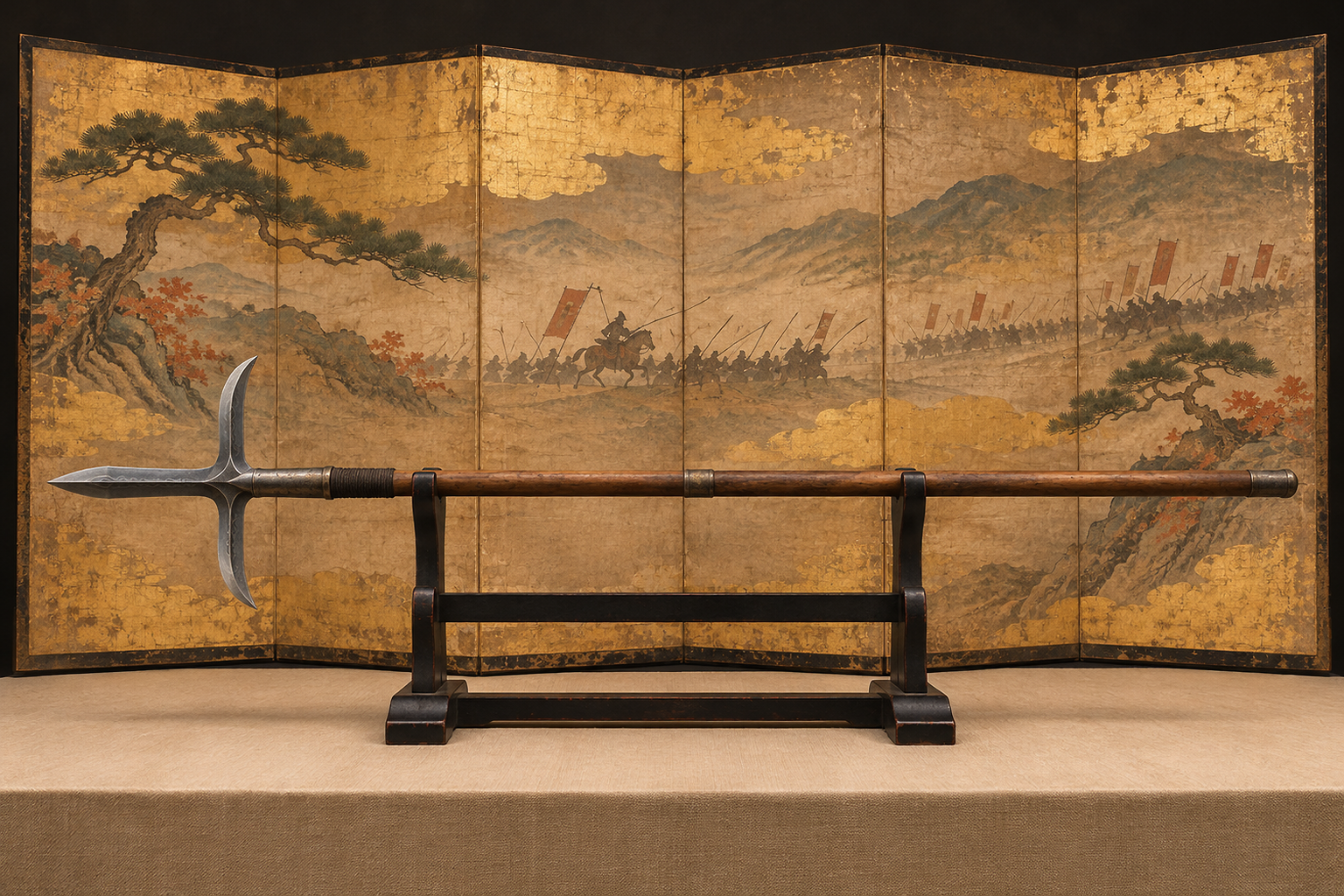
The jumonji yari often appears in later Edo-period woodblock prints and historical painted screens, typically associated with legendary warriors and pivotal battlefield moments. While these depictions are valuable for understanding martial iconography, they occasionally exaggerate the size or lethality of the weapon.
Later literature often mythologized the cross-spear, portraying it as a weapon capable of extraordinary feats against multiple foes simultaneously. Historical study serves to temper these accounts, grounding the weapon's reputation in the realities of tactical application and engineering limitations.
Further reading
Follow the sources to examine the object and its historical context.
Arms and Armor of the Samurai: The History of Weaponry in Ancient JapanExternal reference · Opens in a new tab Japanese Polearms: The Yari and NaginataExternal reference · Opens in a new tab